

SAME Perspectives: 2026 State of A/E/C in Federal Sector AI
Society of American Military Engineers, November 2026
Prepared by: Society of American Military Engineers AI Working Group, Resilience Community of Interest

Executive Summary
Who this is for
This paper is written for the individual in a firm or a federal organization who has been directed to implement artificial intelligence (AI). Not a skeptic and not an expert; someone who knows what a large language model is, they have used the tools, and they understand that holding a Copilot license is not the same as having an AI strategy. Our audience have been given a mission, and now they are running into things they cannot get past on their own. We are not writing to convince anyone that AI is worth using or for the person already building agents inside a federal enclave.
What this covers
This paper defines the hurdles to AI adoption in federal architecture, engineering, and construction (A/E/C), grounds them in what industry told us in the Society of American Military Engineers (SAME) AI Adoption and Barriers Survey, and points to where an organization can start. It does not attempt to solve them. Several of these hurdles need a different set of authors, and some need government action that no white paper can deliver. We have used the word hurdles rather than barriers on purpose. A barrier stops you. You can get over a hurdle, you just have to do something about it first, and that is a more honest description of what is in front of this industry.
What we mean by AI
This paper is about generative AI and large language models. Other forms of AI are real and useful in this industry, and some are already embedded in tools our members use every day. They do not carry the same hurdles. Running a clustering algorithm against project data does not raise the same questions as putting a prompt and a controlled document into a chat window. Where we name a specific vendor or tool, the intent is to illustrate a category rather than endorse a product.
About the survey
The SAME AI Adoption and Barriers Survey collected 115 responses to a survey on AI use in federal A/E/C. Ninety came from industry, 22 from federal organizations, and three from academia and other organizations. They span firm sizes from under 50 employees to over 10,000. Most answered from executive (43), program management (29), and business development (25) seats; 11 came from technical delivery roles. Where industry and federal respondents answered differently in ways that matter, we report them separately. Not every respondent answered every question, so the base for each figure is given alongside it.
It is a self-selected sample and people who choose to answer an AI survey are more likely to be already thinking about it. Because of this, these results almost certainly understate how many organizations have not started at all. We think that skew makes the findings more useful rather than less. If this is what the engaged end of the market looks like, the rest of the market is further behind than these numbers suggest.
This paper also draws on a second body of work. In 2024 and 2025, an SAME Leader Development Program (LDP) team made up of Shirley Albritton, Steve Price, and Lt. Cdr. John Nurthen ran a Utilization Project Implementation Capstone titled Addressing Barriers to Artificial Intelligence Adoption. That effort produced a 70-response survey and roughly two dozen stakeholder interviews across the Naval Facilities Engineering System Command (NAVFAC), the U.S. Army Corps of Engineers (USACE), the U.S. Army Engineer Research and Development Center (ERDC), West Point, and industry. Where we draw on it, we say so and we date it. Some of it has been overtaken by events, particularly what the tools could do at the time. The organizational, cultural, and data findings have held up well.
According to the survey conducted, AI use in the A/E/C industry is near-universal among individuals, and the challenge has moved from adopting AI to getting it into federal project delivery. What stands in the way is mostly permission: unclear rules, too few approved tools, and slow data and compliance approvals. The people and process hurdles come right behind, and they weigh most heavily on government.
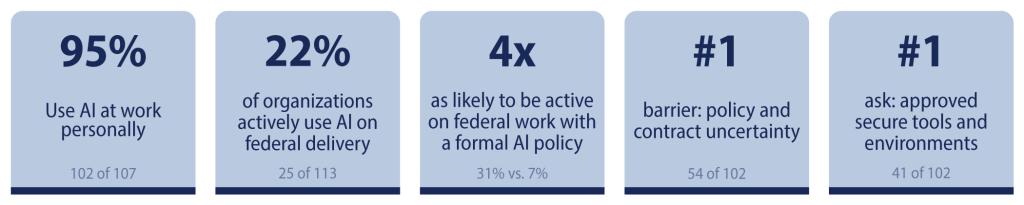
Figure 1 – Survey at a glance
What we found
Use is broad; federal delivery is narrow. Twenty-five of 113 organizations actively use AI on federal project delivery, and 25 more are piloting. Use is heaviest in proposal and document review. Design support drops from 44 organization-wide to 26 on federal projects.
Permission is the binding constraint. The top three scaling barriers are policy and contract uncertainty (54 of 102), IT restrictions and tool access (53), and data and compliance approvals (45). The most requested enabler, by a wide margin, is approved secure tools and environments.
Policy is a necessary entry point that every organization controls. Organizations with a formal AI policy are four times as likely as those without one to be active on federal delivery (31 vs. 7 percent). Policy alone does not get them there, but no one else can write it for them.
Government and industry stall in different places. Industry’s main hurdle is compliance: Cybersecurity Maturity Model Certification (CMMC) and data approvals. Federal respondents put more weight on people and proof: skilled staff, time to learn, and validated use cases.
The rules are still moving. CMMC Phase II was suspended in July 2026 pending review, and the General Services Administration (GSA) has proposed the first contract clause governing large language model use on government data. Organizations are planning against a moving target.
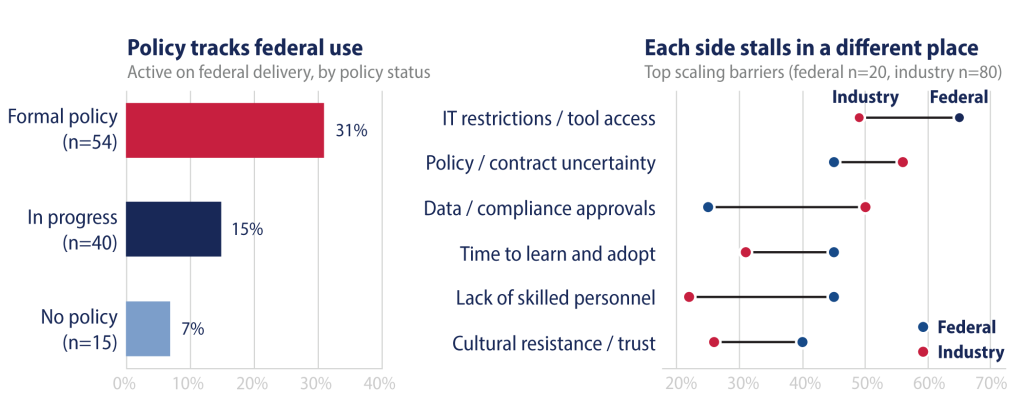
Figure 2 – Executive summary. Source: SAME AI Adoption and Barriers Survey, 2026 (115 responses; bases vary by question). Federal results rest on 20 to 22 responses and should be read as direction.
What can be done
Organizations: Sort federal work by the data it touches, start where controlled information is absent, write the policy, and keep a record of how AI was used.
Government: Give one answer on AI use with federal contract information (FCI), apply it the same way across agencies, recognize certifications already earned, and train the staff who direct contractors.
To get involved: The SAME AI Working Group is working through the hurdles identified in this paper to support both industry and government in overcoming them.
Table of Contents
Adoption is broad. Federal delivery is narrow.
The direction has already been given
The decision to adopt AI has largely already been made above the heads of the people who have to execute it. Firms have been told by their leadership to figure this out. Federal organizations have been told the same thing from the top, in the Department of War’s (DOW’s) case in unusually direct language. The department’s January 2026 AI strategy calls for an “AI-first” department moving at wartime speed, with a dedicated barrier-removal team. Whatever anyone thinks about the pace, the question of whether to adopt AI in federal A/E/C is settled at the level where budgets and mandates come from.
The real problem is that a lot of capable, motivated people have been handed a mandate without a path. What they are running into turns out to be consistent enough across organizations that we can name it, define it, and work it one piece at a time.
Government sees the same problem. In stakeholder interviews conducted for the SAME LDP capstone, a NAVFAC flag officer said his organization would not intentionally put up barriers, that everyone there wants to leverage AI, and that he suspected the real barriers were unintentional, a product of the way the organization requires things to be done. He then asked for help identifying what those barriers are so that he could go attack them and said plainly that they did not know what they were.
This paper argues that the central challenge has moved. It is now getting AI out of internal organizational use and into federal project delivery.
By federal project delivery we mean work performed under a federal contract or task order that touches that contract’s data or deliverables: design, engineering, program and construction management, compliance, and technical review. Proposal and capture work for federal pursuits sits next to delivery, and we report it separately.
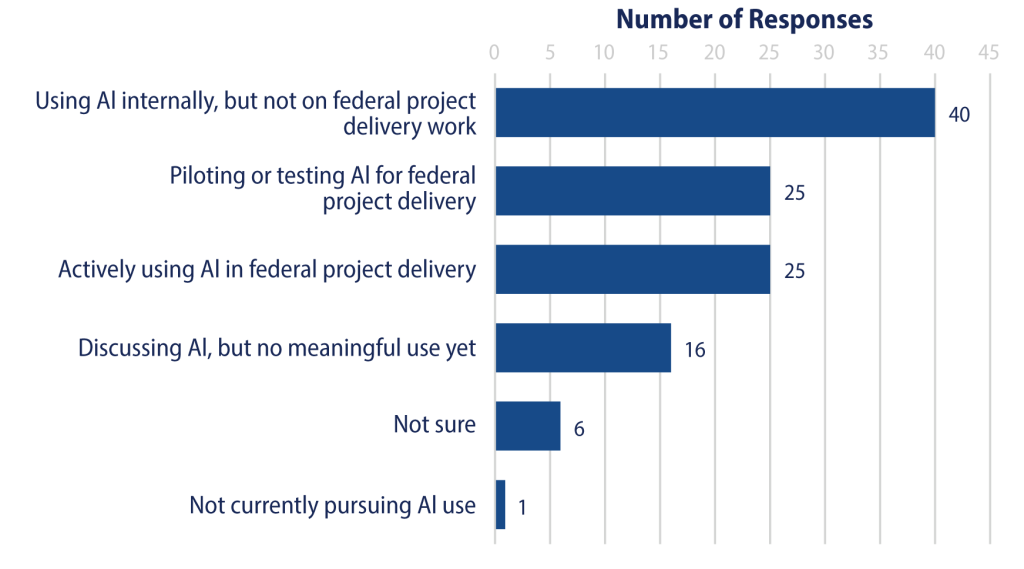
Figure 3 – Where organizations stand in their AI journey for federal project delivery
Adoption gap
AI adoption inside organizations is widespread. AI adoption on federal projects is real but narrow. Twenty-five of 113 organizations report active use in federal project delivery, and another 25 are piloting it.
The survey found widespread organizational use of commercial AI tools, but only limited extension into federal delivery workflows. Use remains concentrated in proposal support and document review and drops sharply in design and engineering: 44 respondents report organizational use for design support, but only 26 report it on federal projects.
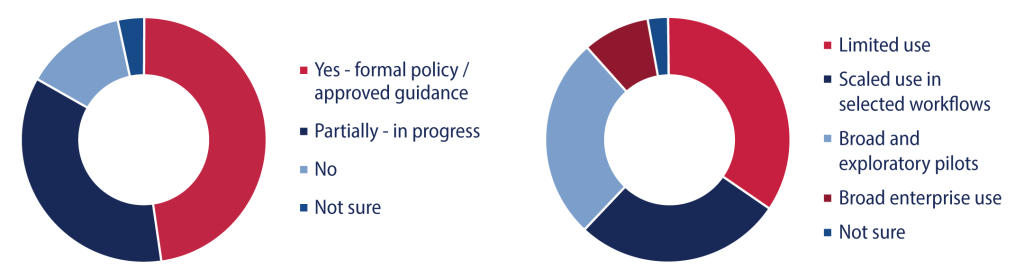
Figure 4 – AI policy status and self-assessed organizational AI maturity
Policy predicts federal use, but does not deliver it
Organizations with a formal AI policy are far more likely to be using AI on federal delivery work. Of the 54 organizations reporting a formal policy or approved guidance, 17 (31 percent) report active use in federal project delivery. Of the 40 with a policy in progress, 6 (15 percent) do. Of the 15 with no policy, one does. Piloting shows the same gradient: 57 percent of formal-policy organizations are piloting or active, against 20 percent of those with no policy. This is a correlation, and it likely runs both ways, since organizations further along tend to write policy sooner.
Policy alone does not get an organization there. Two of every three organizations with a formal policy are still not actively using AI on federal delivery work. They did what they were supposed to do: they wrote the policy, got it approved, and told their staff the rules. What stops them now sits mostly outside the company, in the permission hurdles described in Part I.
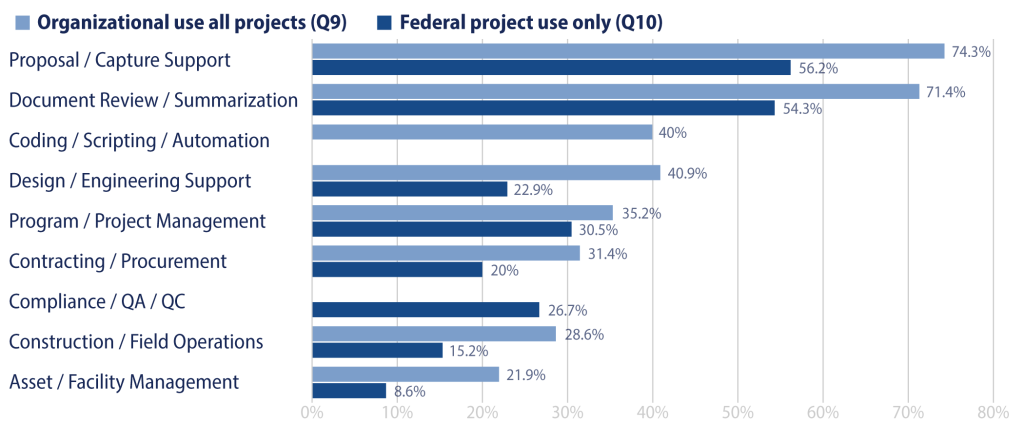
Figure 5 – AI use by application area: organizational vs. federal projects — the deployment gap
What changed since 2024
In addition to the SAME AI Survey data, an SAME LDP capstone team asked many of the same questions in late 2024 and drew 70 responses. Comparing the two is imperfect. The instruments were different, the scales were different, and the samples were different. But on the questions where they overlap the direction is consistent, and it tells us more than either survey does on its own.
Individual use has gone from common to near-universal. In 2024, 13 of 65 respondents said they did not use AI at all. In 2026, that number is 5 of 107.
More important, the barrier set has changed shape. In 2024, the two highest-rated barriers were concerns about data privacy and security and insufficient technical expertise, with lack of clear use cases close behind. In 2026, the top three are policy and contract uncertainty, IT restrictions and tool access, and data and compliance approvals, while lack of skilled personnel has fallen to seventh of nine. Use cases are no longer scarce, and the survey shows them running across nearly every function in the business. For industry, the capability barriers have come down and the permission barriers have not. Federal respondents are the exception: they rank lack of skilled personnel and time to learn (45 percent each) in a three-way tie for second, behind only IT restrictions and tool access.
Where the two surveys line up:
| Measure | 2024 survey (n=70) | 2026 survey (n=115) |
|---|---|---|
| Respondents not personally using AI | 13 of 65 | 5 of 107 |
| Highest-rated barrier | Data privacy and security | Policy and contract uncertainty |
| Workforce and expertise barrier, rank | 2nd of 8 | 7th of 9 |
| Cost or ROI barrier, rank | 8th of 8, last | 9th of 9, last |
| Most requested support | Tools and platforms; regulatory guidance | Approved secure tools and environments |
Government sees a different set of hurdles
The 22 federal respondents are a small sample, but their responses diverge from industry in ways that matter as we look to close the gap.
Federal respondents were twice as likely as industry to name lack of skilled personnel as a scaling barrier (45 vs. 22 percent) and more likely to name time to learn (45 vs. 31) and cultural resistance (40 vs. 26). Additionally, sixty-nine percent of industry respondents named CMMC as a source of federal friction, against 20 percent of federal respondents.
Forty-three percent of federal respondents describe their organization as actively using AI in federal project delivery, against 18 percent of industry. Part of that gap is access: agency staff can use GenAI.mil and agency-built tools on government networks. It also means government is often further along than the contractors it directs.
Still, only one in three federal respondents reported a formal AI policy, against just over half of industry. Also, one in five federal respondents said validated use cases would most enable responsible adoption. One of 80 industry respondents said the same.
This suggests that the path through the permission hurdles runs through the execution hurdles on the government side. A contracting officer or program manager without training, and without a validated example to point to, will likely default to no.
The AI Adoption Hurdles
We group the hurdles into eight categories, drawn from the survey data, one-on-one conversations with people in industry and government over the past several months, and prior research. The first three are permission hurdles: whether you are allowed. The last five are execution hurdles: whether you can. They are distinct enough that solving one does not solve another.
| Hurdle | What it turns on | |
|---|---|---|
| H1 Data, security, and controlled information constraints | What data you may touch, and what environment that requires | Part I: Permission Hurdles |
| H2 Policy, contracting, and governance ambiguity | What is allowed, defensible, and contractually supportable | Part I: Permission Hurdles |
| H3 Tool access, approved environments, and technical admissibility | Whether you can access a usable, permitted tool | Part I: Permission Hurdles |
| H4 Validation, assurance, and defensibility | How you prove the work is sound and defend it later | Part II: Execution Hurdles |
| H5 Workforce capability, trust, and change readiness | Whether your people can and will use it appropriately | Part II: Execution Hurdles |
| H6 Process integration and operating model fit | Whether it fits how the work actually gets done | Part II: Execution Hurdles |
| H7 Resource capacity and organizational leverage | Whether you can absorb the work of adoption itself | Part II: Execution Hurdles |
| H8 Data readiness, quality, and interoperability | Whether the data you hold is accessible and properly structured | Part II: Execution Hurdles |
Part I: Permission Hurdles
We cover hurdles H1 through H3 here to complete the picture. The companion SAME white paper, Data Governance for AI: A Checklist for Federal Planning, Design, and Construction Teams, treats them in depth: data classification, handling requirements, controlled unclassified information (CUI), FCI, CMMC, and compliant deployment environments.
H.1 Data, security, and controlled information constraints
What it covers: CUI, FCI, classification, privacy, cybersecurity, data leakage, and the restrictions that attach to handling sensitive federal information. What this really comes down to is one question: what data are you legally and contractually allowed to touch, and what environment does that require?
Why it is separate: This is the strongest federal-specific signal in the survey. CUI and data handling restrictions, data security and privacy concerns, and CMMC requirements were the top three sources of friction against non-federal work by a wide margin, at 71, 66, and 60 of 102; the next item drew 40. CMMC friction is almost entirely an industry concern: 69 percent of industry respondents named it, against 20 percent of federal respondents.
Two points from the companion data governance paper belong here. The first is that FCI is broader than most firms realize, and it gets little attention. FAR 52.204-21 defines FCI as information not intended for public release that is provided by or generated for the government under a contract. It is not designated sensitive, but the same clause attaches basic safeguarding requirements to any contractor system that processes it, AI tools included. Careful firms treat it much like CUI without the full CMMC apparatus behind it. GSA’s proposed AI clause, revised in June 2026, would go further on contracts where government data is processed by a large language model: no training on that data, audit logging, and notice to the contracting officer of model changes.
The second is that the gray area is itself the problem. It widened this summer. On July 13, 2026, DOW suspended Phase II of CMMC, which would have required third-party Level 2 certification in new solicitations starting November 10, 2026. The department also opened a top-to-bottom review and has announced no replacement date. The underlying obligations remain: Defense Federal Acquisition Regulation Supplement (DFARS) 252.204-7012, National Institute of Standards and Technology (NIST) SP 800-171, Federal Acquisition Regulation (FAR) 52.204-21, and Phase I self-assessments all still apply. Meanwhile some projects are already authorized for CUI without Level 2 certification being required or settled. Industry is confused because the rules are still being written.
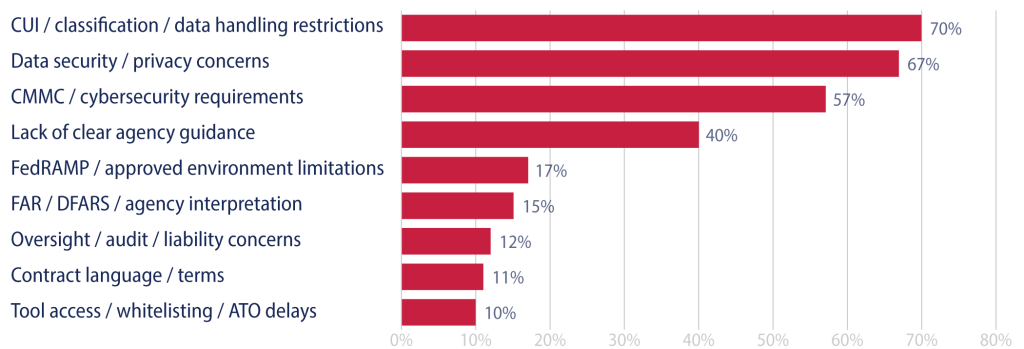
Figure 6 – What creates the most friction for AI use in federal vs. non-federal environments?
H.2 Policy, contracting, and governance ambiguity
What it covers: unclear rules, inconsistent interpretation across and within agencies, contract language, FAR and DFARS uncertainty, and general confusion about what is allowed and what is defensible.
Why it is separate: policy and contract uncertainty was the single largest scaling barrier in the survey at 54 of 102. The open-ended responses were more direct than the multiple choice. Respondents asked for clearer rules, approved lists, standard direction, and templates. One asked simply to “clarify and publish the rules so we know we aren’t breaking them.” Another asked for “a paint-by-numbers template that outlines policies and procedures for AI implementation.”
The inconsistency shows up at two levels. Between agencies, one may accept CMMC Level 2 certification as sufficient for the tools inside a contractor’s audited plan while another says specific tools do not meet its preferences. Within agencies, individual government employees give direction on tool use based on their own understanding, including program-level staff instructing contractors not to use tools the contractor is already certified for, sometimes without the authority to bind the contractor contractually. Training gaps on the government side compound it. Email and statement-of-work markings are the most common example, where material gets marked CUI without containing CUI.
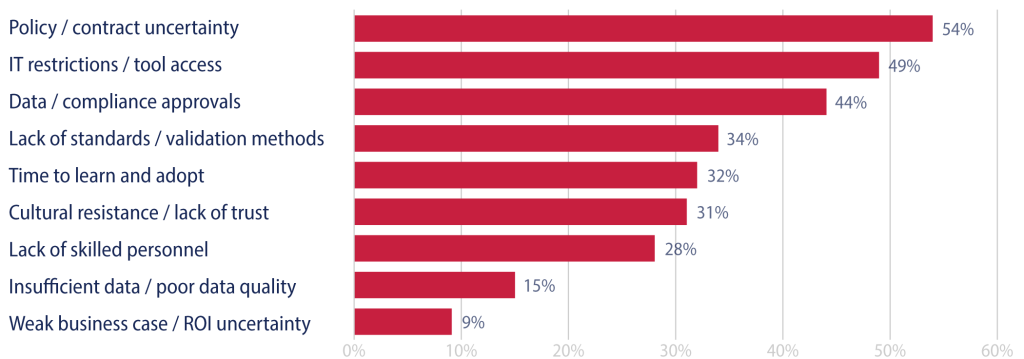
Figure 7 – Biggest barriers to scaling AI on federal projects
H.3 Tool access, approved environments, and technical admissibility
What it covers: whether the user can actually reach an acceptable tool or environment. Whitelisting, Authorization to Operate (ATO) delay, Federal Risk and Authorization Management Program (FedRAMP) limits, approved secure environments, and internal tool availability.
Why it is separate from data security: because a firm can be completely clear on what data it may touch and still have nowhere compliant to touch it. The survey separates them, and so should we. IT restrictions and tool access was the second largest scaling barrier at 53, and approved secure tools and environments was the single most requested enabler at 41, ahead of everything else on the list. Respondents feel this hurdle when they try to scale, not in daily work: tool access and ATO delays drew only 9 of 102 as a day-to-day friction point. The tools people use today work for the work they do today. The wall appears when they try to take that work into controlled environments.
The supply side is the constraint. Few AI tools have FedRAMP authorization available to industry, and most FedRAMP-authorized tools do not have AI capability. FedRAMP has prioritized AI cloud services under its 20x process since August 2025, which should ease supply over time. Government, meanwhile, has AI on its own networks. GenAI.mil now reaches about 1.7 million of DOW’s 3 million personnel, including credentialed contractors, but that access does not extend to an A/E firm’s own delivery environment. There is also limited visibility into which providers are pursuing authorization and whether AI will be part of what gets authorized, which makes it hard for a firm to plan around. Open-weight models running on infrastructure the organization controls belong in this conversation and are usually left out of it. They are a real option, particularly for organizations with a lot of restricted work, and they carry real cost: hosting and hardware cost, a capability gap against frontier models, a physical asset that has to be secured, and more day-to-day friction for the people using them.
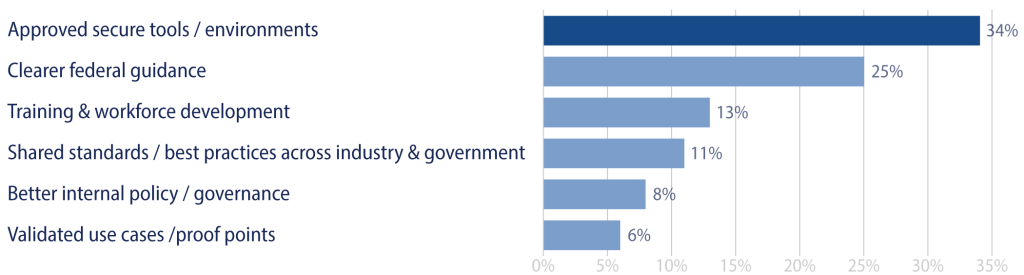
Figure 8 – What would most enable responsible AI adoption on federal projects?
Part II: Execution Hurdles
H.4 Validation, assurance, and defensibility
What it covers: accuracy, hallucinations, quality control (QC), auditability, traceability, standard of care, human review, and how AI-assisted work gets defended after the fact.
Why it is separate: accuracy and hallucinations was the top risk concern at 66 of 102, ahead of cybersecurity at 65 and data leakage at 60. Standard of care and liability at 33 and lack of auditability and traceability at 19 also appear, and lack of standards and validation methods was a top-tier scaling barrier at 31. That makes it a scaling barrier as well as a risk. Federal respondents felt it most: 85 percent named accuracy as a top risk, against 60 percent of industry.
The size of this hurdle depends almost entirely on the use case and on what happens if the output is wrong. Models are considerably better at explaining what they did, and the systems built around them increasingly tie citations to specific parts of an output. But as use moves from proposals toward design and engineering, the cost of a wrong answer rises faster than the tools improve. Several respondents described exactly this working in practice. One built a code compliance drawing review during design. Another loaded the CMMC and CUI regulations into a single grounded workspace so answers came from those documents rather than from the open internet and reported the answers were both faster and more reliable as a result.
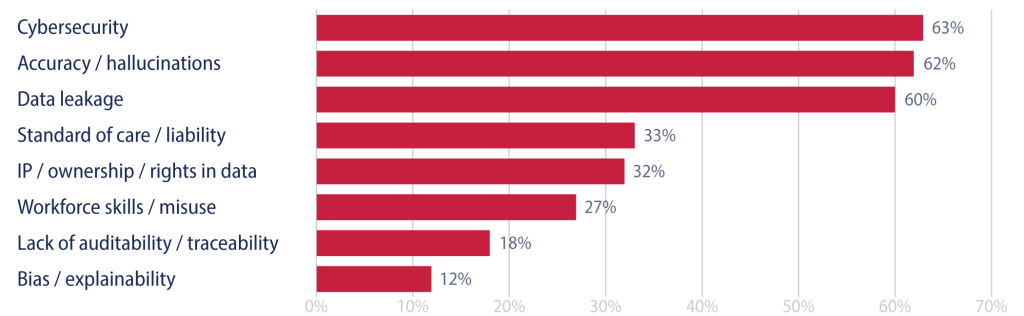
Figure 9 – Top AI risk concerns in a federal A/E/C context
H.5 Workforce capability, trust, and change readiness
What it covers: skills, training, cultural resistance, overtrust, undertrust, misuse, fear, shadow use, and readiness to use these tools appropriately in daily work.
Why it is separate: the people-side barriers are too large to treat as footnotes. Time to learn and adopt at 34, cultural resistance and lack of trust at 31, and lack of skilled personnel at 28 were all top-tier scaling barriers, and workforce skills and misuse appeared as a risk concern at 28. The pressure is highest where capacity is thinnest: federal respondents named lack of skilled personnel and time to learn at 45 percent each, and organizations of 250 or fewer employees named time to learn at 40 percent, against 24 percent for organizations over 1,000.
The core of this hurdle is change management of an unusual kind. At the same time you are asking people to change how they work, you may also be changing contract terms, IT infrastructure, skill requirements, hiring, and in some cases headcount, inside a paradigm where the ways work gets created and validated are themselves in flux.
It runs in both directions at once. Our clients are going through this, and as service providers we have to be able to work alongside them and help them through it if we want to be useful. We are going through exactly the same thing internally, sometimes with different mandates and different constraints but the same underlying problem. This came up in nearly every conversation behind this paper, on both sides of the table.
A/E/C has its own version of this. We are risk averse for good reason, given what we produce and the liability we carry. It also selects for people who like to find the best way to do something and then keep doing it that way. That instinct is an asset in most of our work. When the technology underneath changes every few months, it works against you.
One useful way to look at this, offered by a senior federal engineering leader in one of our conversations, is to plot the individual’s AI journey against the organization’s. The trouble comes from misalignment in either direction. When individuals are well ahead of the organization you get shadow use, data exposure, frustration, and eventually people leaving for organizations that let them work the way they want to work. When the organization is well ahead of its people you get fear, balking, and active refusal. Both are alignment problems. Training alone will not fix either one, and neither will a better tool.
That framing has held up. Two separate interviews in the SAME LDP capstone named the same failure point independently, one calling middle management the clay layer and a USACE senior executive calling it the frozen middle. His warning was specific: you should start at the top to set strategy and policy, but you have to get the middle to buy in, because if they do not like it they will find workarounds, and the workaround compromises the data. Shadow use is what happens when an organization has not brought that layer along.
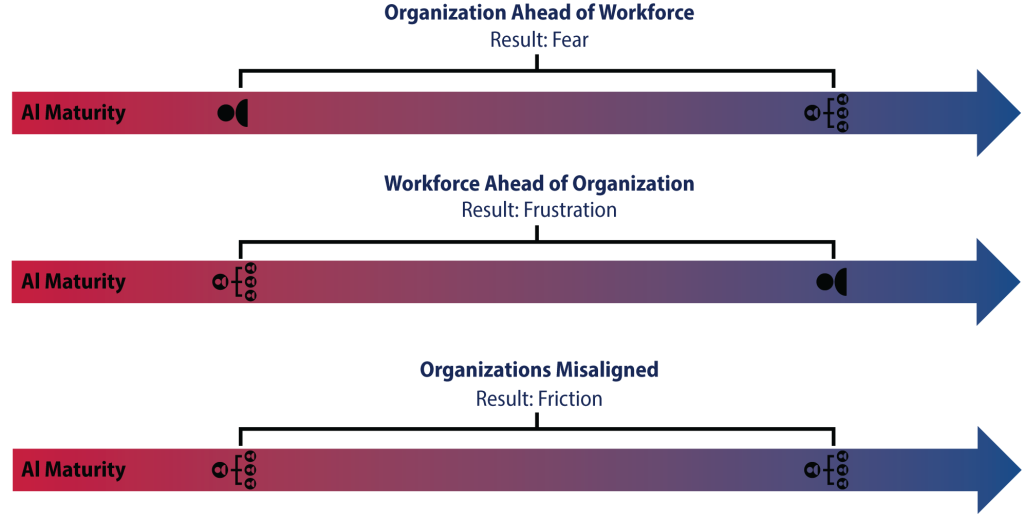
Figure 10 – Misalignment creates fear, frustration, and friction
H.6 Process integration and operating model fit
What it covers: whether AI can be embedded into how work is actually done. Workflow fit, handoffs, review chains, repeatability, and the move from pilot activity to governed operating practice.
Why it is separate: the survey shows use is already broad across administrative work, proposals, document review, program management support, contracting, compliance, design support, and coding. So the question is less whether AI is being used and more whether it can fit the operating model. One respondent said it plainly when asked what was hardest: moving from pilot stage to consistent usage.
Task-level use comes first, and that is fine. Once basic governance is in place, people will discover on their own what works and what does not. The harder part comes next. How do you move from individual task execution into repeatable workflows without creating validation and QC problems from uneven adoption?
Haphazard use, done differently by every person, creates explainability problems for your products and introduces errors while eroding the efficiency gains that justified the effort in the first place. The problem scales with organization size but it exists at any size above one person. In federal work it is worse, because contractual and data handling requirements mean inconsistency becomes exposure as well as inefficiency.
This is where this hurdle and the governance hurdles have to be worked in tandem. Consistent, explainable workflows and clear governance are each necessary, and neither one is sufficient on its own.
H.7 Resource capacity and organizational leverage
What it covers: the ability to absorb the work of adoption itself. Governance capacity, legal and compliance support, IT support, training bandwidth, affordability, vendor dependence, and how unevenly all of that is distributed by firm size.
Why it is separate: the sample spans organizations under 50 employees through organizations over 10,000, and the constraints are genuinely not the same. Organizations of 250 or fewer employees made up 45 percent of respondents. They were much less likely than organizations over 1,000 to report a formal AI policy (37 vs. 63 percent) and far more likely to describe their AI use as limited (45 vs. 16 percent). They do not have dedicated teams for governance, legal, training, or IT, and they told us so directly.
This hurdle is about the infrastructure that lets you deploy anything at all. You can know exactly what you need to do, you can have a critical mass of your people on board, and you can still stall because your technology stack cannot support it or your IT back end is not set up for it. Stalling there costs you twice, because it also confirms the doubts of everyone who was skeptical to begin with.
IT has to be funded for this, and the color of money changes. You may need to move budget out of operations and into IT even in a case where your net spend goes down. An organization that is not set up to handle that shift in where money flows will hit a wall that has nothing to do with technology.
Federal work adds a complication that commercial work does not have. You can generate real savings on a project and have no clear path to capture any part of that savings as margin. It is entirely possible to spend the time and effort to become more efficient and end up worse off for it, if the contract cannot flex, in a procurement environment where timelines are already compressed and the structure is rigid.
Small firms carry a version of this that is specific to them, and they were blunt about it. One wrote that “as a small business that is also striving to stay in compliance with CMMC requirements, we are struggling to deploy AI in a meaningful way.” Another asked for “affordable ways for a small business to deploy basic tools and remain in compliance,” adding that “businesses should not need to spend triple the standard cost for a basic service.” A third put it simply: “data protection meeting CMMC requirements is our largest concern.” The July 2026 suspension of CMMC Phase II gives small firms time, but the NIST SP 800-171 obligations underneath it remain, and it extends the uncertainty they have to plan around.
There is a structural version of this argument that goes past any single firm. Interviewees in the SAME LDP capstone repeatedly tied slow adoption to sector economics rather than to capability. One described the fundamental problem as the profit margin available to invest, contrasting A/E/C margins against sectors that can fund their own research and development. Another put it more bluntly: policy will lag, and economics will drive AI adoption. If that is right, clearing the permission problem is necessary but will not by itself move the market.
H.8 Data readiness, quality, and interoperability
What it covers: whether the data you have can actually be used. Quality, structure, standardization, ownership, provenance, interoperability across file formats and across organizations, and version control.
Why it is separate: This is a different question from whether you are permitted to touch the data. A firm that assumes its problem is permission will chase tool approval when the real constraint is that its data is spread across models, drawings, specifications, schedules, cost systems, PDFs, and several contractor environments that were never built to talk to each other. Approving a tool does not fix any of that.
The survey barely registers this hurdle: poor data quality ranked eighth of nine scaling barriers, at 15 of 102. We include it on the strength of the capstone interviews and our own conversations, and because we expect it to rise. Most current use is in proposals and document review, where the input is a document someone just wrote. Data readiness starts to bite when use moves into design, asset management, and delivery analytics.
In the SAME LDP capstone interviews, a USACE senior executive put it this way: the limiting condition is not the technology, the challenge is the data behind the conclusions being drawn. He put cleaning and processing that data at roughly 90 percent of the cost of implementation. Another interviewee described having the data but not knowing how to use it, and it not being in any shape AI could use.
In federal delivery environments, interoperability challenges are amplified because owners, primes, subconsultants, contractors, and technology platforms often hold different portions of the same project data in systems that were never designed to exchange information seamlessly.
Where organizations can start
We do not try to solve these hurdles here. But the survey makes a few starting moves clear, and the person we are writing to needs somewhere to start.
Segment your work before you do anything else
The most useful move available to most organizations is to stop treating federal work as one undifferentiated thing and sort it by what data it actually touches. If a portion of your federal work involves CUI and you do not want to go near it yet, do not go near it. Go solve the rest. There is a large amount of federal work that does not touch controlled information, and the market has already found it. Proposals and capture, document review, market research, and internal administrative work are where use is highest, and they are highest for a reason. Sixty-one respondents already use AI on federal proposal and capture support, and 60 on technical document review of federal work.
Do the easier work first, on purpose
You will learn what your people actually need, where your workflows break, what your validation process should look like, and what your IT constraints really are, on work where the downside of getting it wrong is small. Then you are in a position to take on a controlled environment, instead of starting there and stalling.
Write the policy anyway
Organizations with a formal policy were four times as likely as those without one to be actively using AI on federal delivery work. Policy alone will not get you there, but it is one of the strongest signals in the survey, and one of the few items on this list entirely inside your control. Fifteen respondents had none at all and 40 more said theirs was in progress. A basic AI use policy that tells your staff which tools are approved, what data may go where, and what has to be disclosed is a prerequisite for everything downstream of it, and it applies to government as much as industry: only a third of federal respondents reported a formal policy.
Build the ability to show your work
Whatever else you do, start building the habit of being able to show what was done: which tool, on what inputs, reviewed by whom, and what changed as a result. This is cheap to establish now and expensive to retrofit later. It is also what turns an eventual conversation with a contracting officer into a short one, and it is where the rules are heading: GSA’s proposed AI clause already calls for audit logging and notice of model changes.
What industry is asking government for
Some of what this survey surfaced is not something industry can fix on its own. These are the requests we heard most consistently, stated plainly so they can be picked up by people in a position to act on them.
- A clear answer on whether and how AI may be used on FCI, and whether a FedRAMP-type bar applies to it. GSA’s proposed AI clause is the first serious attempt at an answer for large language models. Industry needs to know whether other agencies will adopt it, adapt it, or write their own.
- Consistency across agencies. The most repeated request in the open-ended responses was for getting the same answer twice.
- A resolution of who may direct a contractor on tool use. Several respondents described receiving direction from government staff who could not contractually bind them and whose direction contradicted the contractor’s own certified plan.
- Reciprocity for certifications already earned. If a contractor is CMMC Level 2 certified, industry is asking whether that can carry through to the tools inside the audited plan without agency-by-agency customization. DOW’s January 2026 AI strategy commits to ATO reciprocity for its own AI capabilities; industry is asking for the same logic applied to contractor tools.
- More FedRAMP-authorized tools with AI capability available to industry, and visibility into which providers are pursuing authorization and whether AI will be in scope when they get it.
- A clearer picture of how government itself is using AI and what it expects from its A/E partners. Multiple respondents asked some version of the same question: how is the government using AI, and what is its comfort level with us doing the same?
- Shared, validated use cases. Federal respondents asked for proof points far more often than industry did. A jointly curated set of accepted use cases, each with its data class and required review steps, would serve both sides and give contracting staff something to point to.
Where this goes next
This paper defines the problem and deliberately stops there. Solutions in this space get specific in a way that one paper cannot cover. What it takes to make an AI-assisted deliverable defensible has almost nothing in common with what it takes to run a change management program, which has almost nothing in common with what it takes to be compliant. Those are three different papers and three different sets of authors.
Some of what is in here does not have an answer yet, and we should say that out loud rather than dress it up. Government partners have told us they want to know what industry is running into, and several of these hurdles are things they did not know were hurdles. Naming them is the useful part.
What the AI Working Group will do next
This paper names the hurdles. The AI Working Group’s next work is aimed at moving them, starting with the ones this survey says matter most.
- Publish the data governance companion paper. Data Governance for AI: A Checklist for Federal Planning, Design, and Construction Teams takes on the permission hurdles (5.1 through 5.3) in depth: data classification, FCI and CUI handling, CMMC, and compliant deployment environments. It will reflect the outcome of the CMMC reform review and the status of GSA’s AI clause.
- Build a shared library of validated use cases. Federal respondents asked for proof points far more often than industry did. The AI Working Group is building a use case repository for SAME members. Each case will be tagged by the class of data it touches (public, FCI, or CUI) and the review it requires, so a contracting officer and a project manager can point to the same example.
- Develop guidance to lower the execution hurdles.
- Measure again. We intend to repeat the survey in 2027 with the same core questions and a larger federal sample, so the next paper can measure movement instead of describing a single point in time.
To contribute a use case, volunteer as an author, or join the working group, visit the AI Working Group on SAME Engage
Appendix 1: References and Acronyms
| Term | Meaning |
|---|---|
| A/E/C | Architecture, engineering, and construction |
| AI | Artificial intelligence |
| ATO | Authority to Operate |
| CMMC | Cybersecurity Maturity Model Certification |
| CUI | Controlled unclassified information |
| DFARS | Defense Federal Acquisition Regulation Supplement |
| DOW | Department of War |
| ERDC | Engineer Research and Development Center |
| FAR | Federal Acquisition Regulation |
| FCI | Federal contract information |
| FedRAMP | Federal Risk and Authorization Management Program |
| GSA | General Services Administration |
| LDP | Leader Development Program |
| LLM | Large language model |
| NAVFAC | Naval Facilities Engineering Systems Command |
| NIST | National Institute of Standards and Technology |
| QC | Quality control |
| SAME | Society of American Military Engineers |
| USACE | U.S. Army Corps of Engineers |
Appendix 2: Acknowledgments
Lead Author
Zachary Pesicka, P.E., PMP – WSP
Contributing Authors
Pooja Jain – Innov8 Consulting
Michael Ramos – Raymond Global Inc.
Contributors and Reviewers
- Shirley Albritton – NIBS
- Michele Atkinson – Calvary Consulting
- Marcus Farquhar – WSP
- Stephen Friar – Hensel Phelps
- Jay Kline – NIBS
- Alyssa Lapan
- Victoria Mechtly – GFT
- Thai Nyugen – Hensen Phelps
- Steve Price – Stantec
SAME AI Working Group Members
- Pooja Jain – Innov8 Consulting (AI Working Group Chair)
- Lt. Cdr. Karl Coulson, P.E., CEC, USN – U.S. Navy
- Cdr. Timothy Dahms, P.E., CEC, USN – NAVFAC
- Ben Graf – Matrix Design Group
- Alyssa Lapan
- Benjamin Matthews, P.E., F.SAME – AtkinsRealis
- Victoria Mechtly – GFT
- Thai Nyugen – Hensen Phelps
- Matthew Parks – USACE
- Zachary Pesicka, P.E., PMP – WSP
- Jonathan Petry, AIA, PMP, LEED AP BD+C – Office of the Secretary of War
- Michael Ramos – Raymond Global Inc.
- Dylan Spriggs – Black & Veatch Special Projects Corp.
- Greg Tuite, P.E., PMP – Gallant Project Solutions
- F. Charlene Watson – Pond, an Enercon Company
This paper was developed through a collaborative effort of the SAME Artificial Intelligence Working Group. Zachary Pesicka led the drafting, with written contributions from Pooja Jain and Michael Ramos. The contributors and reviewers provided substantive input through working discussions, challenged assumptions, and helped refine the paper’s framing and recommendations.
About SAME
Established in 1920, SAME unites public and private sector professionals from across the A/E/C and national security communities. With more than 22,000 members and over 100 Posts worldwide, SAME strengthens partnerships, develops leaders, and delivers solutions in support of national security. Learn more at same.org.
About SAME Perspectives
SAME Perspectives are knowledge products researched and authored by subject matter experts within SAME. The reports are intended to inform and educate stakeholders, professionals, and decision-makers within the federal A/E/C sector and joint engineering community on topics and issues of importance and interest to national security.