
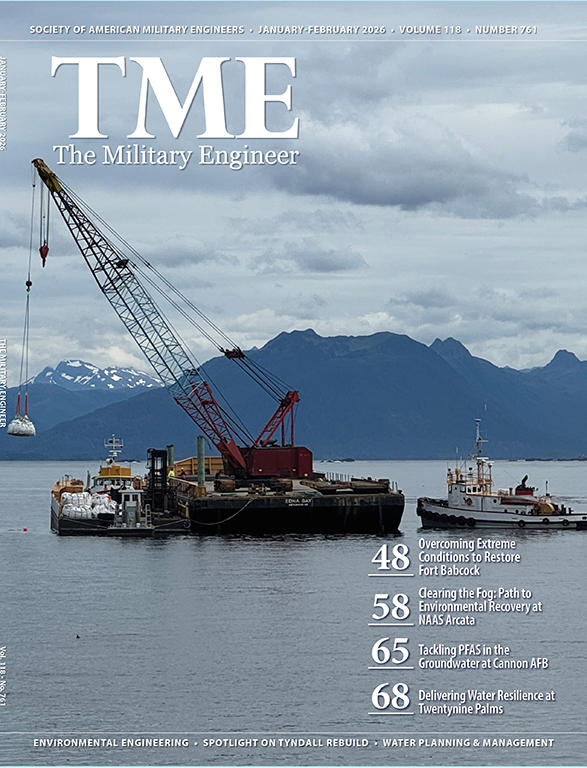
Subscribe toTME
SAME membership includes an annual print subscription to TME—The Military Engineer, a bi-monthly magazine covering issues of importance to the architectural, engineering, construction and environmental community. To receive this valuable publication as a part of your membership, join SAME now.
Non-members can subscribe to the print version of TME by contacting member@same.org, and referencing “TME Subscription.” Annual subscription rates, include mailing costs, are listed below.
TME subscriptions are mailed to addresses within the United States and Canada only; no overseas subscriptions available. If you live overseas, you can receive the print version of TME by becoming a member of SAME.
Individual Rates
| Second Class Mail | One Year | Two Years | Three Years |
|---|---|---|---|
| U.S. and Canada | $85 | $170 | $255 |
Subscriptions are mailed by second class mail to addresses in the United States (including territories and APO/FPO addresses) and Canada.
Agency Discounts
Agencies requesting subscriptions on behalf of libraries, installations or organizations may take advantage of SAME Agency Discount Rates.
Agencies interested in receiving the SAME Agency Discount Rate may send a check to SAME Subscriptions, 1420 King Street, Suite 100, Alexandria, VA 22314, along with the following information:
- Billing Information: contact name, address, phone, fax and e-mail;
- Shipping Information: subscriber name, mailing address, phone and fax numbers and e-mail address.
| Second Class Mail | One Year | Two Years |
|---|---|---|
| U.S. and Canada | $76.50 | $153 |
Bulk Subscriptions
10% off Bulk Subscriptions
NOTE: Bulk Subscription discounts are available for orders of more than five magazines that are mailed to the same address. Discounted prices noted below are per subscription. Bulk subscriptions must be renewed annually. [Bulk subscription discounts may not be applied to any other discount program or offer.]
Subscriptions normally begin with the next issue. Missing issues must be claimed within 120 days of issue date and will be supplied subject to availability.
For answers to questions regarding a subscription, or to claim a missing issue, email member@same.org and reference TME subscription. All claims for missing issues must be made in writing within 120 days of the issue date.

About TME
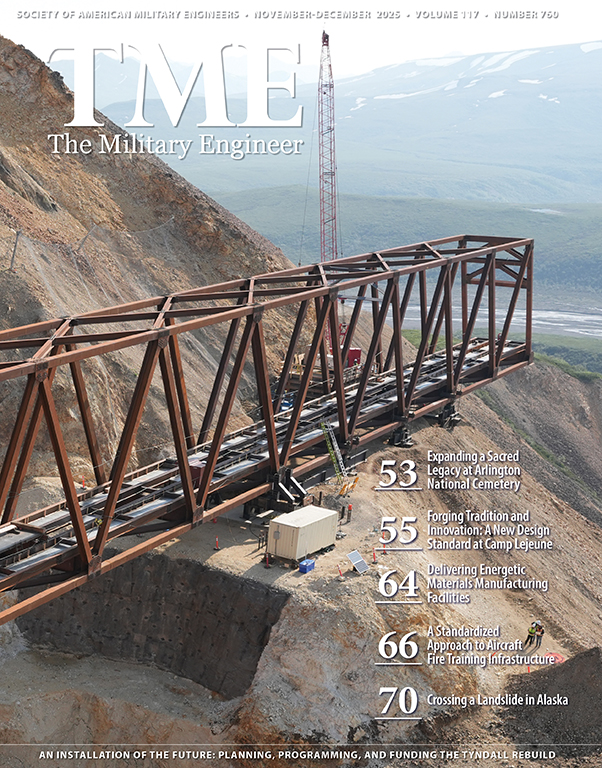
Since 1920, The Military Engineer (TME) has been the leading voice championing the contributions, achievements, and legacy of military engineers and those aligned with ensuring the national security of the United States. TME is an award-winning bi-monthly publication. Each issue includes technical articles authored by subject matter experts throughout military, government, industry, and academia; stories and features from across SAME; and news and updates related to engineering, energy, resilience, technology, acquisition, and other subjects aligned with national security and STEM.

Recent Articles
-

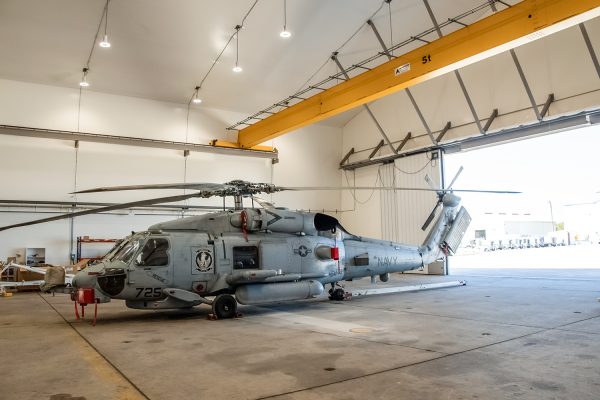
Expediting Delivery with Fabric Buildings
In a constrained supply chain environment with rapid deployment needs, installations such as Naval Station Rota, Spain, have leveraged rigid-frame fabric buildings for their quicker lead time, flexible design, and durable construction. -

A Future-Forward Rotary Wing Maintenance Complex
The Roy Blunt Aviation Logistics Facility features an infinitely reconfigurable design, allowing the Missouri Army National Guard to provide effective airframe maintenance and repair services in its work with units across 14 states. -
Port Clearance Operations in Constrained Environments
The U.S. Army’s 7th Engineer Dive Detachment continues to push forward what is possible when performing port damage repairs, recently having undertaken an operation to clear a vital port in Basco, Philippines, which endured the constraints of an austere environment under environmental protections that barred the use of demolitions. -
Professional Licensure
The National Council of Examiners for Engineering and Surveying (NCEES) is a nonprofit organization dedicated to advancing professional licensure for engineers and surveyors.