Building a Partnership to Guide an Historic Rebuild
By Col. Robert Bartlow Jr., M.SAME, USAF
As the focus at Tyndall AFB after the devastation caused by Hurricane Michael shifted from recovery to rebuild, steadfast vision, partnership, and leadership were equally essential in navigating logistical hurdles across the various teams involved in managing the monumental program.
Editor’s Note: This is the third in a series of articles detailing the recovery and rebuild of Tyndall AFB following Hurricane Michael, which struck the Florida Panhandle on Oct. 10, 2018. The multi-part feature covers the engineering challenges encountered by the U.S. Air Force, U.S. Army Corps of Engineers, and multiple private sector A-E firms and contractors to not only restore the base to operational status, but to transform it into the “Installation of the Future.”
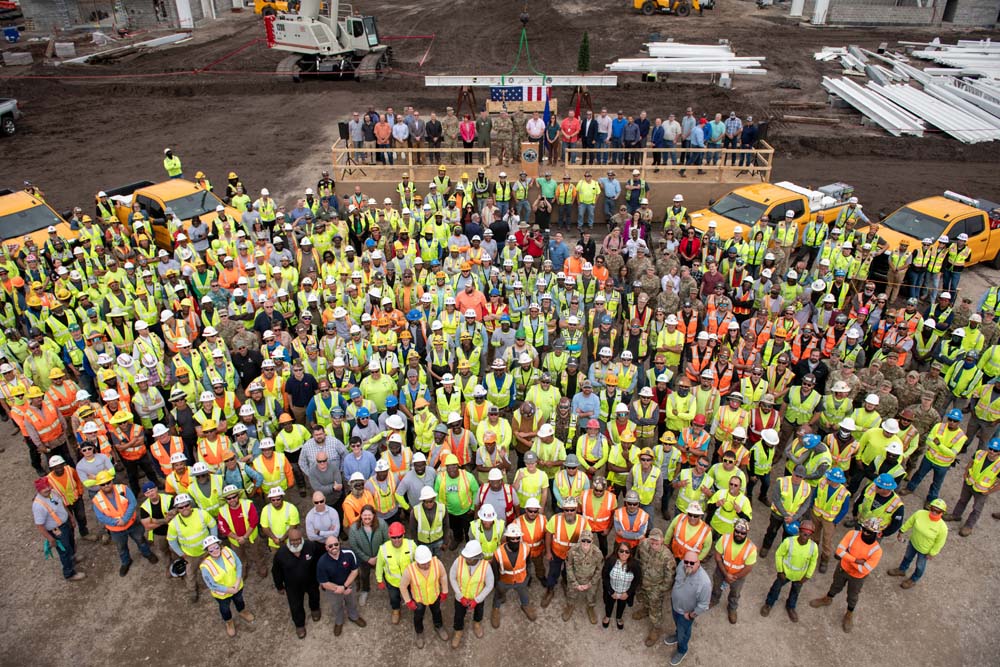
From the early days following the destruction brought by Hurricane Michael to Tyndall AFB, Fla., leadership with the U.S. Air Force recognized that the recovery and rebuild was beyond the installation’s diminished manpower and resources. It would require a team effort between the 325th Fighter Wing, the Air Force Civil Engineer Center’s Program Management Office (PMO), the U.S. Army Corps of Engineers (USACE), and thousands of contractor personnel.
By late 2018, Col. Brian Laidlaw, USAF, Commander, 325th Fighter Wing, recognized the strategic need to address both the immediate recovery requirements and long-term facility solutions necessary for the base’s revitalization to ensure Tyndall could effectively fulfill its mission.
Facility Evaluations
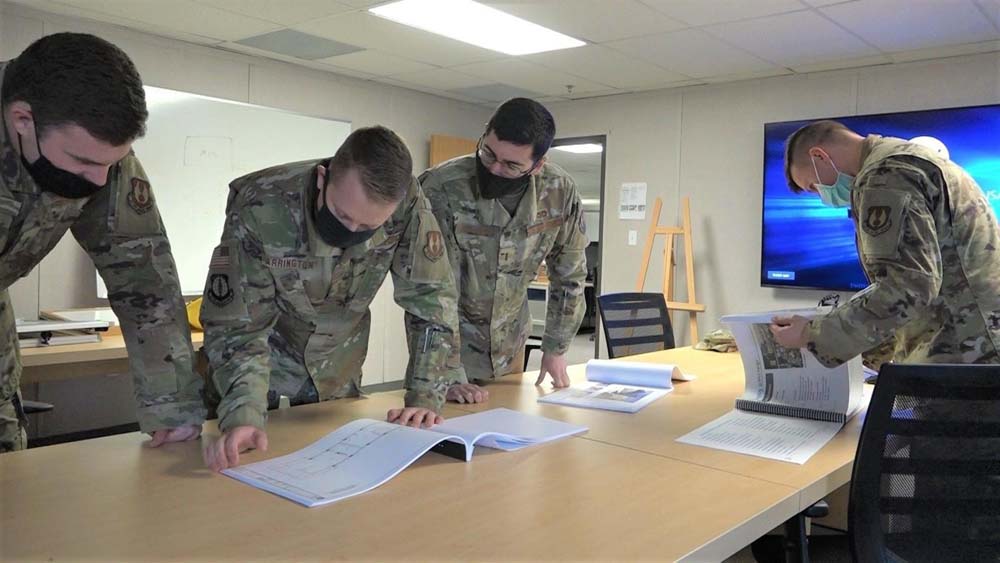
A pivotal step in the recovery was establishing a systematic Facility Disposition Review (FDR). This process allowed for a rigorous assessment of the hundreds of buildings at Tyndall, categorizing them as red, yellow, or green based on their structural integrity and usability. Col. Scott Matthews, USAF, PMO Director, emphasized the importance of having a systematic process to evaluate each building that ensured decisions were documented and defensible.
In January 2019, Tyndall’s Facility Utilization Board began the FDR, approving the first 47 buildings for repair and another 82 for demolition. This provided a structured and accountable approach to managing the base’s facilities moving forward.
In addition to military construction, Tyndall faced numerous demolition and repair initiatives through Facility Sustainment, Restoration and Modernization (FSRM), managed by the Air Force Civil Engineer Center and executed by the 325th Civil Engineer Squadron and USACE Mobile District. In FY2018, Tyndall’s pre-storm FSRM budget was a modest $31 million, which would prove significantly insufficient given the damage. Initial estimates for just the FSRM work in FY2019 were $200 million.
To address this shortfall, the PMO issued a Statement of Work to Jacobs in June 2019 to conduct site surveys and prepare contract packages for the repair and restoration of facilities that could be salvaged. By the conclusion of FY2019, Tyndall and USACE had obligated $338 million for the first 84 projects, far surpassing the typical operational workload. The 325th Civil Engineer Squadron prioritized the FSRM projects into categories based on urgency and impact, ensuring mission-critical efforts were executed first.
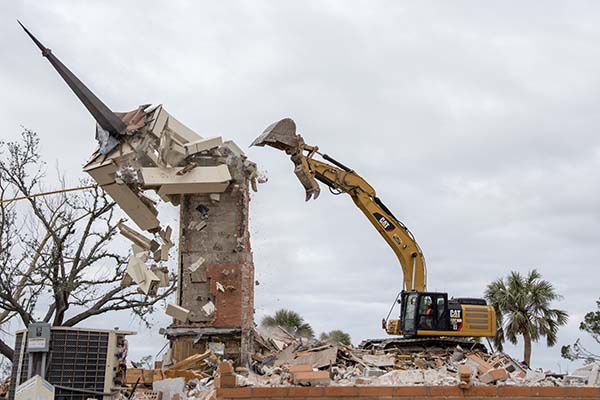
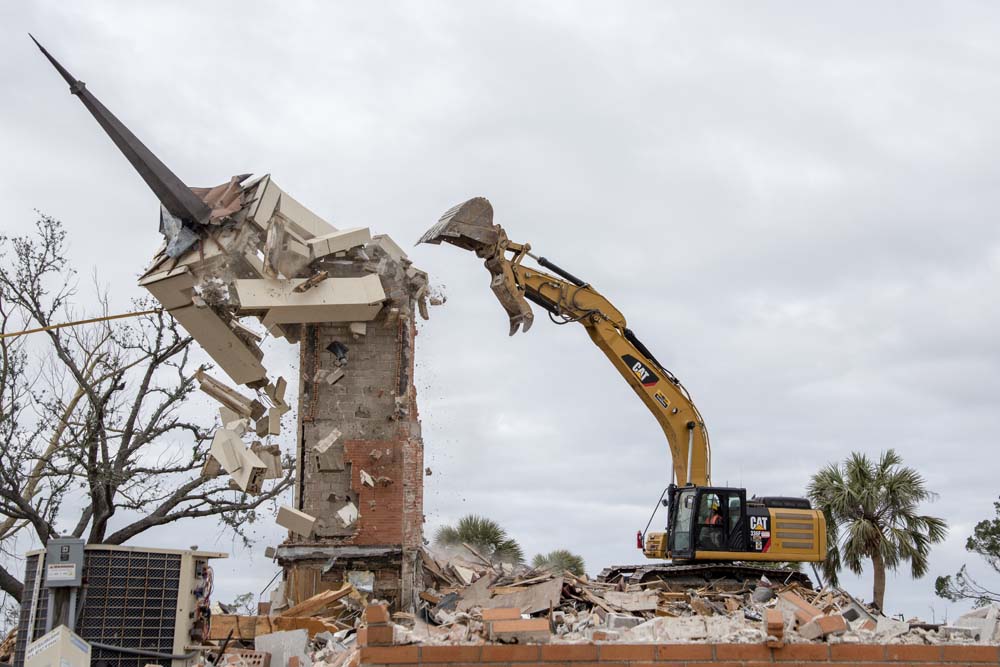
Together, the 325th Civil Engineer Squadron and PMO initiated a long-term program for the demolition of facilities beyond repair and to make room for future construction. This process included navigating environmental regulations and historic preservation concerns that complicated the workload. By 2024, a total of 594 buildings and other structures at Tyndall had been demolished.
Collaborative Spirit
Early in the rebuild, collaboration and partnership were identified as critical to program success. The concept of utilizing industry days emerged as a strategic initiative to engage with contractors and gather insights to enhance the forecasted requirements.
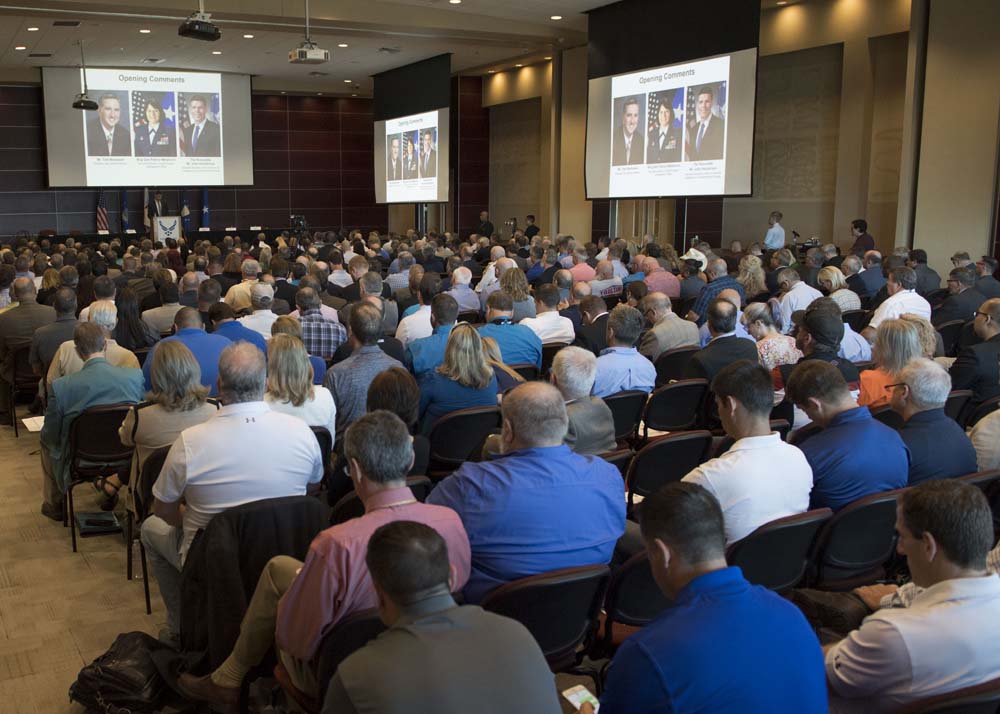
Tyndall’s first industry day, held in January 2019 in Panama City, attracted more than 450 participants from industry eager to engage with Air Force and USACE leaders and explore opportunities for collaboration. At the event, PMO leaders presented their “Bold Way Forward” and emphasized the necessity of innovation and teamwork. A pair of subsequent industry days would draw significant participation from members of the private sector, fostering a sense of community and collaborative spirit that was essential for success.
At the second industry day, Col. Brent Hyden, USAF, who succeeded Matthews as PMO Director, unveiled the acquisition strategy developed over the previous weeks: balancing the needs of both small firms and large businesses.
Tyndall’s first industry day, held in January 2019 in Panama City, attracted more than 450 participants from industry eager to engage with Air Force and USACE leaders and explore opportunities for collaboration.
Based on the planning work of Amy Vandeveer, her team from the Air Force Civil Engineer Center, along with AECOM and planners with the 325th Civil Engineer Squadron, the rebuild program was packaged into 12 manageable zones for design and construction. This decision streamlined the contracting process and allowed for focused and efficient management of resources. An acquisition planning team from USACE and the Air Force then made recommendations based on extensive market research to pursue design-build contracts for the various zones because of the need to award contracts as quickly as possible.
However, this approach faced several challenges. The regional economy was already saturated by hurricane recovery work in the commercial sector, and the demand for labor and materials across the Gulf Coast was only expected to grow with the added $3 billion worth of construction demand at Tyndall. The time to design and build these projects was much more compressed than the standard schedule. Funding for the program was still unclear, with the total scope still being developed. And finally, the work was set to be accomplished while Tyndall maintained its normal pace of flying operations. Eventually, the Tyndall Rebuild Program would include 44 military construction projects, which encompassed approximately 120 different facilities across the base, as well as more than 250 FSRM projects.
U.S. Air Force photo by Senior Airman Javier Alvarez.
Onsite Coordination. Personnel with the base and PMO also realized they faced challenges with the basic logistics of handling a contractor workforce that was expected to approach 4,000 personnel at its peak. Where would they live, eat, and shop in a hurricane devastated area? Would each contractor have to be cleared by the 325th Security Forces Squadron? How would they enter and depart Tyndall through tightly controlled gates without causing lengthy traffic delays that could potentially interfere with normal base operations and construction work? Where would the contractors store their materials? These were just some of the issues facing the team as the contractor workforce grew in size. To meet these challenges, a Construction Logistics Working Group was created, which continues to address these and other construction-related issues to this day.
Despite the best planning efforts, unexpected events occurred that resulted in delays to program execution. First, as if a Category 5 Hurricane was not bad enough, Tyndall experienced an F1 tornado on Jan. 19, 2019, further damaging 10 buildings while hurricane repair work was underway. This occurred during two months of much higher-than-average rainfall, with more than 19-in falling between the months of December 2018 and January 2019. The adverse weather conditions not only delayed repairs but also posed significant risks to the many temporary structures erected in the aftermath of Michael. High winds and heavy rain wreaked havoc on the blue-tarped temporary roof coverings installed as expedient roof repairs to prevent further damage in recoverable facilities. These conditions often resulted in additional interior damage from water infiltration, necessitating mold remediation and further repairs.
Unexpected Complications. The second complicating factor to the rebuild schedule was the arrival of the coronavirus in early 2020. Its onset and the resultant societal restrictions ended up slowing, and in some cases halting, the repair and demolition work while delaying planning efforts for the extensive construction program. The project delivery teams all had to adjust to the new remote work reality.
The pandemic also led to several long-term impacts, with supply chain logistical delays in particular slowing the delivery of construction materials and electronic equipment.
Eventually, the Tyndall Rebuild Program would include 44 military construction projects, which encompassed approximately 120 different facilities across the base, as well as more than 250 FSRM projects.
Staffed for Success
Because of the temporary nature of the PMO, manning the organization was a constant challenge. Most of the early staffing was by personnel temporarily assigned from active duty, Guard, or Reserve units. Eventually, several temporary civilian term positions were established, providing some stability and supporting Col. Travis Leighton, USAF, the first permanently assigned PMO Director, with a handful of additional permanently assigned military members. Eventually, an Advisory and Assistance Services Contract was awarded to BB&E in 2019, bringing much needed expertise not otherwise available to the PMO.
A uniquely innovative approach to solving the manning issue was the “Tyndall Hands” program established in 2020 by then-Brig. Gen. John Allen, USAF, Commander, Air Force Civil Engineer Center. This innovation brought five newly commissioned civil engineering officers to rotate between positions in the PMO and the 325th Civil Engineer Squadron. The objective was to provide much needed manpower while also building a cadre of junior officers who would gain extensive military construction experience.
As the Tyndall rebuilding program matured in early 2021, the PMO underwent a major restructuring to resolve persistent authority and organizational challenges and give it some permanence. Initially established as a direct report entity, the PMO lacked the statutory authority to oversee military construction projects, which instead rested with the Air Force Civil Engineer Center’s Facility Engineering Directorate. This structural gap created complications as the PMO transitioned from a temporary, ad hoc team to a more enduring body. Also, securing long-term civilian staffing and navigating a complex approval process became difficult and undermined its ability to manage large-scale reconstruction efforts.
Leadership recognized an opportunity to optimize the PMO structure for Tyndall and combine the reconstruction effort with recovery work at two other installations: Offutt AFB outside of Omaha, Neb., which had one-third of the base flood in March 2019 and was in the midst of a massive recovery effort; and Joint Base Langley-Eustis, Va., which was the new home for Tyndall’s former F-22 fleet and required three military construction projects to accommodate the additional aircraft. Centralizing project management at all three locations under a single organization would create coherence and efficiency, due in large part to Congress electing to fund construction efforts at the three locations under a single special appropriation.
The decision to consolidate management of the three programs resulted in the PMO transitioning into the Natural Disaster Recovery Division under the Facility Engineering Directorate on April 7, 2021.
Overall, the restructuring of the PMO and its transition into the Natural Disaster Recovery Division demonstrated the Air Force’s commitment to efficiency, resilience, and mission readiness. Through strategic planning, statutory alignment, and collaborative execution, the Natural Disaster Recovery Division was postured to manage the complex construction program critical to the future of Tyndall AFB.
Becoming the Standard
The journey to rebuild Tyndall following Hurricane Michael showcases a narrative of resilience, strategic leadership, a commitment to innovation, as well as simultaneously both patience and a sense of urgency.
Through a concerted partnership involving military leaders, contractors, and the local community, the base continues moving toward becoming a benchmark for future installations.
Col. Robert Bartlow Jr., M.SAME, USAF, is Chief of the Natural Disaster Recovery Division, Air Force Civil Engineer Center, Tyndall AFB, Fla.; robert.bartlow@us.af.mil.

Christine Walker, Public Affairs, AFCEC Natural Disaster Recovery Division, contributed to this article.
Published in the January-February 2026 issue of The Military Engineer
Check Out Related Articles From TME
-

Innovative PFAS Remediation at Camp Grayling
For project stakeholders and remediation managers confronted with PFAS, Regenesis demonstrates the efficacy of using Regenesis’ PlumeStop® colloidal activated carbon (CAC) at Camp Grayling, Michigan. -
A Standardized Approach to Aircraft Fire Training Infrastructure
To support enterprise-wide airmen readiness, the U.S. Air Force is modernizing its standard design for aircraft fire training facilities—introducing digital controls, dual-fuel systems, and PFAS-conscious infrastructure. -
Delivering Energetic Materials Manufacturing Facilities
Designing and constructing facilities that manufacture, process, handle, or store explosives and energetic materials present some of the most challenging defense projects—requiring technical experience, strict safety protocols, and a comprehensive understanding of regulatory frameworks. -
Forging Tradition and Innovation: A New Design Standard at Camp Lejeune
The II MEF Headquarters at Camp Lejeune blends Georgian Revival architecture with modern sustainability—delivering durability, efficiency, and precision that meets contemporary functional requirements while honoring heritage. -

Balancing Efficiency and Fiscal Responsibility
The continuing contracts clause offers the U.S. Army Corps of Engineers a way to improve project delivery and enhance fiscal responsibility by aligning funding with project execution. -
Next Steps for Digital Twin Development
U.S. Forces Japan is laying the groundwork for future integration of digital twin technology in order to validate and collect data that will offer comprehensive insights into utility conditions at installations and enhance overall decision-making, efficiency, and resilience.