Building Partnerships and Warrior Mindsets
By Capt. Andy Trossen, USMC
The multi-year construction and engineering missions conducted by Engineer Services Company, Combat Logistics Battalion 25, Marine Corps Forces Reserve, through the Department of Defense’s Innovative Readiness Training are significantly enhancing military capabilities and bolstering force readiness while providing vital support to underserved communities across the United States.
By providing a training environment where military readiness and community transformation mutually benefit, the Innovative Readiness Training (IRT) is a highly effective Defense Department initiative giving military units opportunities to sharpen their skills while helping fellow citizens. For engineers with the U.S. Marine Corps, these missions are more than exercises: They are proving grounds that reinforce the warrior mindset and prepare troops for what lies ahead.
Secretary of Defense Pete Hegseth has emphasized that winning the next war will require seamless cooperation among all military branches—across land, air, sea, space, and cyber. IRT helps bring that vision to life by placing servicemembers in real-world scenarios. Joint coordination and adaptability are essential as it exposes junior leaders to that environment. IRT assignments transform local infrastructure needs into practical training, helping Marines build confidence and leadership for future fights.
From Indiana and Missouri to West Virginia and beyond, the program showcases how Marines such as those with Combat Logistics Battalion 25’s Engineer Services Company (ESC) maintain readiness. The efforts strengthen teams, deepen civil-military trust, and leave behind infrastructure that local communities genuinely need.
Strategic Framework
IRT is guided by Title 10, U.S. Code, Section 2012, which authorizes military units to support civilian projects as long as they improve readiness and do not cost the Defense Department extra money. Similarly, Department of Defense Instruction 1100.24 outlines the program’s structure, from project eligibility to accountability.
All branches of the U.S. military are tasked with maintaining force readiness and operational proficiency. IRT offers a powerful tool to meet those objectives through hands-on, service-based projects that build capability while directly benefiting local communities. Whether conducting vertical construction, providing medical care, or supporting logistical operations, these missions expose servicemembers to complex, real-world environments that enhance their ability to operate under challenging conditions.
Units from all branches have leveraged IRT to meet mission-essential task requirements, improve cohesion, and contribute to national resilience. The initiative continues as a cornerstone of interservice collaboration and a cost-effective solution to meet simultaneous defense and civil support goals.
Value All Over
ESC has completed IRT missions in Indiana, Missouri, and West Virginia, with another upcoming project in Bitterroot, Montana and others being planned. Every IRT opportunity is a training ground for Marine engineers—teaching them how to work under pressure and build essential skills they will use in combat operations.
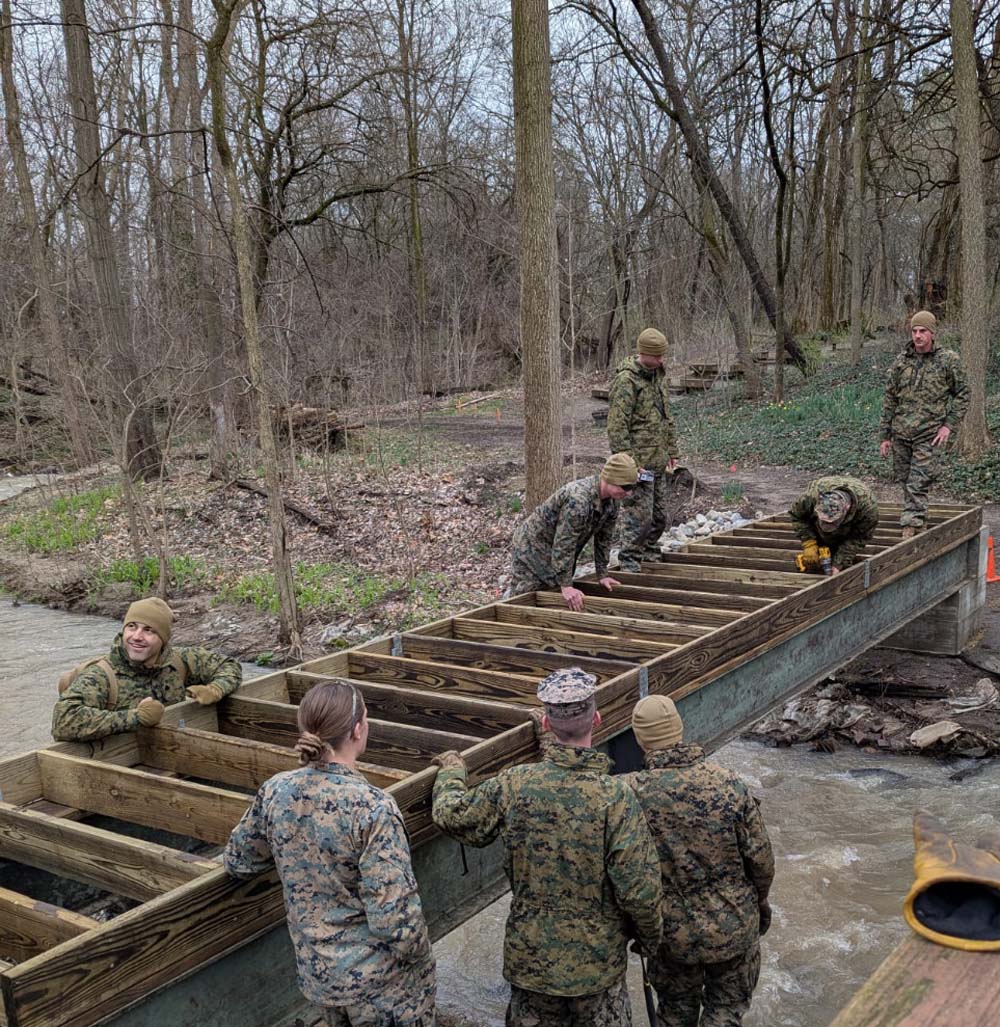
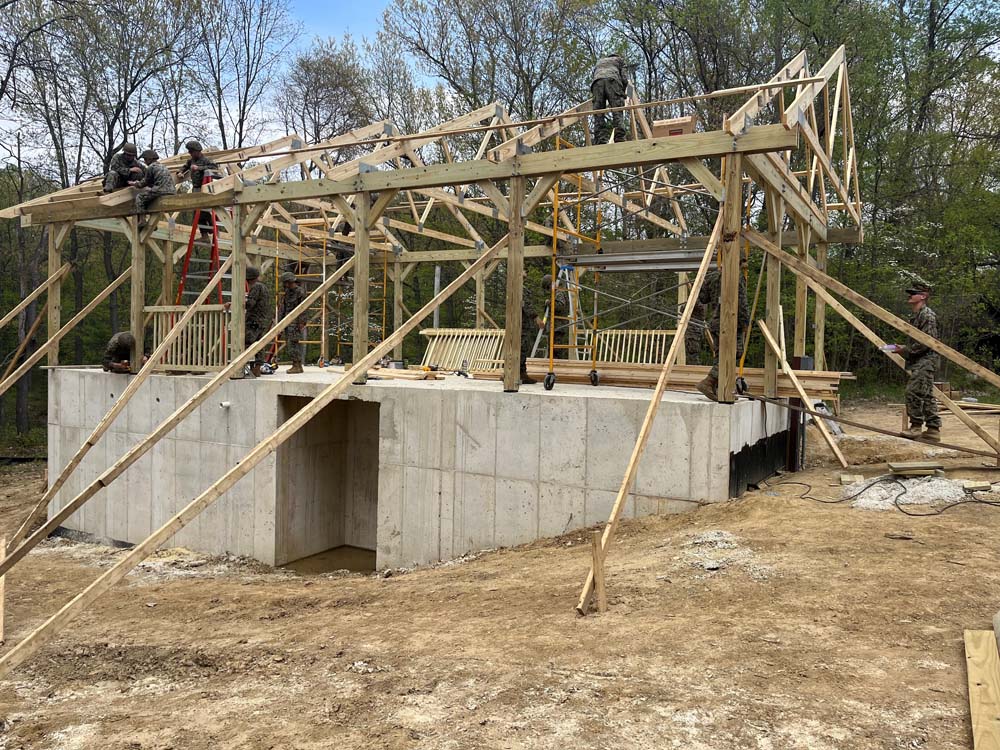
Camp Topenebee, Ind. At Camp Topenebee in South Bend, Ind., ESC took on a multi-year mission through IRT. In 2022, the Marines built three federal-grade storm shelters by digging footings, pouring concrete, and laying utilities. In 2023, the focus shifted to vertical work, including framing and roofing. By 2024, the team moved into reconstructing rifle and archery ranges. All of this was completed during drill weekends and an annual training event.
ESC’s performance elevated its reputation within IRT and Marine Crops Forces Reserve and led to its selection for more complex joint projects and international exercises. The unit participated in OBANGAME EXPRESS 25 (Sao Tome and Senegal) and Latvia while supporting the 507th Engineer Battalion of the Michigan National Guard. These high-visibility assignments benefited retention and allowed Marines to see the value of their work in and out of uniform.
Otterville, Mo. Due to the standout work at Camp Topenebee, ESC was invited to support a mission in Otterville, Mo., led by Landing Support Company, Combat Logistics Regiment 45. While ESC’s participation in this IRT was limited, it helped demonstrate the overall value of interoperability. The Marines moved more than 51,000-yd³ of ground and installed over 1,000-ft of drainage, using GPS-enabled equipment to guide their layout.
Though smaller in scope, ESC’s role boosted its visibility with higher headquarters. These touchpoints increased the tempo of future missions and strengthened morale. Importantly, IRT provided access to off-site training that normally requires layers of approval, streamlining impactful readiness events.
IRT heavily depends on the services of environmental and safety offices to screen and approve projects alongside federal organization such as the U.S. Fish & Wildlife Service. The project in Otterville eliminated more than $1 million in contractor costs and boosted the local economy. Area businesses benefited from spending by the Marines while in town, and residents saw firsthand the military’s capabilities (although it is important that Marines do not rely on local infrastructure for basic needs during projects, as to not place an undue burden on the community).
Stonewall Resort, W.V. At Stonewall Resort State Park, W.V., Marines supported infrastructure upgrades through technical and engineering tasks. Working with local contractors, personnel assisted with erosion control, grading, and site development while learning from regional construction practices.
ESC’s role made a lasting impact. The unit provided engineering support, cleared trees, and helped with maintenance. In addition, the Marines repaired a pontoon boat—restoring key transportation and showcasing their mechanical skills.
Broad Training Benefits
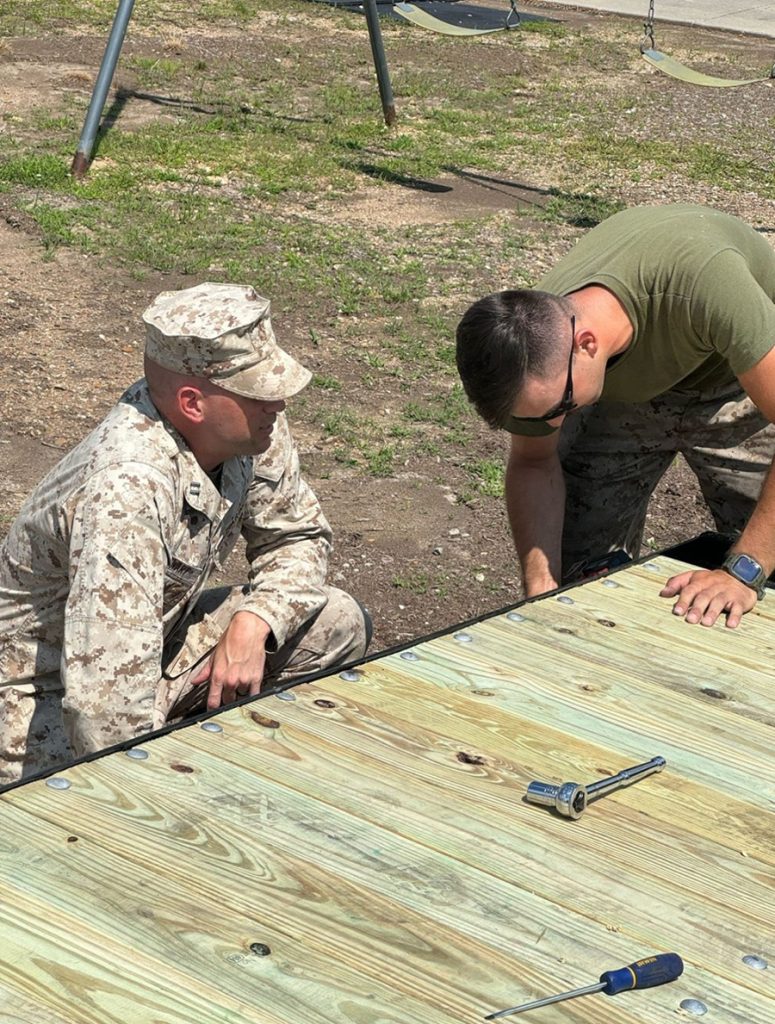
Participation in IRTs has reinforced ESC’s value in joint missions. Exposure to off-site interagency coordination has allowed the Marines to expand their skills in unfamiliar environments. The program’s framework often turns what could be logistical challenges into multi-layered training opportunities.
In addition to the technical skills being developed, leadership skills are also being grown through the opportunities for noncommissioned officers to lead crews and manage logistics. These grounded experiences build confidence and inspire continued service and mentorship of the next cadre of leaders.
IRT missions carry many benefits for the local community. Projects offer infrastructure and recreational assets that most of the jurisdictions could not otherwise afford. These partnerships connect public needs with military readiness and build trust and local pride. Importantly, servicemembers are able to directly see the positive outcomes of their efforts among fellow citizens, which supports retention and morale across the ranks.
Preparing For Tomorrow
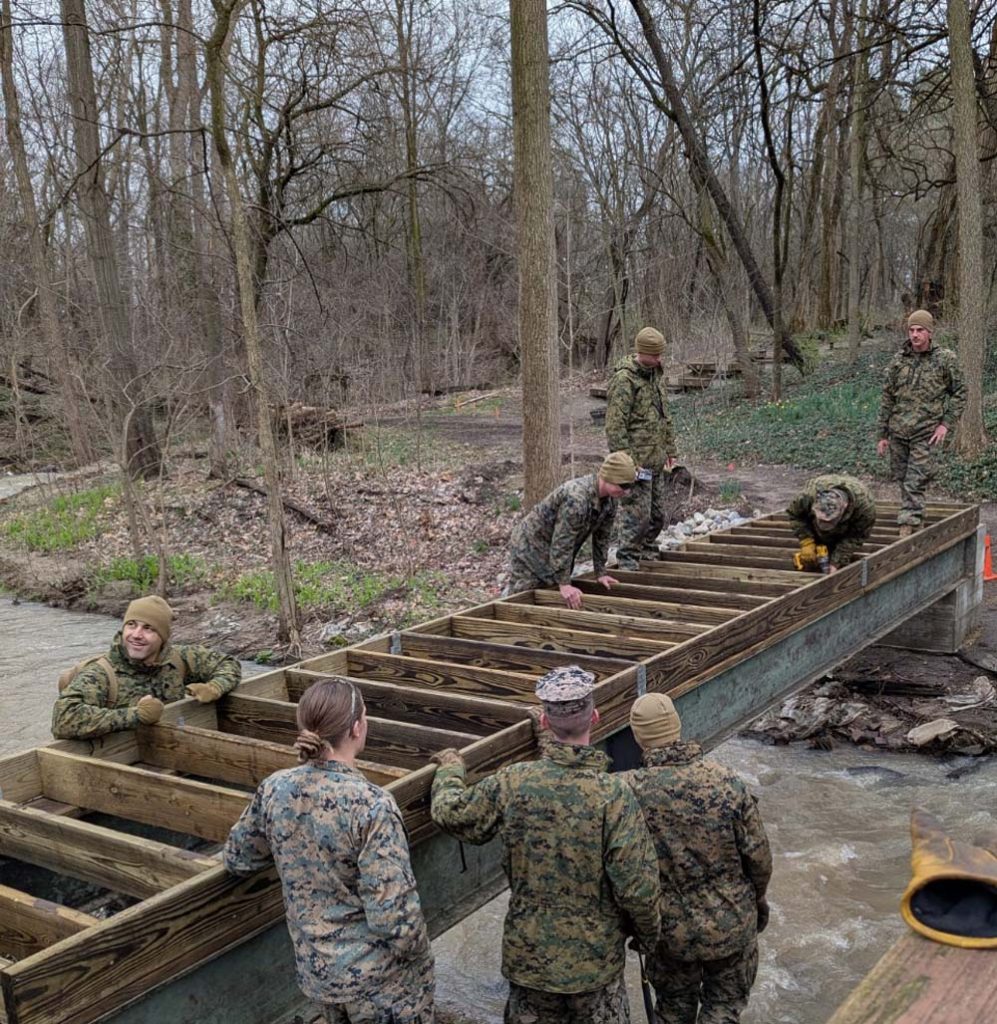
In 2025, ESC already has launched two efforts. At Camp Tamarack, Mich., the unit is upgrading facilities with Scouting America, while in Mishawaka, Ind., the Marines are constructing a footbridge at The RES, a city park for family recreation. Larger projects are also ahead. ESC is preparing for the IRT in Montana and then another in Selawik, Alaska in FY2026, at a remote Inuit village north of the Arctic Circle, that will test the ability to work in extreme conditions and deliver results in an area with limited resources.
Beyond construction and logistics, IRTs foster a culture of adaptability and innovation that translates to combat readiness and civic service. The exposure to new environments, interagency coordination, and public-private partnerships gives Marines and other servicemembers the tools to lead in complex, multidomain operations. The program proves that with the right mission, servicemembers can train hard and serve purposefully. The work sharpens skills and strengthens teams. It also builds a positive narrative around military service by creating real value for American communities.
ESC’s track record positions the program as a reliable contributor to the goals and objective of the Marine Corps Forces Reserve and a model for joint service collaboration. From the Midwest to Alaska, ESC is using IRT to build readiness, strengthen partnerships, and prepare Marines for tomorrow’s challenges. Their journey reflects the potential of the program as a cornerstone of modern troop training and civil-military engagement.
As Marines, we are trained to improve our position, whether in combat or community. The IRT projects are not just missions; they are opportunities to lead with purpose.
Real World Impact
The success of IRT missions is built on strong local partners. At Camp Topenebee, for instance, the LaSalle Council of the Scouting America provided logistics and coordination support, and in return received site improvements worth more than $1.5 million—upgrades that enhanced the safety, usability, and long-term value of the facilities the organization relies on for youth development and outdoor education. These enhancements also created new opportunities for year-round programming and safer shelter during inclement weather.
The collaboration at the scout camp in northwestern Indiana highlights the real-world impact that military engineers can have beyond traditional defense missions, and is one of many similar examples made possible through IRT nationwide.
Capt. Andy Trossen, USMC, is Company Inspector-Instructor, Engineer Services Company, Combat Logistics Battalion 25, Combat Logistics Regiment 4, 4th Marine Logistics Group, Marine Corps Forces Reserve; andrew.trossen@usmc.mil.
Published in the July-August 2025 issue of The Military Engineer
Check Out Related Articles From TME
-

A Standardized Approach to Aircraft Fire Training Infrastructure
To support enterprise-wide airmen readiness, the U.S. Air Force is modernizing its standard design for aircraft fire training facilities—introducing digital controls, dual-fuel systems, and PFAS-conscious infrastructure. -
Delivering Energetic Materials Manufacturing Facilities
Designing and constructing facilities that manufacture, process, handle, or store explosives and energetic materials present some of the most challenging defense projects—requiring technical experience, strict safety protocols, and a comprehensive understanding of regulatory frameworks. -
Forging Tradition and Innovation: A New Design Standard at Camp Lejeune
The II MEF Headquarters at Camp Lejeune blends Georgian Revival architecture with modern sustainability—delivering durability, efficiency, and precision that meets contemporary functional requirements while honoring heritage. -

Balancing Efficiency and Fiscal Responsibility
The continuing contracts clause offers the U.S. Army Corps of Engineers a way to improve project delivery and enhance fiscal responsibility by aligning funding with project execution. -
Next Steps for Digital Twin Development
U.S. Forces Japan is laying the groundwork for future integration of digital twin technology in order to validate and collect data that will offer comprehensive insights into utility conditions at installations and enhance overall decision-making, efficiency, and resilience. -
Generating Agile Technology
Through a collaborative program with the Naval Facilities Engineering and Expeditionary Warfare Center, a team of engineering students designed and prototyped a generator powered by ocean movement, with the aim to support the energy needs of warfighters in contested logistics environments.