Creating SCIFs That Secure and Inspire
By Cory Bonham, AIA, LEED AP, and Peter Brown, ASID, CID, LEED AP, M. SAME
In designing secured spaces for federal agencies, the requirement for uncompromised security can also be balanced with human-centered design to create compartmentalized yet engaging environments that support both military and intelligence operations.
Photos courtesy AECOM.
For the Department of Defense and U.S. Intelligence Community, it has long been a complex and exacting process to design and accredit Sensitive Compartmented Information Facilities (SCIFs). While the procedure is rigorously guided by ICD 705, which has been in effect since May 2010, meeting technical specifications alone is no longer enough.
The modern SCIF demands a delicate balance. These facilities must strike uncompromised security seamlessly integrated with environments that reflect thoughtful design for operational efficiency, organizational collaboration, and employee well-being.
Building Consensus
Each SCIF is unique—and not all Accrediting Officials and Site Security Managers apply requirements the same from project to project. These security officials bring their own ICD 705 interpretations, and often consider specific operational needs, lessons learned, and preferred security protocols. Design teams also must navigate varied inputs from Accrediting Officials, Special Security Officers, Authorities Having Jurisdiction, and other mission stakeholders. This requires designers to find common ground that meets baseline security requirements while addressing environmental quality, user experience, and mission effectiveness.
Bridging these differences requires deep technical expertise in SCIF design and defense requirements as well as strong diplomatic, communication, and creative thinking skills.
Achieving success begins with establishing the right project team. This includes identifying the Cognizant Security Authority and Accrediting Official (which represents the agency and designated principal responsible for all security program aspects).
- The Certified TEMPEST Technical Authority determines requirements for TEMPEST countermeasures.
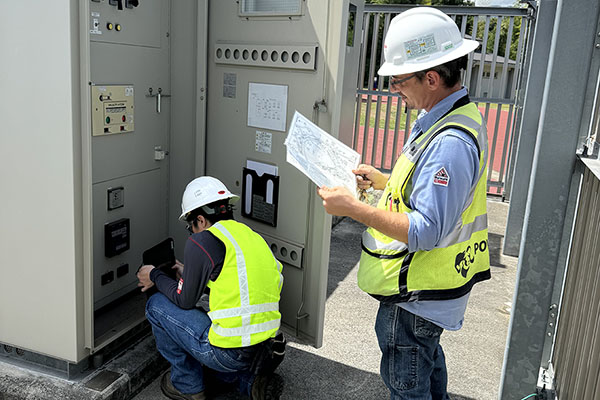
- The Site Security Manager serves as the critical project liaison, manages security during design and construction, and develops and maintains the Construction Security Plan.
Early engagement with these stakeholders is vital on SCIF projects. Teams must establish transparent communication channels to navigate conflicting priorities and ensure all perspectives are integrated into a cohesive design. The site security manager needs to be proactively included in design meetings and communication plans, not just pulled in for reviews. Their direction and guidance is essential to design and execution.
Strategic Planning
Effective SCIF design includes thorough pre-planning. Once sponsorship from the Accrediting Official is secured, project teams must conduct comprehensive risk assessments that evaluate threats against vulnerabilities, probability, and consequences while balancing risk with cost. The concept of security-in-depth plays a crucial role as well, as it incorporates building access controls and security zones, with additional layers of protection when projects are located on military installations or secure compounds.
Understanding user requirements is similarly important. Projects may involve single units or multiple organizations working within the same facility. Some groups may not share the same “need to know” whereas others might be unrelated yet share the same secure space. Most Accrediting Officials prefer facilities with as few accredited containers as possible. This simplifies design, construction, cost, and ongoing security monitoring.
Strategic planning at this stage also involves understanding impacts from building utilities and exterior envelope systems. Designers need to determine if windows will be permitted in secure areas and plan how utilities and secure networks will enter and distribute within the facility.
Technical Excellence
The technical execution of SCIF construction demands meticulous attention across multiple systems. Secure boundary wall types provide both physical security and evidence of intrusion. These walls must extend to the structure below and above; they should be finished and painted full height, including above ceilings and below raised floors, and include sound mitigation to prevent unintentional compromise of secure conversations.
Door requirements are equally prescriptive, including spin-dial combination locks, closers, secure hinges, and alarms. Windows should be minimized or not used at all. When permitted, they must be acoustic and TEMPEST-rated with visual protection. Additionally, any ground floor windows must be non-operable and alarmed.
Utility penetrations through secure boundary walls require special treatment for acoustics, physical security, and TEMPEST protection, with penetrations kept to a minimum. Utilities serving areas outside the SCIF cannot route through it. Ductwork openings must include security bars or grilles to prevent unauthorized access. These restrictions significantly impact building planning and utility coordination, making early consideration essential in project design.
The Human Element
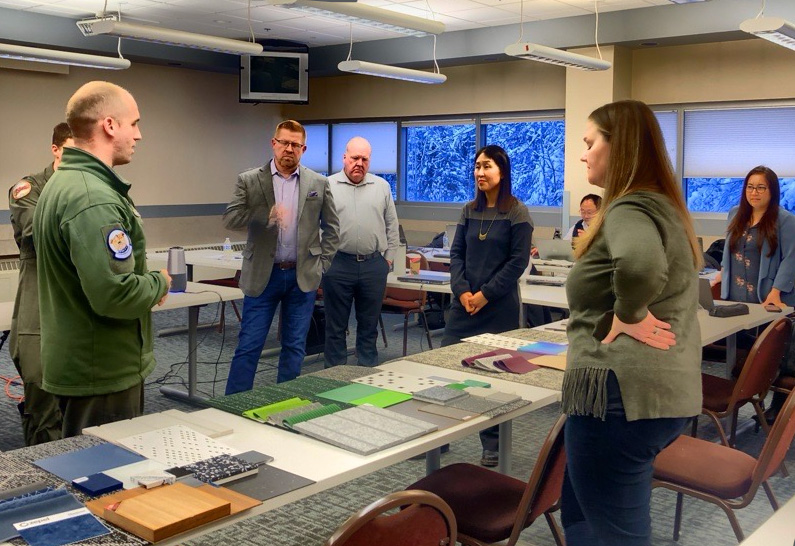
While security remains paramount in SCIFs, progressive approaches are now recognizing the profound impact of the built environment on occupant productivity, morale, and retention.
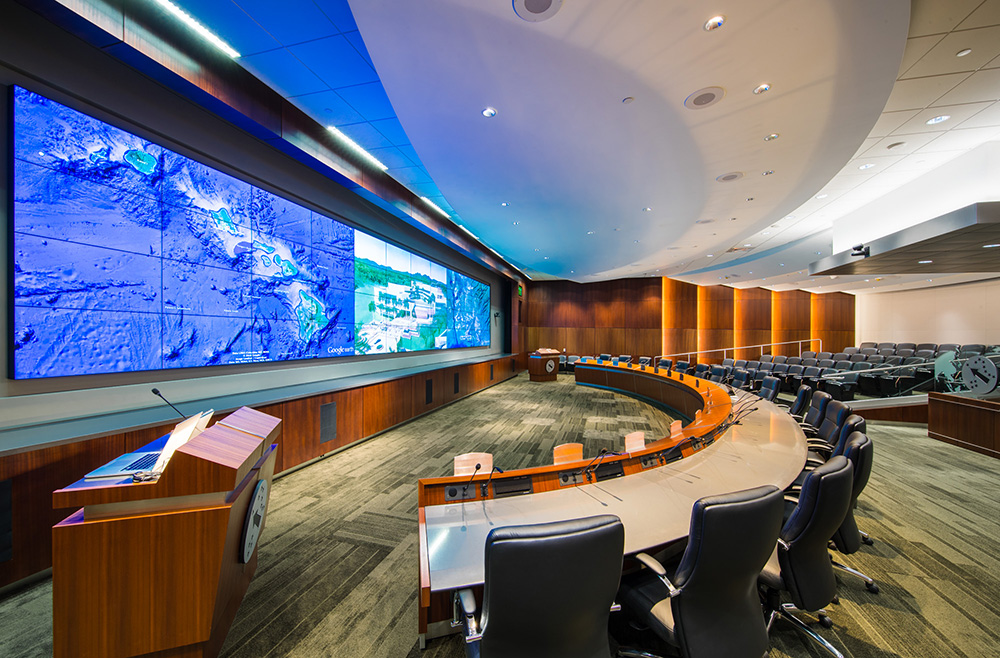
Incorporating elements like natural light (where security mitigations allow) and thoughtfully designed spaces can significantly enhance the user experience without compromising security. This might involve the strategic placement of common areas, creation of secure internal courtyards, or integration of natural materials and biophilic design principles within the SCIF’s secure perimeter. The key is to achieve human-centric design without sacrificing the necessarily strict demands of ICD 705—a coordinated effort that seeks innovative solutions and a commitment to meticulous documentation.
Phasing Construction
The Construction Security Plan serves as the roadmap for maintaining protection throughout the building process. This living document, typically authored by the Site Security Manager, outlines security requirements during design and construction, covering everything from personnel clearance requirements to material sourcing and handling procedures.
The construction site security approach involves multiple specialized roles. The responsibility of Construction Surveillance Technicians (Top Secret-cleared U.S. citizens with construction experience and specialized ICD-705 training) is to monitor adherence to design documents and the Construction Security Plan. For overseas projects, Cleared American Guards often facilitate formal access control and security inspections, with requirements based on risk assessments. Material procurement and handling requires particular attention. Every item to be installed within the confines of the SCIF must be stored in a Secure Storage Area after inspection or pre-approval, from bags of screws to entire air handlers. The Construction Security Plan also addresses country of origin requirements, shipping procedures, and customs considerations in overseas projects to ensure successful execution.
Overcoming Vulnerability
TEMPEST countermeasures represent one of the most complex aspects of SCIF design. This declassified codeword refers to radio frequencies naturally emitted by electronic equipment that can compromise security—a vulnerability first discovered during World War II when engineers from Bell Labs found that their encryption devices revealed message patterns through electromagnetic signals.
Today, all electronic equipment in secure areas emits radio frequencies that could expose classified information, requiring comprehensive countermeasures through distance, radio frequency shielding, and power and data filtering.
Achieving Accreditation
After construction of SCIFs are complete, the Accrediting Official may issue an Interim Accreditation to allow the space to function while accommodating furniture and information technology installation. During this phase, all personnel entering must be TS/SCI cleared and indoctrinated to the secure program, or be 100 percent escorted by cleared personnel. These scenarios create unique challenges for punch list resolution and close-out construction activities.
The final accreditation requires comprehensive documentation review, construction photos, and often physical walk-throughs. And the work does not end there. Periodic inspections are required to maintain accreditation. facilities must follow strict, well-documented operational procedures throughout their lifecycle.
Balanced Design
The evolution of SCIF design reflects a broader understanding that security and human factors are not mutually exclusive. As the intelligence community continues to evolve and defense missions accelerate, especially in cyber operations, so too must our approaches to creating secure environments. Success in this specialized field requires technical expertise, diplomatic skills to navigate stakeholder requirements, creative problem-solving to balance security and code compliance, and meticulous attention to detail throughout every project phase.
The modern SCIF should represent more than a secure container for classified work. It should embody a commitment to security excellence and human dignity. By fostering collaboration from the outset, embracing creative solutions for security integration, and maintaining focus on stringent requirements and personnel well-being, teams can create facilities that safeguard critical assets while inspiring, supporting, and sustaining those who dedicate their careers to national security.
Evolution of ICD 705
SCIFs and Special Access Program Facilities (SAPFs) are controlled by the Office of the Director of National Intelligence through ICD 705. This directive replaced the earlier DCID 6/9 in 2011, which followed DCID 1/21 in 2002.
The ICD 705 core document spans just three pages, directing construction standards for all SCIFs. However, detailed guidance comes through Intelligence Community Standard 705-1 and the IC Tech Spec for ICD 705. This resource provides comprehensive guidance across 14 chapters, from physical construction requirements to day-to-day operations, making it essential reading for professionals entering this field and designing SCIFs and SAPFs.
The Office of the Director of National Intelligence serves as the Security Executive Agent for the Intelligence Community and establishes uniform security standards and delegating accreditation authority to cognizant security authorities within each agency. While ICD 705 applies across all agencies within the Intelligence Community, defense projects may also reference additional directives, including DOD Manual 5105.21 and DOD Manual 5205.07
Cory Bonham, AIA, LEED AP, is Principal, Interiors Senior Manager, and Peter Brown, ASID, CID, LEED AP, M. SAME, is Associate Vice President | Principal, Director of Interiors, AECOM. They can be reached at cory.bonham@aecom.com; and peter.brown@aecom.com.
Published in the November-December 2025 issue of The Military Engineer

Check Out Related Articles From TME
-

Innovative PFAS Remediation at Camp Grayling
For project stakeholders and remediation managers confronted with PFAS, Regenesis demonstrates the efficacy of using Regenesis’ PlumeStop® colloidal activated carbon (CAC) at Camp Grayling, Michigan. -
A Standardized Approach to Aircraft Fire Training Infrastructure
To support enterprise-wide airmen readiness, the U.S. Air Force is modernizing its standard design for aircraft fire training facilities—introducing digital controls, dual-fuel systems, and PFAS-conscious infrastructure. -
Delivering Energetic Materials Manufacturing Facilities
Designing and constructing facilities that manufacture, process, handle, or store explosives and energetic materials present some of the most challenging defense projects—requiring technical experience, strict safety protocols, and a comprehensive understanding of regulatory frameworks. -
Forging Tradition and Innovation: A New Design Standard at Camp Lejeune
The II MEF Headquarters at Camp Lejeune blends Georgian Revival architecture with modern sustainability—delivering durability, efficiency, and precision that meets contemporary functional requirements while honoring heritage. -

Balancing Efficiency and Fiscal Responsibility
The continuing contracts clause offers the U.S. Army Corps of Engineers a way to improve project delivery and enhance fiscal responsibility by aligning funding with project execution. -
Next Steps for Digital Twin Development
U.S. Forces Japan is laying the groundwork for future integration of digital twin technology in order to validate and collect data that will offer comprehensive insights into utility conditions at installations and enhance overall decision-making, efficiency, and resilience.