Crossing a Landslide in Alaska
By Patrick Murphy and Justin Sieg
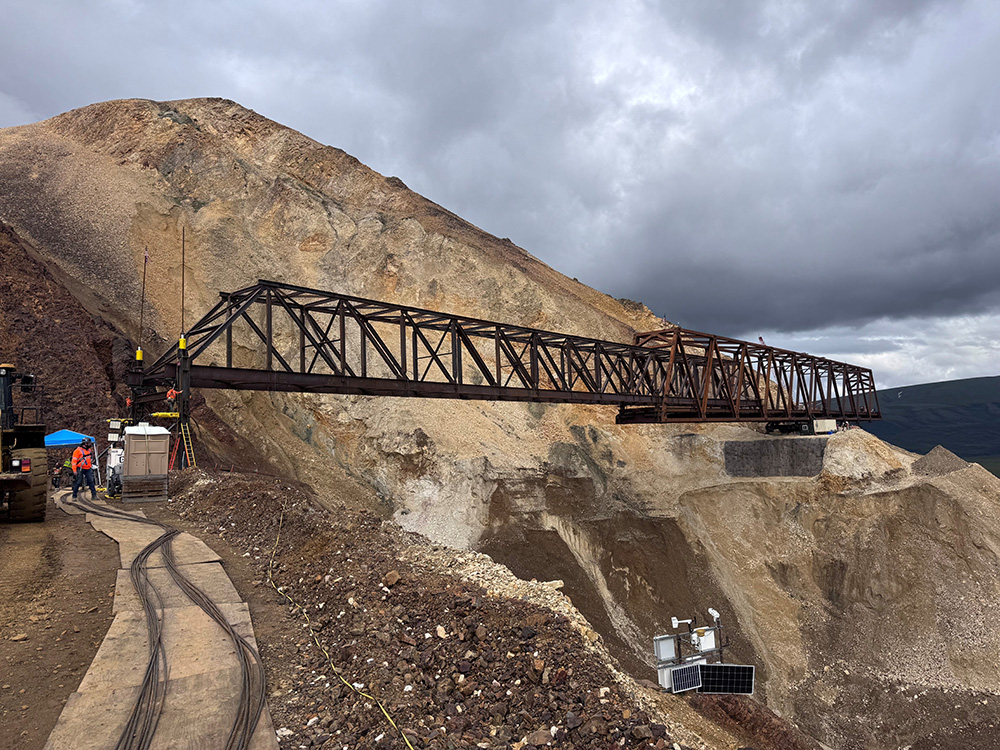
By leveraging collaborative delivery and a commitment to close partnering, the construction of a 475-ft single-span steel truss bridge over an active landslide in Denali National Park and Preserve has been able to successfully overcome evolving site concerns and significant geology challenges.
Built in the 1920s and 1930s by the Alaska Road Commission (an entity first established by Congress in 1905), Denali Park Road is a mostly gravel traverse that heads through Denali National Park and Preserve in southcentral Alaska. The 92-mi route has a single connection to the state highway system at the park entrance on the eastern boundary and is typically open to traffic from mid-May to mid-September.
As the road progresses west, it transitions from paved to rustic to primitive. The first 15-mi is a dual purpose, paved surface. The next stretch until mile-marker 30 is a transition zone where the driving surface changes from pavement to gravel. West of that point, the road changes to a variable width, one-lane passage.
Long-Standing Concern
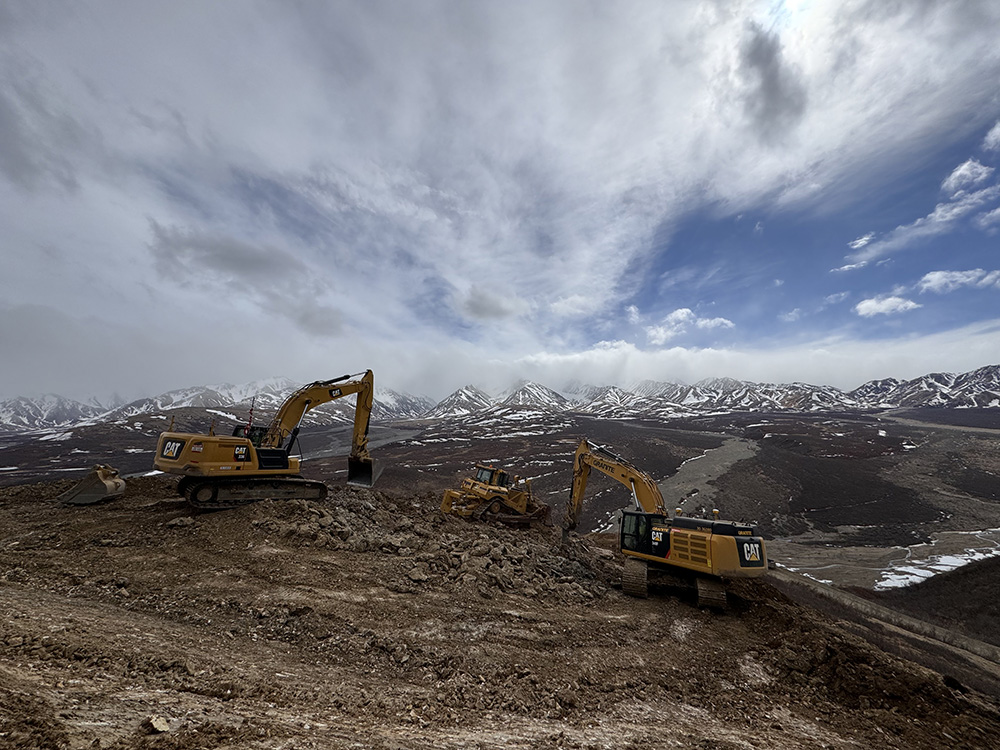
The Pretty Rocks Landslide, at around mile 45, has impacted the park road by the Polychrome Overlook since at least the 1960s. Until recently, the faltering only required maintenance every two to three years. Throughout the 1990s, the landslide, which occurs below the roadbed, only caused small cracks in the road surface. However, by 2018 the slumping had increased to almost 0.5-in/day, and increasing to 3.5-in/day by August 2020.
By August 2021, the rate of movement had grown to more than 1-ft/day. The National Park Service was forced to close the section until a permanent solution could be developed.
By the time of the pre-construction kickoff meeting, the concept bridge design has been developed to approximately 30 percent.
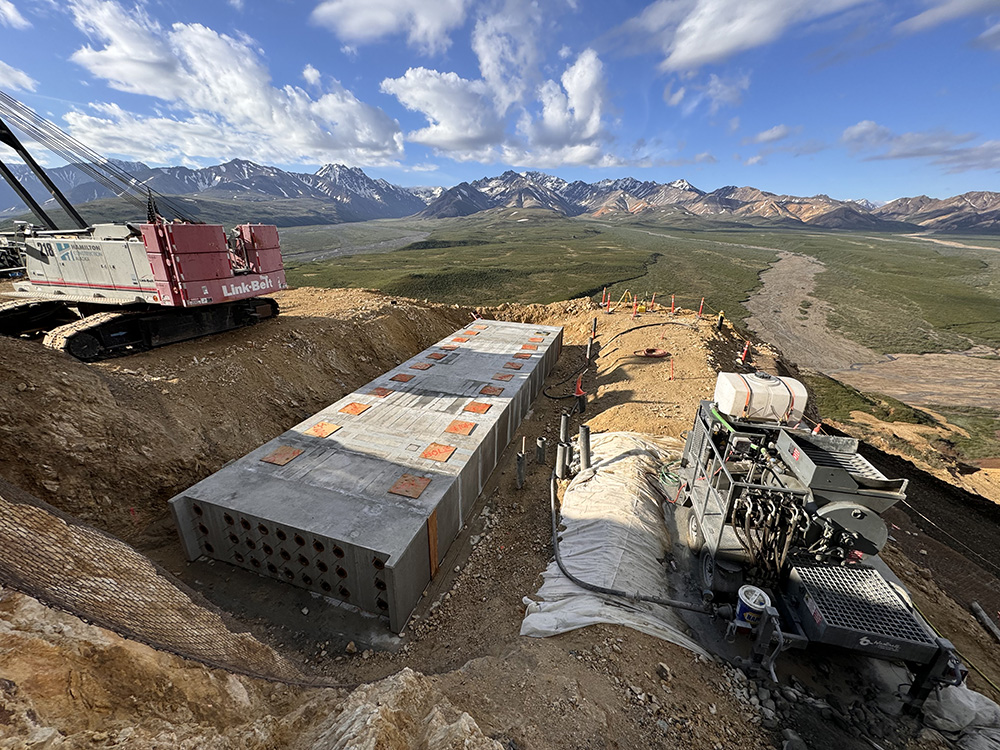
Just about a year later, the answer would come in the form of the Polychrome Area Improvements Project. Consisting of an approximately 475-ft-long single-span steel truss bridge spanning the landslide, the new structure requires the installation of ground anchors, micro-piles, soil nail wall, rock bolts, and thermosyphons at the abutments in order to achieve global stability and maintain permafrost in a frozen state. Also included in the scope of work are 80,000-yd³ of rock excavation, drainage improvements, minor road realignment, and a retaining wall structure adjacent to the bridge at the Perlite Landslide.
The existing road at the project site is currently closed to traffic and will remain off-line until construction is complete in 2026.
Time is of the Essence
The Polychrome Area Improvements Project was originally advertised in February 2022 with a two-step design-build request-for-proposal that was based on the construction of a pre-engineered and launchable bridge. But that plan had challenges. While a statement of qualifications for the first step was submitted, it was also suggested that rather than design-build, the project would benefit from a collaborative delivery method to resolve the sizeable challenges the scope of work anticipated.
After discussions, the Federal Highway Administration elected to issue a new request-for-proposal stipulating the use of construction manager/general contractor (CMGC). The CMGC solicitation was issued in September 2022. Granite Construction was awarded the pre-construction services phase contract in January 2023.
By the time of the pre-construction kickoff meeting, the concept bridge design has been developed to approximately 30 percent. Despite that progress, the available geotechnical information was inadequate to support the planned erection method. The original completion date of 2024 no longer was achievable. With the landslide continuing to accelerate, access to the west abutment was becoming more and more challenging. Expediting procurement of long-lead materials became critical. All of the team members, including the Federal Highway Administration and National Park Service as well as Granite, Jacobs (designer), and subcontractors, made every effort to expedite design and break out portions of the contract to accelerate steel procurement and bridge fabrication, as well as other items of work.
The work was broken into eight separately negotiated packages.
- Pre-Construction: Pre-construction design support and negotiations for construction phase scope; key subcontractors for ground anchoring, abutment components, rock bolting, and bridge erection provided expertise throughout this phase.
- Option W1: Mobilization of equipment and support facilities.
- Option W2: Material procurement and delivery of rock bolts, rock dowels, ground anchors, soil nails, micro-pile, post-tensioning system, anchored wire mesh, precast structural concrete, and structural steel furnishings.
- Option W3.A: Material procurement of structural steel, steel fabrication, and sandwich plate bridge deck design.
- Option W3.B: Bridge erection system engineering and materials.
- Option W.4: Bridge railing material procurement and bridge bearing device procurement.
- Option X: All support costs for 2024, excavation, slide maintenance, and construction of three staging areas.
- Option Y: All remaining items of work, including construction of abutments, bridge, bridge launch system, and thermosyphons.
Uncovering Information
The erection method depicted in the request-for-proposal was to employ the progressive cantilever method from each abutment using a highline. After award of the preconstruction contract, KWH Constructors, with subsidiary Somerset Engineering, began performing construction engineering and revealed an issue with this approach. There was limited, if any, geotechnical information available in the areas required for highline stay foundations and cantilever tie-backs. When additional geotechnical information was provided, it revealed that the area west of the western abutment was simply not suitable for stay or tie-back foundations.
The project team began investigating if it could employ a one-sided approach from the east abutment. Temporary cable stays and launch methodologies were analyzed—with the launch methodology ultimately selected largely because of its lower dependency on long periods of low wind conditions.
Designing for Success
Once the launch methodology was selected, work set out to determine critical load cases and finalize the permanent bridge main member geometry and plate thickness. This was done utilizing the integrated design and detailing process during preconstruction design. A structural steel detailer was brought out early in the engineering process to work with the design team to create a 3D model that would be used to fabricate the permanent structure. This innovation approach saved seven months of detailing and shop drawing generation—critical for this time-sensitive project.
First, a wire frame model was created to confirm geometry of the main truss. Then, infill was done on the main member section. This enabled the exportation of an advanced bill of materials and allowed for solicitation and selection of the W3B supply option.
The contract breakout and integrated design and detailing process let the team award the main member structural steel supply contract so that its nearly six-month lead time could be overlapped with permanent bridge connection design and design finalization. This parallel action greatly accelerated the schedule.
Throughout the timeline, integrated design and detailing was used. The steel detailer took tabular connection design information along with a 2-D depiction of the main connections to infill the model. Detailing these connections in real time allowed the preconstruction team to ensure the design intent was being met while also analyzing constructability and integration.
The project team began investigating if it could employ a one-sided approach from the east abutment.
An additional benefit of the one-sided bridge launch approach was that it only required temporary foundations on the east side of the landslide. The geotechnical investigations carried out for the permanent structure were primarily focused on the permanent foundations. The CMGC contracting method allowed the team to bring on a geotechnical engineer to aid in the temporary foundation design needed to erect the main bridge and perform the launch truss and combined truss launches.
After reviewing the provided geotechnical information available, the temporary foundations geotechnical engineer recommended a test pile program to be carried out in the first onsite work season of the project. That allowed the design assumptions to be confirmed and left room for any adjustment or redesign to be carried out in the off season. The construction team could then begin production pile installation by the start of the second construction season. This greatly reduced project risk on a site with highly variable geology—and it was only possible by having the temporary works design team working simultaneously with the permanent bridge design.
Overcoming Challenges
The CMGC contract model combined with a strong partnering approach during construction has allowed the Polychrome Area Improvements Project to continue through challenges as they arise with sound engineering and enhanced efficiency.
This collaborative delivery approach has pushed the team to achieve the functional goal of restoring park access to visitors while also providing an iconic landmark befitting the picturesque setting at Denali that everyone can be proud of.
Geologic Conditions
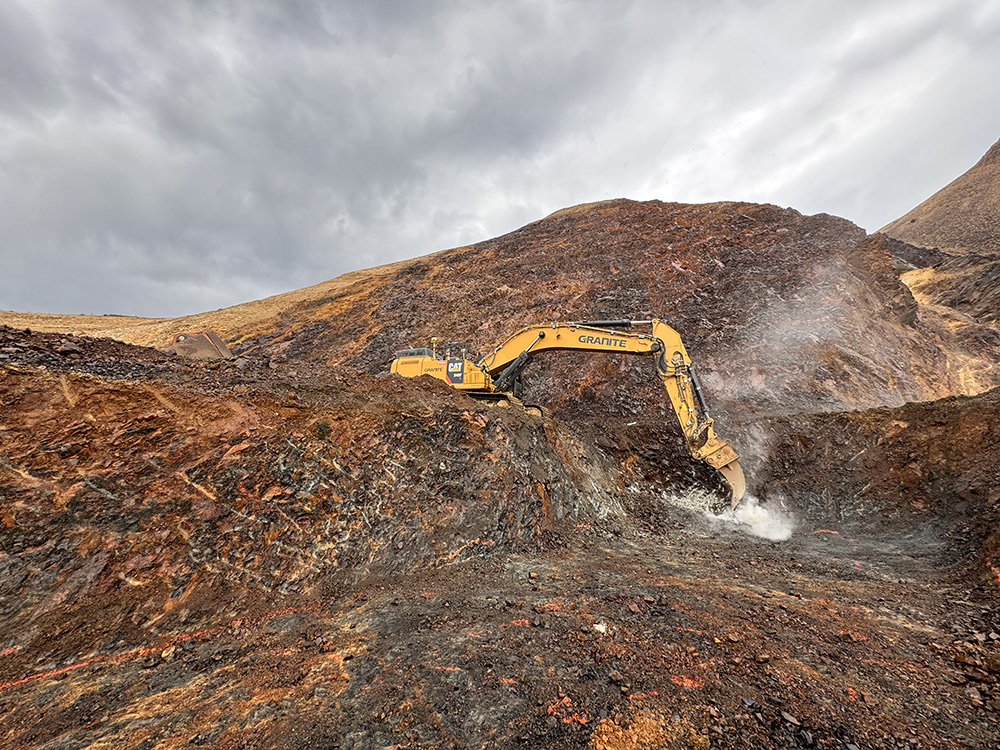
Throughout the Polychrome Area project, geology of the location was substantially variable. Conditions ranged from permafrost rich colluvium to competent basalt rock, which all surrounded the active landslide through the middle of the job site.
These factors caused unique challenges through the lifespan of the project. Partnering between the owner and contractors allowed for a feasible construction approach and efficiency in working through unforeseen site conditions without severely impacting the schedule.
For instance, a large ice form was found in the west cut, which stopped work. Together, FHWA, Jacobs, and Granite put together a plan that would safely and efficiently solve the problem as well as keep the project on track. The operation had minimal localized schedule impact and zero impact on the overall schedule.
Patrick Murphy is Project Manager, Granite Construction Co.; patrick.murphy@gcinc.com.

Justin Sieg is Project Manager, KWH Constructors Ltd.; jsieg@kwhconstructors.com.
Published in the November-December 2025 issue of The Military Engineer

Check Out Related Articles From TME
-

Innovative PFAS Remediation at Camp Grayling
For project stakeholders and remediation managers confronted with PFAS, Regenesis demonstrates the efficacy of using Regenesis’ PlumeStop® colloidal activated carbon (CAC) at Camp Grayling, Michigan. -
A Standardized Approach to Aircraft Fire Training Infrastructure
To support enterprise-wide airmen readiness, the U.S. Air Force is modernizing its standard design for aircraft fire training facilities—introducing digital controls, dual-fuel systems, and PFAS-conscious infrastructure. -
Delivering Energetic Materials Manufacturing Facilities
Designing and constructing facilities that manufacture, process, handle, or store explosives and energetic materials present some of the most challenging defense projects—requiring technical experience, strict safety protocols, and a comprehensive understanding of regulatory frameworks. -
Forging Tradition and Innovation: A New Design Standard at Camp Lejeune
The II MEF Headquarters at Camp Lejeune blends Georgian Revival architecture with modern sustainability—delivering durability, efficiency, and precision that meets contemporary functional requirements while honoring heritage. -

Balancing Efficiency and Fiscal Responsibility
The continuing contracts clause offers the U.S. Army Corps of Engineers a way to improve project delivery and enhance fiscal responsibility by aligning funding with project execution. -
Next Steps for Digital Twin Development
U.S. Forces Japan is laying the groundwork for future integration of digital twin technology in order to validate and collect data that will offer comprehensive insights into utility conditions at installations and enhance overall decision-making, efficiency, and resilience.