Designing for Resilience Against Coastal Hazards
By Shavon Charlot, AIA, NCARB, LEED AP, M.SAME
Withstanding severe coastal weather and remaining operationally ready through climate hazards and extreme storms is becoming increasingly mission-essential for military installations as the intensity of these events increases.
The term “resilience” is often used in the planning, design, and construction of modern facilities and infrastructure. Incorporating resilience within the built environment requires designs to be both durable and flexible. True resilience provides the ability to not only bounce back, but forward, as stated in the report, Understanding Resilience, from the American Institute of Architects. When it comes to designing for resilience within coastal climates, in particular, this standard means that buildings must be designed to respond to the effects of humidity, rain, wind, floods, tropical storms, hurricanes, and typhoons. These impacts can be immediate in the face of the extreme weather, and longer-term, as recovery efforts unfold.
Each new climatic event renews concerns about the impacts of meteorological hazards. In 2024, the National Oceanic & Atmospheric Administration reported there were 27 billion-dollar weather and climate disasters in the United States, which resulted in 568 fatalities and $183 billion in damages. Tropical cyclones have caused the most damage across the country. They have the highest average per-event cost of all the billion-dollar disasters and are responsible for the most deaths. Designing resilient buildings in locations more vulnerable tropical disasters is most critical. Many military installations are located in coastal areas.
The need for resiliency is heightened when the expectation of readiness is uncompromising. The Department of Defense (DOD), over the course of the last decade, has seen significant losses and disruption at coastal locations, including Camp Lejeune, N.C.; Tyndall AFB, Fla.; and multiple sites in Guam. Instances of extreme weather events within the last 10 years have caused more than $15 billion in reported damages to military installations while also disrupting operations.
Designing resilient buildings in coastal environments, where harsh conditions can occur regularly, is critical to maintaining operational ability. However, ensuring operational ability must be a priority during non-hazardous events as well. That puts a premium on the intersection of resilience and practicality.
Process Considerations
Understanding resiliency and how to apply it to the design of buildings is necessary for everyone with a role in the design process. Achieving resilience at the building scale includes a series of interrelated considerations.
- Locating critical systems to withstand flooding and extreme weather events.
- Designing buildings that can maintain livable conditions in the event of an extended loss of power.
- Including durable building features and details such as hurricane wind-rated windows or interior finishes that can dry out and not require replacement if exposed to moisture.
- Considering on-site renewal energy, redundant electrical systems, and redundant water supply and storage.
- Combining proven vernacular design strategies with modern technology and materials.
Designers carry a responsibility to monitor changes to codes and other location-specific criteria that may result from lessons learned in response to recent severe weather events. These include Unified Facilities Criteria, agency-specific design guides, and installation-level design and construction standards.
Following Guidance. DOD has encouraged investments to increase the resilience of coastal assets. Approaches in recent years have sought to engage industry and code experts to ensure that its building criteria prioritizes standards and best practices that will improve the performance of infrastructure.
Some installations that are recovering from the impact of recent disasters have also been looking to non-federal criteria for additional guidance. For example, building requirements from Miami-Dade County often serve as a precedent for designing tough, resilient buildings in coastal locations. In response to Hurricane Michael, the rebuild efforts at Tyndall AFB increased the base’s building standards to match Miami-Dade County, requiring each new facility to be able to withstand 165-mph winds.
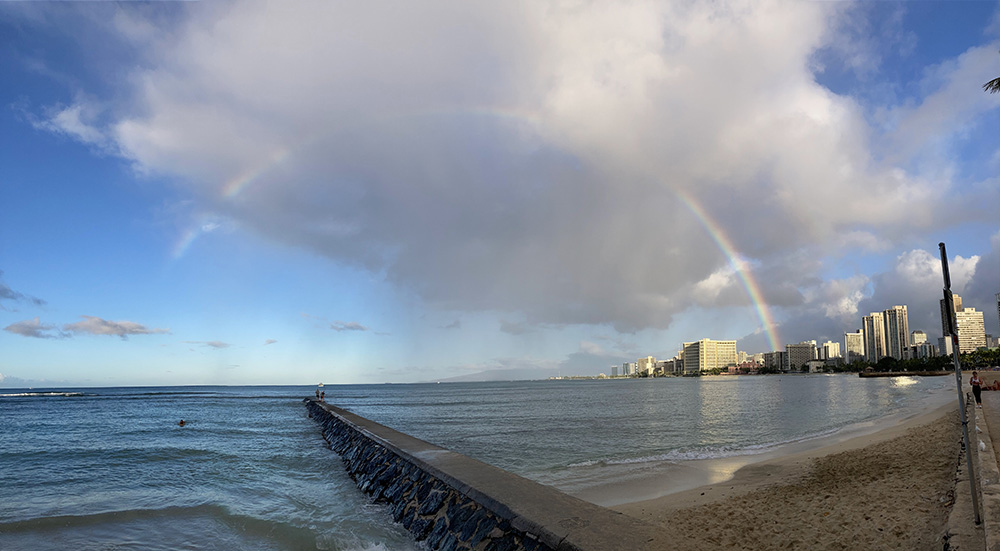
Coastal regions present some of the most dynamic and challenging environments for building design—bringing a combination of hurricanes, storm surges, flooding, high winds, humidity, saltwater corrosion, and in some locations, seismic activity.
Geographic Challenges
Coastal regions present some of the most dynamic and challenging environments for building design—bringing a combination of hurricanes, storm surges, flooding, high winds, humidity, saltwater corrosion, and in some locations, seismic activity. These hazards not only test the limits of structural resilience but demand innovative approaches to ensure functionality, safety, and longevity.
During the design of a facility in a coastal environment, architects and engineers must first understand the unique considerations of their building site. Proximity to the coastline, for example, might dictate the most appropriate type of structural foundation system. A site’s elevation in relation to sea level may influence the physical height or number of stories.
Construction methods, material selection, availability of materials, maintenance considerations, and budget are all factors in the design response to coastal and tropical location impacts. In Guam, for example, the design of the U.S. Naval Hospital utilized a completely cast-in-place concrete structure and exterior wall system. Cast-in-place was selected over pre-cast concrete panels, which were considered and evaluated early in the design process. Because of the need to respond to tropical conditions and potential seismic activity, it was determined that the use of precast concrete panels for the exterior closure might carry some increased risk of failure if overcome by a powerful seismic event. Ensuring the security of the exterior enclosure was a critical design goal to protect against degradation of the facility as a result of normal environmental conditions and severe weather events.
Materials Selection. On installations in Guam and other island or coastal locations, non-corrosive metals such as stainless steel or aluminum are commonly used for exterior metal elements. Those same pieces of equipment are also provided with extra protection against Guam’s notoriously high winds. At the Branch Health Clinic Apra Harbor on Naval Base Guam, all flush exterior doors were specified to be aluminum after learning that aluminum doors could out-perform stainless steel doors. Gates to mechanical and dumpster yards were constructed completely of stainless steel. Mechanical equipment was kept off the roof to the extent possible; what could not be located inside or at ground level was strapped down with structural supports designed to withstand winds exceeding 165-mph.
In the design of the clinic, equipment selection and material selection addressed the ability of the hospital staff to maintain the facility and source replacement components to Guam’s remote location. The designers worked closely with staff, listening to their maintenance expectations, needs, and abilities. They took lessons learned from Naval Hospital Guam, which had completed construction shortly before work on the clinic began. An occupant survey of the hospital staff, combined with numerous interviews with building maintainers, informed where adjustments could further support the facility’s resiliency to Guam’s climate.
Instances of extreme weather events within the last 10 years have caused more than $15 billion in reported damages to military installations while also disrupting operations.
Preparing For Disaster
In coastal and tropical environments, designing for resiliency must incorporate an understanding of the known hazards and impacts unique to these climates and locations. Designers also must prepare for future risks by monitoring changes to standards and utilize best practices that have proven successful in the site-specific environment. Seek out lessons learned from similar facilities.
The end goal of any resilient design on a military installation has the same objective: ensure the mission can continue, always.

Shavon Charlot, AIA, NCARB, LEED AP, M.SAME, is President, SS&A Design Collective; shavon.charlot@ssainc.com
Published in the November-December 2025 issue of The Military Engineer
Check Out Related Articles From TME
-

Innovative PFAS Remediation at Camp Grayling
For project stakeholders and remediation managers confronted with PFAS, Regenesis demonstrates the efficacy of using Regenesis’ PlumeStop® colloidal activated carbon (CAC) at Camp Grayling, Michigan. -
A Standardized Approach to Aircraft Fire Training Infrastructure
To support enterprise-wide airmen readiness, the U.S. Air Force is modernizing its standard design for aircraft fire training facilities—introducing digital controls, dual-fuel systems, and PFAS-conscious infrastructure. -
Delivering Energetic Materials Manufacturing Facilities
Designing and constructing facilities that manufacture, process, handle, or store explosives and energetic materials present some of the most challenging defense projects—requiring technical experience, strict safety protocols, and a comprehensive understanding of regulatory frameworks. -
Forging Tradition and Innovation: A New Design Standard at Camp Lejeune
The II MEF Headquarters at Camp Lejeune blends Georgian Revival architecture with modern sustainability—delivering durability, efficiency, and precision that meets contemporary functional requirements while honoring heritage. -

Balancing Efficiency and Fiscal Responsibility
The continuing contracts clause offers the U.S. Army Corps of Engineers a way to improve project delivery and enhance fiscal responsibility by aligning funding with project execution. -
Next Steps for Digital Twin Development
U.S. Forces Japan is laying the groundwork for future integration of digital twin technology in order to validate and collect data that will offer comprehensive insights into utility conditions at installations and enhance overall decision-making, efficiency, and resilience.