Identifying Contaminated Materials at Remediation Sites
By David Hays and Ann Ewy, PMP, F.SAME
Differentiating site-related wastes from naturally occurring or industrial background materials is critical for accurate remediation decisions and cost-effective cleanup.
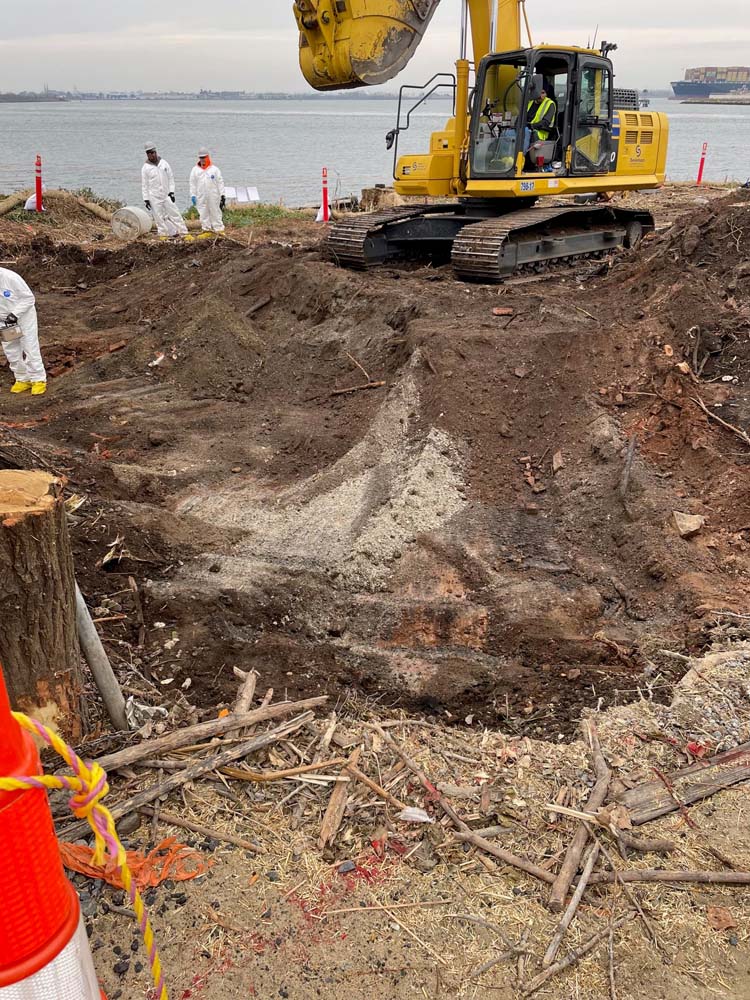
An additional review of data from the area led to effectively distinguishing site contamination from naturally occurring radioactive material; this resulted in specific sections being excluded from further consideration and triggered a significant cost avoidance for the project.
At remediation sites containing uranium and thorium radiological materials, differentiating between low-level site-related contamination and what constitutes naturally occurring radioactive material is a recurring challenge facing site owners. Both uranium and thorium processing and milling sites generate wastes possessing contaminants that are similar to naturally occurring radioactive material deposits and other industry wastes.
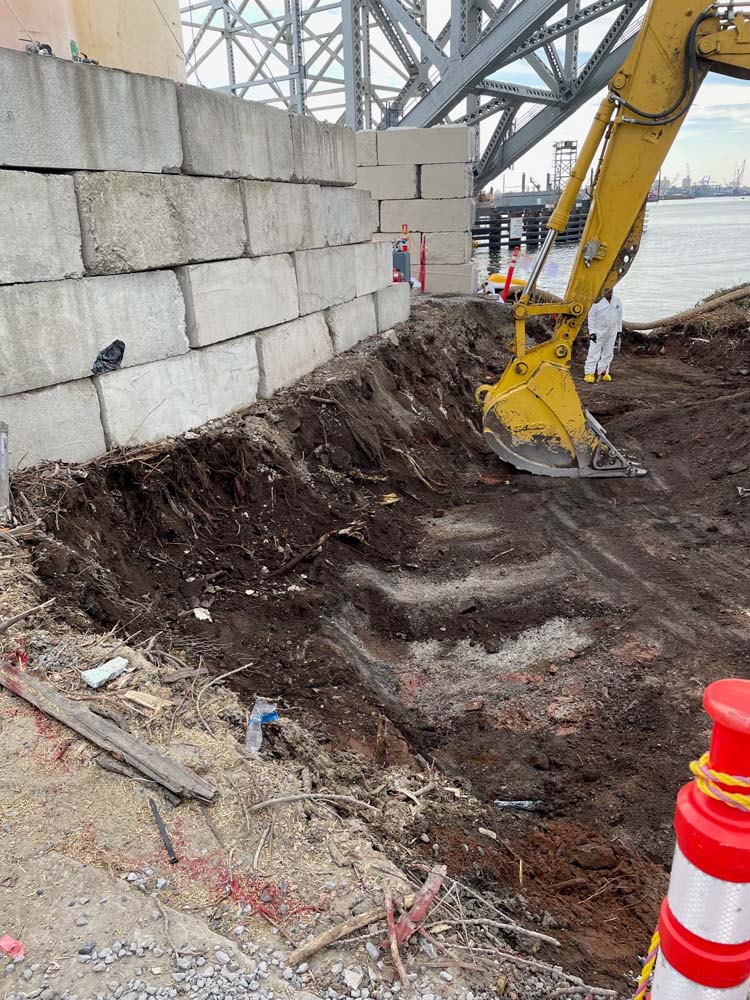
For affected locations in urban areas, this issue is further compounded due to the presence of historic industrial fill containing materials like fly ash, coal ash, and red brick that exhibit elevated radioactivity levels. These substances often have activity levels near, or even well above, a specific cleanup goal. This can lead to misidentification of other materials as site wastes.
In an environment challenged by budget constraints and limited funding, distinguishing between site-related wastes and other sources of radioactive materials is of greater importance than ever. To do so, engineers must have some understanding of what other sources of radioactivity may exist on a project site.
Historical Records
Historical site assessments often focus on a facility’s use of materials and site waste areas. The same information that can be used to locate site materials can provide information on other potentially radioactive materials. As a result, other potential sources of radioactive materials should be noted during the assessment.
Referencing navigation maps, aerial photography, fire insurance maps, photographs, and other historical records may provide key understandings. Having sufficient background information such as the development of an area, probable fill areas, and important local features affecting contamination distribution not only provides a better understanding of site contamination. It also offers a basis to question if elevated materials are site-related.
In an example project, a former creek was identified in historical maps. Other records and figures demonstrated that it had been filled in prior to the time of site operations. The dates of the creek being filled in helped highlight that elevated radioactive materials in the fill may not be from the site. An additional review of data from the area led to effectively distinguishing site contamination from naturally occurring radioactive material; this resulted in specific sections being excluded from further consideration and triggered a significant cost avoidance for the project.
Understanding the process that generated waste can be used to identify site contaminants and aid in distinguishing wastes from naturally occurring radioactive material. Knowledge of what other materials and chemicals are associated with site wastes can be used to facilitate or eliminate the characterization phase.
On another project example, a gas mantle production facility had used thorium and cerium to create coatings for mantles. Often these elements are found together in natural deposits. The ores brought to the facility for processing contained both thorium and cerium. Waste from the facility would be expected to contain thorium, cerium, and other associated rare earths. Sampling for rare earth content could be added to the characterization phase in suspect areas.
Distinguishing Evidence. Having insights into how wastes were handled can give confidence as to the probability of a material being site related. At the gas mantle production site, material appearing to be elevated background naturally occurring radioactive material just over the site release criteria was discovered in an area not suspected of containing wastes. The onsite team considered additional data and characterization to prove that the material was not site related. In this instance, however, the fact that mantle cloth also was found in the area provided sufficient justification to include as site waste.
Although modest savings, the cost and schedule impacts of additional characterization was minimized by understanding the other processes occurring at the facility.
Characterizing Waste
There are many naturally occurring radioactive material characteristics that can be used to distinguish site wastes from natural and other enhanced background materials. These include chemical, isotopic ratios, and uranium isotopic natural abundance.
Tracking chemical and other byproducts associated with a process serve as fingerprints to identify site waste. For example, vicinity properties at two thorium mills recently were identified as having above-criteria thorium contamination, leading to a rare earth characterization sampling approach being implemented. Rare earth analysis was conducted on typical site wastes as well as on elevated background soils from the vicinity properties. The rare earth analysis comparison proved that material on the properties in question was not site-related and was likely natural because the rare earth content matched that of natural sources.
Distinguishing Materials
The isotopic ratios of wastes compared to other materials can be used to distinguish between site-related wastes and enhanced background materials. Typical thorium-232 to radium-226 ratios in thorium mill waste are on the order of 4:1 to over 20:1. This ratio in natural background materials is closer to 1:1. Uranium and thorium is found in most soils, and while the isotopic ratio is disturbed by milling, the waste may still exhibit a consistent thorium-232 to uranium-238 ratio. At one mill site, this ratio was used to demonstrate that natural deposits were not site related.
The thorium-232 to radium-226 ratio in enhanced naturally occurring radioactive material such as coal ash can vary significantly. Experience on several remediation sites demonstrates coal ash ratios of 1:1. In coal ash with cinder chunks, the ratio was as high as 20:1.
Another key approach to identifying wastes is the natural uranium isotopic abundance. Natural uranium consists of uranium-238, uranium-234, and uranium-235 in a 1:1:0.046 activity ratio, respectively. Obvious disruption of this ratio occurs during the uranium enrichment processes. Enrichment results in enriched uranium and depleted uranium. Each can be used at many sites to distinguish between site wastes and natural materials.
There are two natural processes (alpha recoil and alpha track) that can result in enhancing the activity concentration of uranium-234, along with radon in ground water. This is most common with waters moving through uranium-bearing materials. The uranium-234 to uranium-238 ratio in seawater is 1.14, and in groundwater it can vary significantly, typically ranging from 1 to 3 with typical mean around 2.
Boring logs provide valuable characterization data if completed properly. The geologist on the project can identify soil types and other sources of radioactivity, such as coal ash. Physical traits, color, and composition can be indicators of non-site wastes. For example, at another site it was discovered that elevated gamma scan readings were associated with road pavers referred to as Belgian Block. The blocks were not site wastes, but the soil immediately beneath contained elevated radioactivity. A comparison of isotopes and isotopic ratios demonstrated that the soil was impacted by fine particles eroding from the blocks rather than site wastes.
Processing Benefits
The success rate of distinguishing between site wastes and enhanced background material can be facilitated by establishing and applying a formal process. Additionally, significant cost avoidance may be realized by distinguishing site wastes from enhanced naturally occurring radioactive materials.
Collection of information on other potential sources of radioactive material and physical information related to the potential for other radioactive material sources should be gathered and reported in the historical site assessment. It is incumbent on decision-makers to approach each site area with the expectation that non-site related radioactive material may be present—and then have a process in place to distinguish from site and non-site related materials.
Radioactivity in Natural and Manmade Background Materials
| Material | Process | Potential Isotopes | Literature Maximum Values (Rounded) |
|---|---|---|---|
| Coal ash | Burning of coal results in concentrating NORM. The ash has been used as fill and is used as an ingredient in many types of concrete. | Uranium, radium-226, thorium-232, and daughters | Uranium: 100-ppm; Radium-226: 0.4-Bq/g; Thorium-232: 0.8-Bq/g |
| Phosphate fertilizers | Phosphate ore materials often contain NORM. Uranium tends to stay with the phosphate in the manufacturing process. | Uranium isotopes and short lived daughters | 2-Bq/g |
| Fertilizer production tailings | Phosphate ore materials often contain NORM. Radium tends to remain with the tailings from phosphate extraction. | Radium-226 and daughters | 2-Bq/g |
| Oil and gas industry | Process waters contain elevated concentrations of NORM, which can plate out in piping and accumulate in soils under lagoons holding this water. | Radium-226, lead-210, and daughters | 125-Bq/g 86 percent of data < 3.7-Bq/g |
| Ore milling | NORM isotopes can be concentrated in milling many types of metal ores. Aluminum, zirconium, and magnesium production can generate significant NORM radioactivity in tailings. | Thorium-232, radium-226, uranium-238, and daughters | 370-Bq/g |
| Ceramics | NORM isotopes can be concentrated in milling many types of metal ores. Aluminum, zirconium, and magnesium production can generate significant NORM radioactivity in tailings. | Thorium-232, radium-226, uranium-238, and daughters | 2-Bq/g |
| Groundwater | Groundwater dissolves many natural radioisotopes from the deposits through which it flows. | Radium-226, radium-228, lead-210, and uranium | Radium-226: 1.15-Bq/L Radium-228: 2.72-Bq/L Lead-210: 0.28-Bq/L Uranium: 10,000-ug/L |
| Wetlands | Wetlands accumulate many metals, including radioactive material. | Uranium | Approximately 50 percent of water concentration retained in wetland |
| *NORM: naturally occurring radioactive material |
David Hays is Health Physicist, and Ann Ewy, PMP, F.SAME, is Project Manager, USACE Kansas City District. They can be reached at david.c.hays@usace.army.mil; and ann.ewy@usace.army.mil.
Published in the January-February 2026 issue of The Military Engineer

Check Out Related Articles From TME
-

Innovative PFAS Remediation at Camp Grayling
For project stakeholders and remediation managers confronted with PFAS, Regenesis demonstrates the efficacy of using Regenesis’ PlumeStop® colloidal activated carbon (CAC) at Camp Grayling, Michigan. -
A Standardized Approach to Aircraft Fire Training Infrastructure
To support enterprise-wide airmen readiness, the U.S. Air Force is modernizing its standard design for aircraft fire training facilities—introducing digital controls, dual-fuel systems, and PFAS-conscious infrastructure. -
Delivering Energetic Materials Manufacturing Facilities
Designing and constructing facilities that manufacture, process, handle, or store explosives and energetic materials present some of the most challenging defense projects—requiring technical experience, strict safety protocols, and a comprehensive understanding of regulatory frameworks. -
Forging Tradition and Innovation: A New Design Standard at Camp Lejeune
The II MEF Headquarters at Camp Lejeune blends Georgian Revival architecture with modern sustainability—delivering durability, efficiency, and precision that meets contemporary functional requirements while honoring heritage. -

Balancing Efficiency and Fiscal Responsibility
The continuing contracts clause offers the U.S. Army Corps of Engineers a way to improve project delivery and enhance fiscal responsibility by aligning funding with project execution. -
Next Steps for Digital Twin Development
U.S. Forces Japan is laying the groundwork for future integration of digital twin technology in order to validate and collect data that will offer comprehensive insights into utility conditions at installations and enhance overall decision-making, efficiency, and resilience.