Sponsored Content, Presented by REGENESIS
Colloidal-Activated Carbon Barrier at Camp Grayling Builds on Previous Success
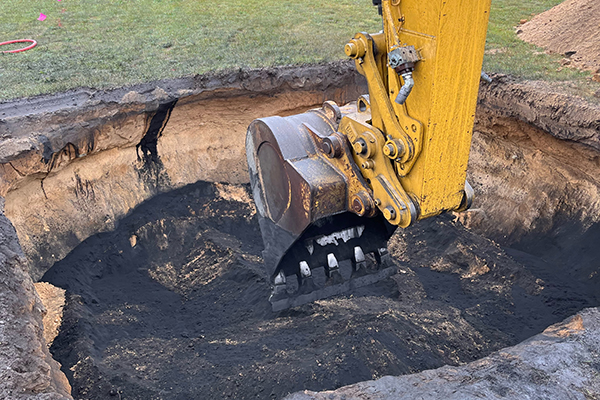
The presence of per- and polyfluoroalkyl substances (PFAS) were confirmed in soil and groundwater at Camp Grayling, Mich., and the adjacent Grayling Army Airfield beginning in late 2016. Subsequent investigations identified aqueous film-forming foam (AFFF) release areas and plume migration toward downgradient municipal and surface water receptors.
As remedial investigations at the bases advanced under the Comprehensive Environmental Response, Compensation, and Liability Act, project teams implemented a phased approach to evaluate applications of in situ colloidal-activated carbon (CAC)—using PlumeStop and SourceStop for plume management and source zone treatment, respectively.
First Field Application With CAC
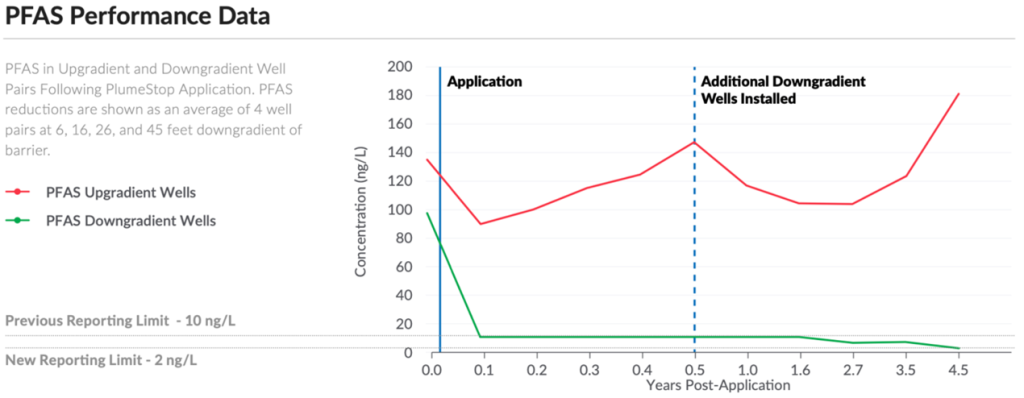
A PlumeStop CAC permeable reactive barrier was installed within a PFAS-impacted area to evaluate plume stabilization under field conditions. Monitoring from paired upgradient and downgradient wells showed rapid concentration reductions following installation and downgradient total PFAS concentrations have remained near reporting limits for 4.5 years, while upgradient concentrations remain elevated. No rebound trend has been observed. The application required hydraulic disruption or above-ground infrastructure expansion.
Scan the QR Code for the full case study.

Preventing PFAS Leaching
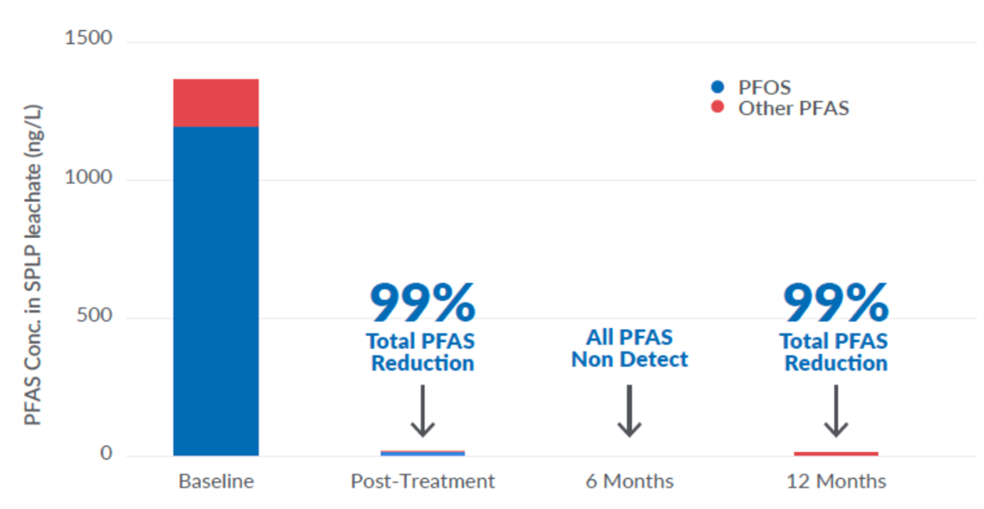
SourceStop CAC was evaluated within vadose soils in a separate AFFF source area at Camp Grayling to evaluate its effectiveness at preventing PFAS leaching to groundwater. The treatment resulted in over 99 percent reduction in total PFAS leachability, sustained through 12 months of monitoring. This source-area application provided a validation that CAC treatment can effectively reduce PFAS mobility in soils with elevated contaminant loading.
Scan the QR Code for the full case study.

Larger-Scale Barrier Pilot Test
Building on the previous application results, a larger-scale pilot test CAC barrier was installed in 2025 at Grayling Army Airfield to intercept plume migration toward offsite sensitive receptors across a defined boundary. The barrier was installed using direct-push injection across the contaminant flux zone.
The 2025 installation is recent; long-term monitoring is ongoing. But the design and loading calculations were informed directly by the multi-year plume data and source-area validation results obtained on-site.
Engineering Implications
The Camp Grayling progression illustrates a phased, performance-informed remediation model, pilot testing, performance monitoring, and scaled implementation based on field data.
For PFAS sites operating under interim action frameworks, this approach can support plume stabilization while feasibility studies and long-term remedies advance. As military bases move from characterization toward implementation, performance history remains the foundation for defensible engineering decisions.
Scan the QR Code for a video link to the project.