Meeting Mission Requirements Through Collaborative Delivery
By Timothy Hess, P.E., M.SAME, and the SAME Construction Community of Interest’s Working Group for Collaborative Delivery
If adopted by the government, collaborative delivery contract models could have significant benefits to federal agencies in managing risk and improving both cost and schedule certainty on military construction and civil works projects.
Editor’s Note: The following article is an executive summary of “Collaborative Delivery Federal Policy Recommendation,” an SAME Perspectives published this spring with the SAME Construction Community of Interest’s Working Group for Collaborative Delivery. The full report can be read at www.same.org/news.
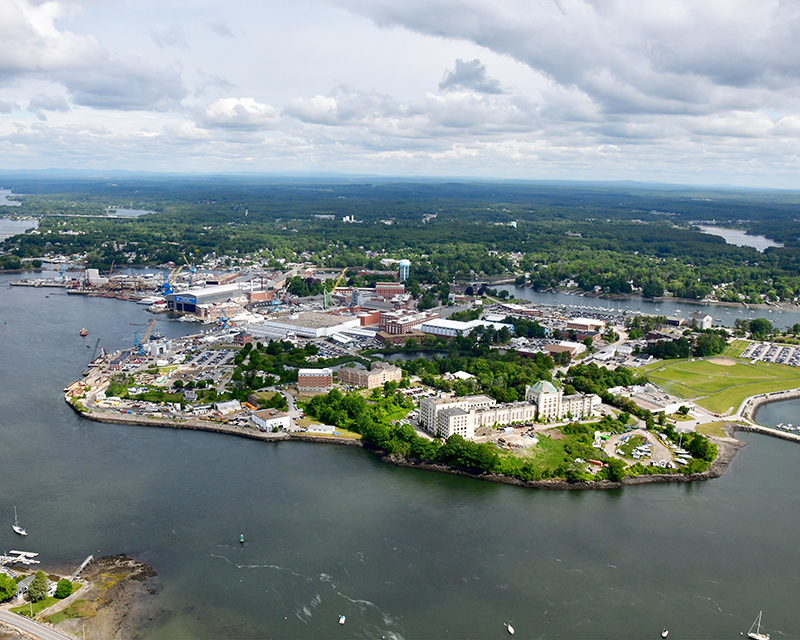
The United States has long understood that a well-funded and fully equipped military is vital to protecting and advancing the nation’s interests while preserving our economic strength and independence. Underpinning this requires investing significant resources in defense systems and critical infrastructure, including federally owned physical assets and networks vital to the military services.
Each year, billions of dollars are appropriated to enhance defense installations through military construction (MILCON) and to develop critical domestic infrastructure through civil works projects. These investments are necessary to allow the United States to compete economically and project power throughout the world.
MILCON is executed through the U.S. Army Corps of Engineers (USACE), Naval Facilities Engineering Systems Command (NAVFAC), and Air Force Civil Engineer Center (AFCEC), while USACE is also responsible for the Civil Works Program that enables navigation, flood risk reduction, hydropower, and other water resource responsibilities nationwide. Given statutory competitive pricing restrictions and the limited number of contract types available to USACE, NAVFAC, and AFCEC, the services are unable to use acquisition tools, delivery methods, and selection procedures that both private sector owners and non-federal public owners have been using effectively for decades. They need new acquisition tools to effectively deliver their annual program workload as well as the massive new programs they have been tasked with delivering.
SAME’s Working Group for Collaborative Delivery, under the Construction Community of Interest, was chartered to investigate collaborative delivery methods used by industry and determine if they would be of benefit in executing the construction programs of the services. The working group focused on collaborative delivery contracting types involving qualifications-based selection and negotiated pricing for construction that optimizes the use of early contractor involvement.
Significant Investments
MILCON programs have grown significantly during the last decade, and the infrastructure delivery requirements placed on the services today are composed of large, complex, and technically difficult projects. The U.S. Navy’s Shipyard Infrastructure Optimization Program preliminary cost estimate is $21 billion, with final costs for infrastructure and equipment optimization expected to exceed $30 billion. The U.S. Air Force’s Sentinel Program is estimated at $140 billion, with the infrastructure requirement possibly exceeding $30 billion. The Army’s Civil Works Disaster Recovery and Resiliency Programs have been provided more than $37 billion in supplemental funding over the last five years, in addition to annual civil works appropriations. The magnitude of these requirements far exceeds what has been previously asked of the services to deliver using traditional contracting methods. Traditional delivery models are simply not adequate to meet these expanded requirements.
USACE, NAVFAC, and AFCEC all contract for construction and design through procurement methods defined in the Federal Acquisition Regulation (FAR). Their acquisition strategies, delivery methods, and contract types must stay within the framework outlined in the FAR as well as specific statutory codes applicable to military and civil works construction. Federal agencies are required by law to use competitive pricing in accordance with the Competition in Contracting Act of 1984 and other statutes for construction contracting. This limits the ability of the services to use collaborative delivery contracting methods that are widely used in the private sector and by non-federal public agencies.
While the services have faced criticism on cost overruns and delivery delays, traditional contracting methods do not allow them to obtain the outcomes they desire for schedule and cost certainty. The traditional delivery method process takes more time than the process for collaborative delivery methods and has a higher potential for change orders and conflict due to the lack of early contractor involvement. Traditional methods often result in mistakes discovered late in project development, where the costs to make changes or corrections are greatest. Both NAVFAC and USACE officials have faced significant challenges with cost growth and schedule delays on MILCON projects. They need new contracting tools to help them meet these challenges.
Increasing Certainty
New contracting tools are crucial to meet what are unprecedented mission requirements. The SAME working group found that private sector and non-federal owners using collaborative delivery experienced significant benefits; these methods provide better risk management, better cost and schedule certainty, and better results in accomplishing desired project outcomes.
Collaborative delivery optimizes early contractor involvement by allowing for integrated design and construction: the owner, design-builder, and other stakeholders work together toward a common goal from the beginning. This mindset allows risk to be addressed up front in the process. It also allows for early scope alignment and the collaborative development of cost and schedule. This type of approach results in the ability to determine accurate, well-informed cost and schedule estimates and greater certainty at the beginning of construction.
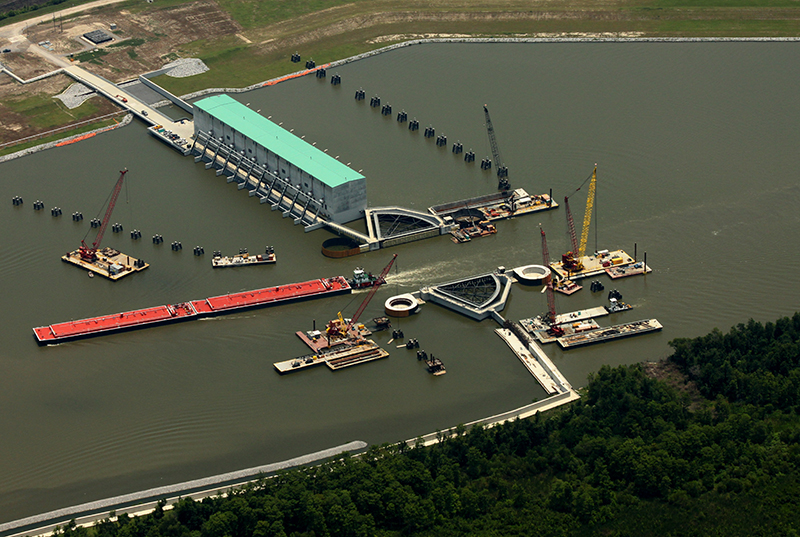
Collaborative delivery models address the challenges federal agencies are seeing. Private sector and non-federal public owners have observed significant benefits from collaborative delivery contracting models. Given the collaborative process that originates at the beginning of project development, the owner, designer, and builder are all working together to incorporate project objectives early. This early involvement from all stakeholders contributes to cost, schedule, and scope alignment. When combined with negotiated pricing, changes are incorporated in the design phase, which significantly reduces the number of changes that occur throughout construction. This ensures greater cost and schedule certainty at the time of awarding the construction contract and reduces claims, disputes, and litigation.
Collaborative delivery methods are culturally different from traditional methods in that the focus for collaborative delivery is on “designing to build” as opposed to “designing to bid.” A change in culture is needed where all stakeholders, led by the owner, are working collaboratively together to meet the project objectives.
Tools for the Trade
Collaborative delivery, also referred to as alternative delivery methods, are contract models involving qualifications-based selection and negotiated pricing for construction. Collaborative delivery methods include design-build, progressive design build, Construction Manager/General Contractor (CM/GC), and Construction Manager at Risk (CMAR). Utilizing collaborative delivery methods can provide agencies with the contracting tools they currently lack and allow them to more effectively leverage and partner with industry to meet their program goals.
Design-Build. In the United States, design-build contracts have been leveraged for decades, with positive results for owners and design-builders. FMI Consulting estimates that design-build will account for 47 percent of construction spending in 2026. Design-build contracting has steadily grown over the last 30 years as both owners and builders alike have seen its benefits as compared to traditional project delivery methods. Design-build contracts have been widely used by the federal government; however, the design-build usage rate in the federal sector has slowed in recent years.
Given statutory competitive pricing restrictions and the limited number of contract types available to USACE, NAVFAC, and AFCEC, the services are unable to use acquisition tools, delivery methods, and selection procedures that both private sector owners and non-federal public owners have been using effectively for decades.
There are two widely used versions: two-phase best value design-build; and progressive design-build.
A two-phase procurement process first identifies the most highly qualified design-builders, then seeks design and cost proposals. The owner selects the design-builder offering the best value proposal: a combination of design, project approach, and contract price. In progressive design-build, the design-builder is selected primarily on the basis of qualifications. After selection, the owner and design-builder collaborate to progressively advance the design and cost model toward a mutually agreeable design concept and contract price.
Progressive Design-Build. Experienced private sector owners, as well as many public sector clients, have chosen progressive design-build as their preferred model when they want to work collaboratively with the design-build team to develop a design and then implement construction means and methods that best meet the project’s goals. During the initial phase of a progressive design-build model, owners work alongside the design-build team to verify and align project schedule, scope, and budget based on the most accurate information available. This leads to a realistic estimate based on input from the owner and design-builder.
Then within the second phase, the owner and design-build team remain in collaboration to develop the project design. Cost estimates and schedule updates are continually provided, which permits the owner to make informed decisions early in the process where impacts from changes are minimal.
Once the design has advanced enough to allow for definition of the project, the design-builder will provide a formal proposal for the construction, including the cost and schedule. The owner and design-builder negotiate the proposal to arrive at an agreement on scope, schedule, and price. Once an agreement has been reached, the parties enter into either a contract amendment for construction or a second contract for construction.
Construction Manager/General Contractor. The CM/GC model is similar to progressive design-build in terms of qualifications-based selection and negotiated construction pricing—but with a key difference. For CM/GC, the design-build team is comprised of two separate entities, and the designer and the builder each have a contract with the owner.

USSTRATCOM Headquarters
The U.S. Strategic Command Headquarters Facility Construction Project, at Offutt ABF, Neb., is an example of the challenges agencies face in completing the large, complex, and difficult when constrained to traditional delivery contract methods and current programming rules.
The original need for a new building was detailed in 2007. The standard process was used for the scoping, planning, designing, and then construction of the facility, with the initial planning estimate coming in at $453 million. After successive rounds of scope reduction and multiple amendments to the solicitation documents, the construction contract was awarded for $524 million in November 2011. In February 2018, 11 years after the demand signal was first identified, construction was completed at a cost of $617 million and 29 months behind schedule. Given that a contract claim is in litigation and has not yet been resolved, final construction contract costs have yet to be determined but may end up around $750 million, the average of industry proposals for the initial solicitation.
Unfortunately, federal construction examples like this are not uncommon. Changes are needed to provide USACE, NAVFAC, and AFCEC with the best contracting tools available, to enable them to be able to collaboratively work with construction contractors to incorporate early constructability input and negotiate accurate and realistic construction cost estimates.
The construction manager provides suggestions, innovations, and constructability input to the designer during the design phase. After completion of the design, the construction manager and owner negotiate a price for the construction contract. Following an agreement between the parties, the construction manager acts as the general contractor to complete the construction. The CM/GC approach provides for early contractor involvement with the design team and owner, which allows for constructability input early and throughout the project.
Construction Manager at Risk. The CMAR model is similar to CM/GC in that the design-build team is two separate entities. However, the main difference is that the owner provides an initial design to a construction manager, who then collaborates with the designer to develop and refine the project design further. Throughout the design phase, the construction manager will work on behalf of the owner to provide suggestions, innovations, and constructability input to the designer.
Prior to the design being complete, the construction manager presents the owner with a proposal for a guaranteed maximum price and negotiates a final price. Once there is agreement, the construction manager and the owner enter into a guaranteed maximum price or fixed-price contract. The construction manager assumes the risk of delivering the project within the guaranteed maximum price parameters.
It is important to note that these contracting methods all result in a guaranteed maximum price or fixed-price construction contract. They are not open-ended cost-plus or cost-reimbursable type contracts. Under collaborative delivery contracts, both design and construction are procured using qualifications-based selection and negotiated pricing. Both private developers and public sector owners have found that fixed-price contracts for construction are crucial to ensure effective risk management and minimize construction cost growth.
Authority to Deliver
While USACE, NAVFAC, and AFCEC currently do not have the statutory authority needed for qualification-based selection and negotiated construction pricing, other federal agencies and non-federal public agencies have been permitted to use qualification-based selection and negotiated pricing.
Results show collaborative delivery is proven as a best practice and the top choice for large complex projects where cost and schedule certainty are paramount.
- Congress provided all 50 state-level departments of transportation the authority in 2012 to use collaborative delivery methods for federally funded state highway projects.
- The Federal Highway Administration received authority, in 2021, within the Infrastructure Investment & Jobs Act, to use collaborative delivery methods for FAR-based federal construction contracts.
- The U.S. Virgin Islands received authority in 2023 to use progressive design-build for the $20 billion Federal Emergency Management Agency-funded Rebuild USVI Program.
- The Federal Aviation Administration received approval to use progressive design-build for the $8 billion Regional Airport Upgrade in the Infrastructure Investment & Jobs Act.
Desirable Outcomes
Collaborative project development that includes early contractor involvement and negotiated construction pricing results in cost, schedule, and scope alignment, and, when combined with a fixed price contract, can better meet owner objectives for risk sharing and cost and schedule certainty. USACE, NAVFAC, and AFCEC should seek authority to use collaborative delivery contracting methods proven in both the private and public sectors as best practices for obtaining desired project, cost, and schedule outcomes.
Additionally, rules affecting MILCON and the Civil Works Programs should be modernized to be commensurate with any contracting model changes and streamline the authorities to capture the full benefits that collaborative delivery models offer. Should new contracting prescriptions allow the use of collaborative delivery methods, the FAR should be updated to provide clear guidance on the use of these methods and DOD should provide specialized training on their usage and implementation.
Embracing more flexible and collaborative acquisition tools in facility investments will enable the services to better meet their mission requirements—and ensure America’s military readiness.
Timothy Hess, P.E., M.SAME, is Vice President, Federal Programs, Kiewit Infrastructure Co.; tim.hess@kiewit.com.

SAME Construction Community of Interest’s Working Group for Collaborative Delivery (Industry Members): Angie Martinez, P.E., F.SAME, Martinez Construction Services; Sam Barnett, M.SAME,  iParametrics LLC; Curt Haldeman, P.E., M.SAME, Granite Construction Co.; Bob Leonetti, M.SAME,  The Lane Construction Corp.; Col. Matthew Beverly, P.E., M.SAME, USAF (Ret.), AECOM; Desiree Gilani, Kiewit Infrastructure Co.; Louis Jenny, M.SAME, Design-Build Institute of America; and Lt. Col. Rick Sloop Jr., P.E., F.SAME, USAF (Ret.), Fluor Corp.
Published in the May-June 2025 issue of The Military Engineer
Check Out Related Articles From TME
-

Innovative PFAS Remediation at Camp Grayling
For project stakeholders and remediation managers confronted with PFAS, Regenesis demonstrates the efficacy of using Regenesis’ PlumeStop® colloidal activated carbon (CAC) at Camp Grayling, Michigan. -
A Standardized Approach to Aircraft Fire Training Infrastructure
To support enterprise-wide airmen readiness, the U.S. Air Force is modernizing its standard design for aircraft fire training facilities—introducing digital controls, dual-fuel systems, and PFAS-conscious infrastructure. -
Delivering Energetic Materials Manufacturing Facilities
Designing and constructing facilities that manufacture, process, handle, or store explosives and energetic materials present some of the most challenging defense projects—requiring technical experience, strict safety protocols, and a comprehensive understanding of regulatory frameworks. -
Forging Tradition and Innovation: A New Design Standard at Camp Lejeune
The II MEF Headquarters at Camp Lejeune blends Georgian Revival architecture with modern sustainability—delivering durability, efficiency, and precision that meets contemporary functional requirements while honoring heritage. -

Balancing Efficiency and Fiscal Responsibility
The continuing contracts clause offers the U.S. Army Corps of Engineers a way to improve project delivery and enhance fiscal responsibility by aligning funding with project execution. -
Next Steps for Digital Twin Development
U.S. Forces Japan is laying the groundwork for future integration of digital twin technology in order to validate and collect data that will offer comprehensive insights into utility conditions at installations and enhance overall decision-making, efficiency, and resilience.