Overcoming Extreme Conditions to Restore Fort Babcock
By Karina Quintans, M.SAME, and Erik Dahl, P.E., M.SAME
At the remote former Fort Babcock site near Sitka, Alaska, an exceedingly complex, four-year environmental remediation sought to clean up decades-old World War II-era polychlorinated biphenyls and petroleum contamination.
Located roughly 11-mi west of Sitka, Alaska, on Kruzof Island, the Fort Babcock Formerly Used Defense Site is as historically significant as it is challenging. The base was developed in the 1930s under “Plan Orange,” the pre-World War II defense strategy for the Pacific. The U.S. military constructed gun batteries and infrastructure before abandoning the site to focus on the Aleutian Islands. Today, the land is managed by the U.S. Forest Service, which seeks to open the area for public recreation and education. But first, the environmental legacy had to be addressed.
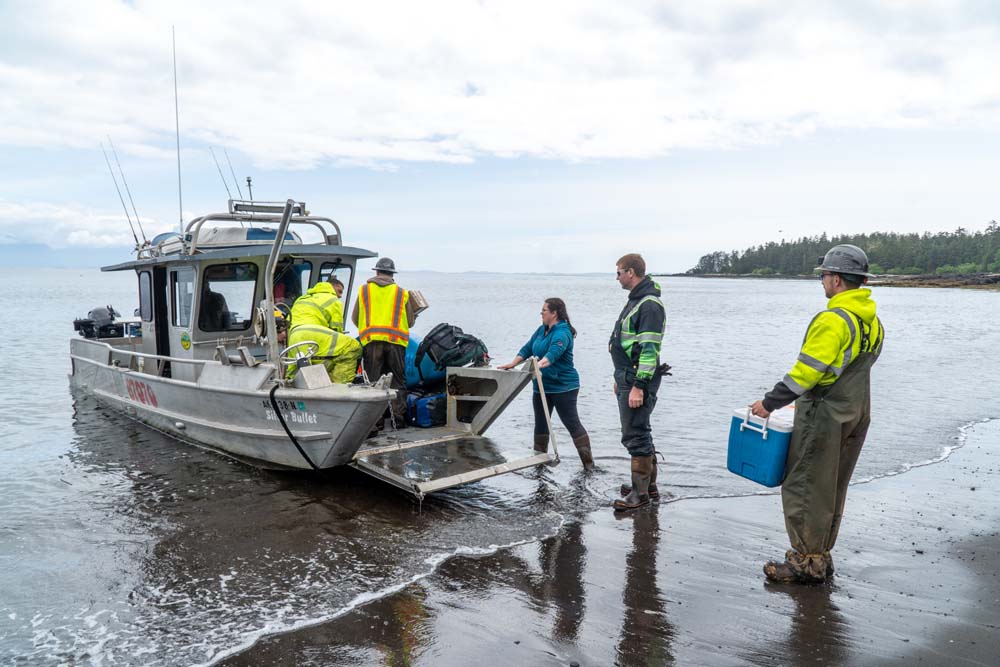
As a remote, off-the-grid site, Fort Babcock presented challenging field conditions. The island is accessible only by barge or landing craft. The temperate rainforest climate of the Tongass National Forest, which the grounds are located within, means lots of rain and extreme mud, testing the limits of people and equipment. With a local bear population as well, safety was top of mind. In addition, strict compliance with regulations and multiple stakeholder expectations guided every aspect of project planning and execution to protect nesting eagles, migratory birds, old growth forest, and World War II archaeological resources. Finally, a change in scope due to conditions encountered in the field amplified the already complicated logistics.
The work would eventually span four field seasons, between 2022 and 2025. After countless downpours, muddy conditions, and a first-time self-perform mobile field laboratory deployment, Brice Engineering completed the cleanup and full-scale remedial action.
Successful Preparations
In 2022, Phase One began, covering a site visit to guide planning and the complex logistics. During the 2023 field season, Phase Two took place, with eagle nest surveys being completed to comply with the Migratory Bird Treaty Act and Bald Eagle Management Guidelines. Follow-up surveys were completed in 2024 and 2025.
During Phase Three, 0.5-mi of vegetative growth was cleared to access six “areas of concern” along the path of a World War II-era road. Each area of concern also was cleared to facilitate the remedial action. In total, approximately 5.9-acres were cleared in accordance with Forest Service expectations to minimize impact to the rainforest. Quickly, however, challenges arose. On the second day, the site lead returned to Sitka by water taxi until the field camp was ready to inhabit. The next day, a summer cruise line accidentally cut a fiberoptic cable, jeopardizing the coordination needed with the water taxi operator for island access. A 2-mi walk to the home of the water taxi operator kept the plan intact. Once back on Kruzof Island, the site lead then devised contingency check-ins at the field camp until communications were restored.
Following that potential setback, fieldwork proceeded with the site access road being cleared to ensure the safe passage of equipment and staff to project work areas. Steep grade angles were reworked to a safe and navigable grade. Tundra mats, wood laminated mats, and crane mats were used to help equipment get through muddy and soft spots in the road and protect vegetation. To build stormwater and erosion controls along the access road, a handcart was mobilized to move materials down the road. Because of the extreme mud, the cart was immediately rendered useless. Over the course of a week, the site lead walked as much as 10-mi/day from the camp to the access road to establish the stormwater and erosion controls in accordance with the approved Stormwater Pollution Protection Plan.
During the final week of fieldwork, a three-day intense atmospheric event was forecasted to impact Kruzof Island. To ensure safety, the field team returned to Sitka for a few days. Once the storm passed, final site preparation and clearing work was completed within a day, and personnel demobilized for the season.
The work would eventually span four field seasons, between 2022 and 2025.
Mobilizing for Cleanup
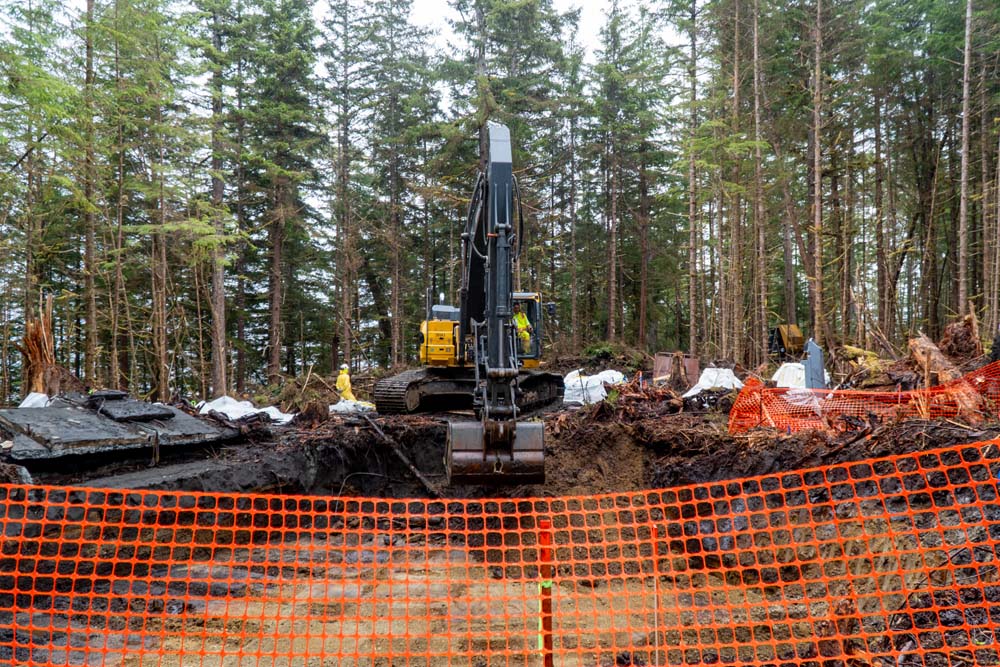
The contracted team with Brice remobilized in spring 2025 to perform the remedial action. Inert debris consisting of metal drums and drum fragments were removed. At the power plant area, soil contaminated with polychlorinated biphenyls was excavated and bagged for offsite disposal. Liquids and sludge containing petroleum, oil, and lubricants from an existing 8,000-gal aboveground storage tank in the fuel storage area were removed and containerized, with the inside of the tank cleaned. In addition, an 8,000-gal aboveground storage tank was temporarily moved to excavate underlying contaminated soil. Material in septic tanks and a manhole was removed and bagged. Excavated soil then was placed directly into supersacks and transported to the staging area.
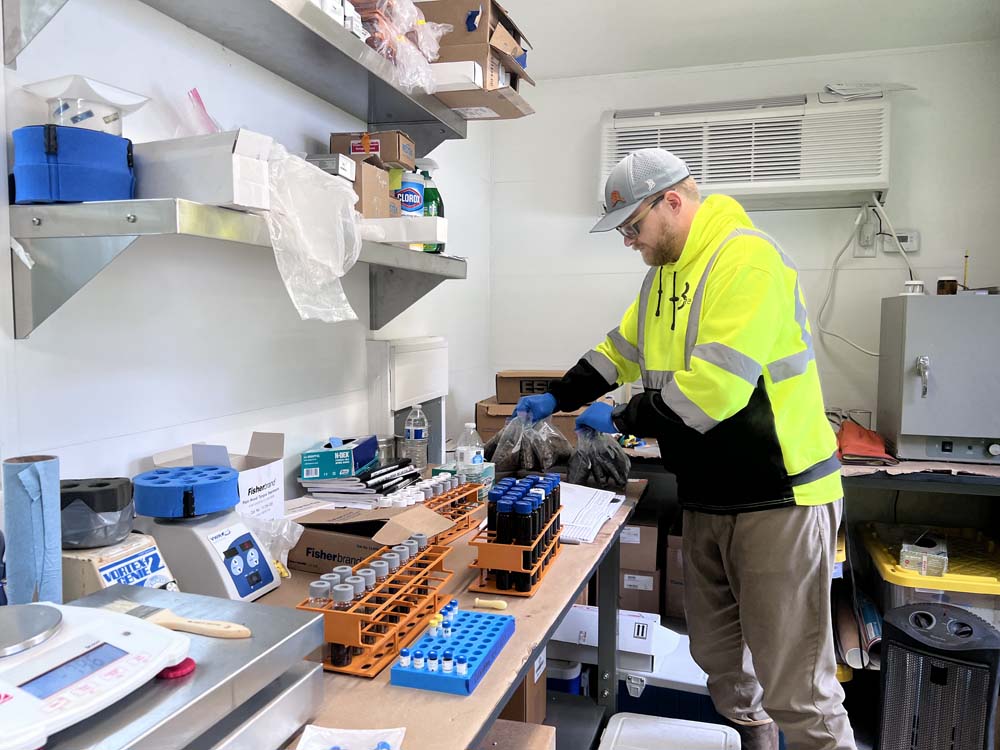
To keep to the schedule and maintain productivity levels, Brice deployed a field laboratory, one of the only in-house deployable field centers in the state. The mobile setup provided initial analytical results in less than a day, enabling real-time decisions during the remedial action. The field results were later confirmed by fixed laboratory analysis confirmation samples.
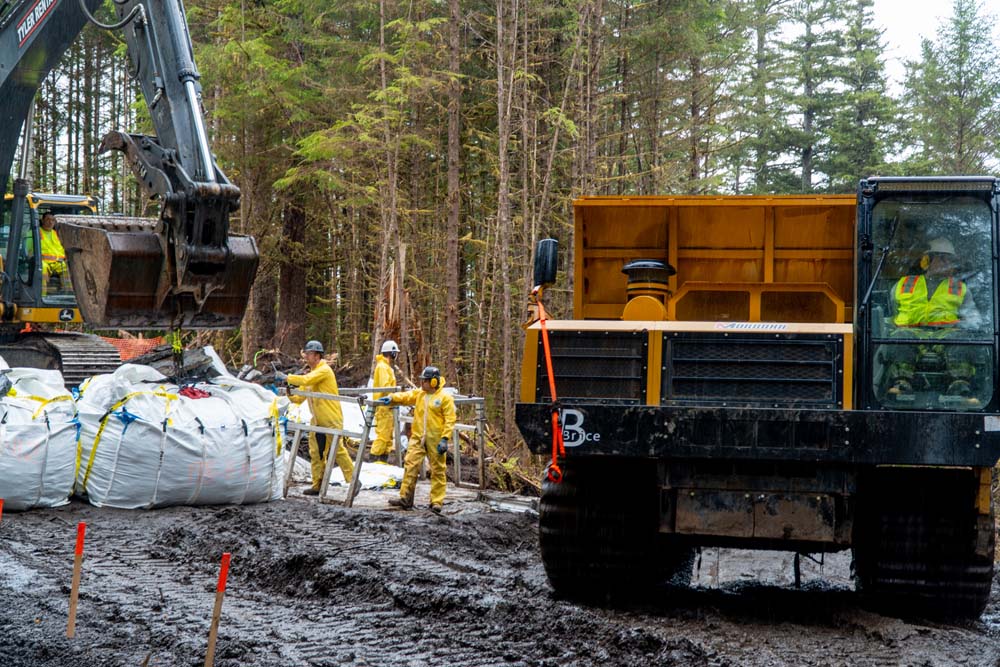
way for future public access.
Site Complexities
Though standard in scope, the remedial action at Fort Babcock was made more challenging by highly complex site conditions. The work was meticulously planned ahead of time and while in the field in order to minimize impacts on ecological and cultural resources.
Multiple tactics were implemented to overcome site conditions and facilitate safe and smooth operations.
- The access road was minimized to a single lane.Areas of concern were cleared to the minimum-sized footprint needed to complete the job.
- The excavator was staged at each area of concern while field crews traveled back and forth using 4×4 tracked utility task vehicles.
- An operator used a rubber track carrier to transport multiple bags of excavated soil at a time to the staging area to reduce travel; loads were minimized in weight to avoid getting stuck in the mud.
- A full-time archaeologist was assigned to perform archaeological monitoring and ensure there was no impact to cultural resources if encountered.
During May and June 2025, record-breaking rainfall compounded difficulties, stalling the excavator seven times in the mud on the first day of the fieldwork alone. To mitigate the negative impacts of the conditions, the staging area was reworked with layered reinforcement: puncheon, dirt from a borrow pit, corduroy road, a geotextile liner, and even “hopscotching” logs and rig mats to keep the excavator moving through deep mud. The field team also had to actively manage stormwater protections along the access road, which was compromised several times by heavy precipitation.
Additional challenges emerged late in the project when unexpected polychlorinated biphenyls contamination and petroleum-contaminated septic material were discovered. The field crew initially had to deal with this extra material without the right equipment onsite; however, the project manager was able to revise the schedule and procured the resources needed to complete the additional work in an already short field season.
Cleaner, Safer, Transformed
To finally achieve status complete, the project still required two additional unplanned mobilizations—with the final demobilization proving one of the most complex barging operations the contractor has experienced to date. A combination of a lightering barge and a boat was used to move around 350 sacks of material comprised of three waste streams with their unique handling instructions off the island and onto the ocean-going barge with the assistance of tugboats. The field team performed this complex operation twice a day in concert with the tide schedule. Fortunately, tide cycles aligned with daylight hours, avoiding riskier night work.
With the remedial action now complete, the Fort Babcock Formerly Used Defense Site is on its way to a safer, more usable future. The cleanup will have served to help transform this historic location into a place to be explored and revered by the public.
Karina Quintans, M.SAME, is Writer, JebelWorks LLC; kquintans@comcast.net.

Erik Dahl, P.E., M.SAME, is Project Manager, Brice Engineering; edahl@briceeng.com.
Published in the January-February 2026 issue of The Military Engineer

Check Out Related Articles From TME
-

Innovative PFAS Remediation at Camp Grayling
For project stakeholders and remediation managers confronted with PFAS, Regenesis demonstrates the efficacy of using Regenesis’ PlumeStop® colloidal activated carbon (CAC) at Camp Grayling, Michigan. -
A Standardized Approach to Aircraft Fire Training Infrastructure
To support enterprise-wide airmen readiness, the U.S. Air Force is modernizing its standard design for aircraft fire training facilities—introducing digital controls, dual-fuel systems, and PFAS-conscious infrastructure. -
Delivering Energetic Materials Manufacturing Facilities
Designing and constructing facilities that manufacture, process, handle, or store explosives and energetic materials present some of the most challenging defense projects—requiring technical experience, strict safety protocols, and a comprehensive understanding of regulatory frameworks. -
Forging Tradition and Innovation: A New Design Standard at Camp Lejeune
The II MEF Headquarters at Camp Lejeune blends Georgian Revival architecture with modern sustainability—delivering durability, efficiency, and precision that meets contemporary functional requirements while honoring heritage. -

Balancing Efficiency and Fiscal Responsibility
The continuing contracts clause offers the U.S. Army Corps of Engineers a way to improve project delivery and enhance fiscal responsibility by aligning funding with project execution. -
Next Steps for Digital Twin Development
U.S. Forces Japan is laying the groundwork for future integration of digital twin technology in order to validate and collect data that will offer comprehensive insights into utility conditions at installations and enhance overall decision-making, efficiency, and resilience.