Physical Security Lessons Learned From State Department FLEX Missions
By Lt. Col. Sarah Culbertson, M.SAME, USMC
The Department of State’s experience in working from austere locations across the Pacific and its mature doctrine for executing physical security in such environments can offer lessons for the U.S. Marine Corps as the service carries out expeditionary advanced base operations in the region.

“We will cut our enemies down in droves. Our fires will be the substance of their nightmares. The fields of the dead will serve as evidence of our passing.”
So opens the 249th Marine Corps Birthday Message from the Commandant of the Marine Corps, reminding the audience that the primary function of Marines is to visit violence on the nation’s enemies: to fight and win in armed conflict.
Considering this unwavering mandate, it may seem that the physical security requirements for Marines operating overseas would differ substantially from those employed by members of the Department of State. However, an evolving threat landscape, guided by national strategic directives aimed at countering Chinese influence in the Pacific, has driven both organizations to adopt operational concepts that focus on small, flexible, and agile operations in small island nations.
This convergence of missions in similar environments, with comparable threats and resource constraints, has brought the force protection requirements of both organizations into close alignment. The Marine Corps stands to benefit by adopting some of the State Department’s established physical security practices to protect its personnel executing dispersed missions in the Pacific, given the department’s vast experience working in these types of environments paired with its mature and robust doctrine.
Smaller, Lighter, Agile
Current U.S. national strategies stress the need for military/government personnel to be present in the Pacific in order to counter the malign influence of the People’s Republic of China and prevent it from increasing its impact in the region. The 2022 National Security Strategy lists out-competing China as its top global priority and states that the United States needs to “partner with, support, and meet the economic and development needs of partner countries” to counter Chinese influence.
In alignment with this strategic-level guidance, the Commandant of the Marine Corps and the Chief of Naval Operations released the Tentative Manual for Expeditionary Advanced Base Operations (May 2023), which directs the services to engage in “a form of expeditionary warfare that involve[s]
the employment of mobile, low-signature, persistent, and relatively easy to maintain and sustain naval expeditionary forces from a series of austere, temporary locations.”

During competition, these operations provide the United States with critical access in the Indo-Pacific, strengthen partnerships with friendly nations, and allow military personnel access to create and upgrade local infrastructure to ensure, should competition turn to crisis, that the United States has the roads, runways, housing, and supplies in place to conduct follow-on operations.
In a similar manner, the State Department recognized that a U.S. diplomatic presence is critical in the region and received direction to “open new embassies and consulates, particularly in Southeast Asia and the Pacific Islands.” Because the existing requirements for opening a mission were too slow, cumbersome, and expensive to rapidly exploit opportunities in the region, the State Department developed its own concept to speed and streamline the process.
These missions, termed Fast, Lean, Efficient, Expedient (FLEX), can be completed in less than 12 months and for under $10 million, unlike traditional diplomatic missions, which take three to five years to open and cost upward of $100 million. The FLEX approach allows the department to have “expeditionary platforms for diplomatic engagement where the United States does not currently have a physical presence or where a nimbler platform would better support U.S. foreign policy objectives.”
Pending Congressional funding, the State Department plans to open five FLEX locations in the next three years in Antigua and Barbuda, Saint Lucia, Saint Kitts and Nevis, Dominica, and Saint Vincent and the Grenadines.
Assessing Local Access
Due to the austere environment inherent in both FLEX missions and expeditionary advanced base operations (EABO), construction of new infrastructure is often expensive and extensively constrained by the private ownership of land, the scarcity and quality of locally procured construction materials, and the physical space available (requiring military personnel to lease local infrastructure for billeting).
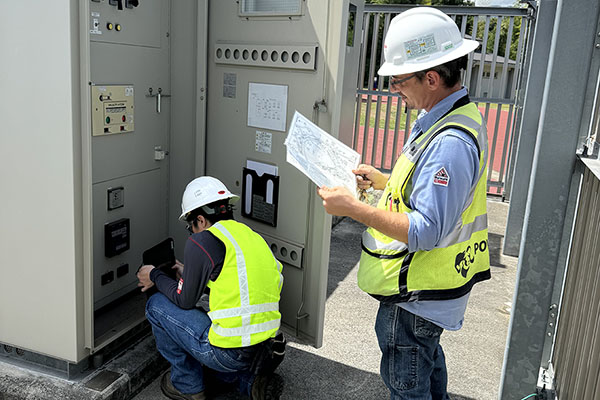
The Marine Corps Antiterrorism Manual is the service’s principal doctrine governing site selection and directs units to have their antiterrorism officers conduct vulnerability assessments on buildings being considered for military use to help to determine the overall risk at a specific location. This process requires the officer to identify vulnerabilities with the site, weigh their probability, then identify actions to address these deficiencies in a process not entirely dissimilar to the more familiar operational risk management assessment.
Assessment Guidance and Criteria
A tangible benefit of leveraging the State Department’s FLEX Mission Facility Playbook for Marine Corps personnel who are conducting vulnerability assessments is the objective standards by which to measure sites.
Instead of requiring the assessor to evaluate environmental factors, for example, “The Scorecard” offers more quantifiable guidance and criteria to assess environmental hazards.
Natural Hazard Exposure/Risk: What natural hazard (flood, landslide, wildfire, tsunami, hurricane,) risks does the facility location face? The facility selection team will need to carefully consider its rating when multiple hazards exist.
- Zero Compliance – The facility is in an area with a high frequency and severity of natural hazards such as earthquakes, hurricanes, floods, or wildfires. Historical data shows frequent and significant damage from these natural events.
- Low Compliance – The facility is in an area that experiences natural hazards regularly, though not as severely as the highest risk areas. There is a history of moderate damage from events like floods, storms, or seismic activity.
- Moderate Compliance – The facility faces occasional natural hazards, but the frequency and severity are average compared to other areas. Historical data shows occasional, moderate damage from natural events.
- High Compliance – The facility is in an area with infrequent and mild natural hazards. Historical data shows rare and minor damage from natural events.
- Full Compliance – The facility is located in an area with very few or no significant natural hazards. Historical data shows no significant damage from natural events.
However, guidance on conducing vulnerability assessments provided by the Antiterrorism Manual is broad and often subjective; the officer is expected to assess criterion such as “environmental factors” and “personal behaviors of people working in or around the critical assets,” with no objective standards by which to measure them.
To address these issues, the Marine Corps should consider adopting a checklist similar to what the State Department uses to assess local infrastructure for suitability in its FLEX missions, which is located in the FLEX Mission Facility Playbook (“The Scorecard”). This checklist consists of 28 questions, grouped under the broader categories of location, building/infrastructure, and security features, objectively defining and weighing physical security criteria. The Scorecard also includes criteria such as “representational quality,” which, while not typically prioritized by the Marine Corps, could prove critical in EABO missions where fostering trust and strengthening partnerships with host nations is essential to achieving strategic objectives. By integrating these related considerations, the Marine Corps can broaden its evaluation framework to include factors that support operational goals and the soft power necessary for building lasting partnerships in resource-constrained environments.
In the locations where Marines will be conducting EABO, the scarcity of billeting options combined with the inability of most accommodations to meet force protection standards presents significant security challenges.
Enhancing operational effectiveness in austere environments requires the Marine Corps to incorporate more rigorous, objective criteria for infrastructure assessment. Adopting methods such as those found in the Scorecard would ensure functional suitability and strategic alignment with service initiatives.

Scaling Measures
The Tentative Manual for Expeditionary Advanced Base Operations recognizes that forces operating from expeditionary advanced bases during campaigning are vulnerable to intelligence collection by state, non-state, and proxy actors or networks—and by threats from civil disturbances and criminal activity. Marine Corps doctrine on physical security and force protection is limited in addressing these challenges and instead focuses on physical security measures to “reduce collateral damage and the scope and severity of mass casualties in the event of a terrorist attack.” This type of force protection calls for standoff and large barriers, both of which can be difficult and expensive to obtain in a remote island location.
While blast and ballistic protection are important during conflict, these measures may not be appropriate or feasible in the initial stages of EABO. There, the primary threats in partner nations are likely enemy collections and criminal activity, and the mission often involves partnering with host nation personnel to build friendships and trust in the region.
Although Marines must remain prepared to be able to transition rapidly to conflict, adopting physical security measures tailored to the current threat level during the initial establishment of a foothold is cost-effective and expedient. This approach ensures force protection in the short term, and allows more time for commanders to develop and allocate extensive conflict-level protections based on strategic risk assessments. While the Marine Corps does have force protection conditions standards that adjust according to threat, these are temporary and largely related to human actions, not construction standards.
In contrast, the Department of State, which routinely operates in environments ranging from friendly to hostile, has robust practices for scaling physical security measures to match the threat level of the operating environment. Utilizing standards dictated in the Secure Embassy Construction and Counterterrorism Act of 1999 and the Overseas Security Policy Board, the State Department, through Volume 12, Handbooks 5 and 6 of the Foreign Affairs Manual (“Physical Security Handbook”), lists physical security requirements for its infrastructure that are scalable based on threat.
For example, the handbook provides four separate standoff distance requirements for embassies and chanceries, dependent on whether the mission is in a country categorized as having a low, medium, high, or critical likelihood of political violence or terrorism. In contrast, Department of Defense doctrine dictates a minimum 50-ft of standoff, inclusive of the clear zones outside and inside the installation perimeter, regardless of the country’s threat level.
Because of the Physical Security Handbook, the State Department already had scalable, codified physical security when it started exploring FLEX missions. This enabled it to plan for physical security measures that were contextually appropriate and effectively integrated into broader campaigning efforts. The Marine Corps need not reinvent the wheel to create its own doctrine appropriate for use during campaigning and should instead look to an existing proven approach, as codified in the Physical Security Handbook, to adequately protect the force in lower threat operating environments.

Hardening Infrastructure
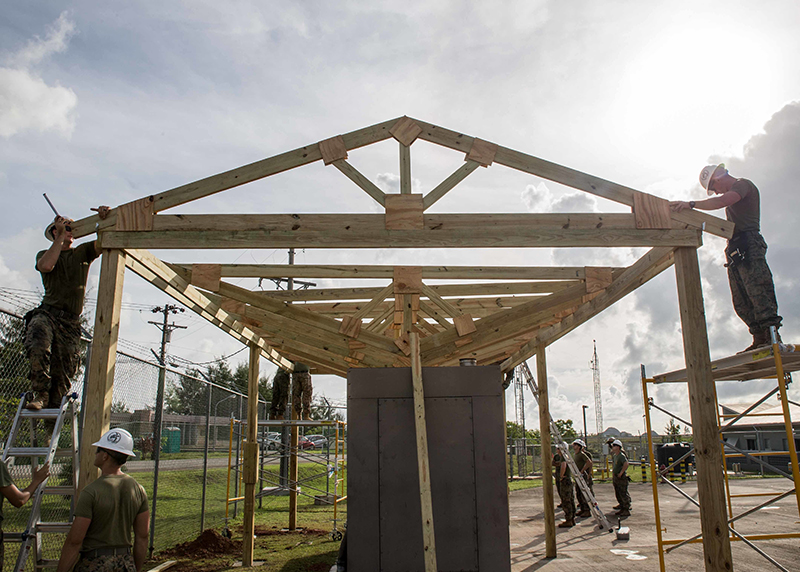
In conflict situations, military personnel often construct their own infrastructure for life support; and during overseas training and theater cooperation exercises, they often live in existing military barracks, in field conditions, or in hotels with established assessments for appropriate security. In the locations where Marines will be conducting EABO, the scarcity of billeting options combined with the inability of most accommodations to meet force protection standards presents significant security challenges. Whereas the Marine Corps Antiterrorism Manual states that antiterrorism officers should assess existing infrastructure to determine its ability to protect personnel, there is minimal guidance on how specifically to harden these structures. Consequently, Marines have an obligation to harden the infrastructure themselves, yet they generally are ill-equipped with neither the proper training nor doctrinal guidance to do so.
Personnel with the State Department have extensive experience with leasing and upgrading host nation infrastructure to meet physical security standards. Not only does doctrine identify physical security requirements, scaled to the nation’s threat and found in the Physical Security Handbook, but a manual provides blueprints and schematics to achieve these “lease fit out” requirements, utilizing multiple combinations of barriers and construction materials. If the threat level in a particular country requires that a residence has a wall that resists forced entry for five minutes, for example, the handbook states that walls can be either reinforced with a combination of 3/4-in plywood with metal mesh and steel studs, 1/8-in steel plate with 1-in by 6-in boards, or 3/8-in gypsum board with 1-in by 6-in boards or 3/4-in plywood.
By consulting this reference resource, Marine engineers would have access to detailed plans for enhancing force protection in existing accommodations to meet antiterrorism requirements. The handbook’s various options also allow engineers to tailor solutions to available resources, which becomes critical when operating in austere locations. Through leveraging the Physical Security Handbook, Marine engineers can overcome the constraints of remote sites and implement solutions that balance security requirements with available resources.

Enhancing Effectiveness
Both EABO and FLEX were developed with the aim to achieve strategic positioning in alignment with broader efforts to enhance U.S. presence and influence in the Pacific.
Given a shared focus on these small-scale operations, the Marine Corps stands to benefit from the State Department’s mature program and expertise in adapting and enhancing existing local infrastructure to implement effective force protection in resource-limited environments. By leveraging the State Department’s established practices, the Marine Corps can enhance operational effectiveness and ensure alignment with broader interagency efforts.
Integrating such measures would reinforce the ability of the Marine Corps to maintain security, build local partnerships, and sustain its strategic objectives while operating within the resource and space constraints of small island nations in the Pacific and Eastern Caribbean, areas likely to remain as high priority locations the Marines must prepare for. This collaboration could serve as a model for future operations, fostering greater cohesion across U.S. agencies in addressing shared national security challenges.
Lt. Col. Sarah Culbertson, M.SAME, USMC, is a Marine Corps Fellow, Department of State; sarah.culbertson@usmc.mil.

The opinions expressed in this article are the author’s own and do not necessarily reflect the views of the Department of Defense or the United States government.
Published in the May-June 2025 issue of The Military Engineer
Check Out Related Articles From TME
-

Innovative PFAS Remediation at Camp Grayling
For project stakeholders and remediation managers confronted with PFAS, Regenesis demonstrates the efficacy of using Regenesis’ PlumeStop® colloidal activated carbon (CAC) at Camp Grayling, Michigan. -
A Standardized Approach to Aircraft Fire Training Infrastructure
To support enterprise-wide airmen readiness, the U.S. Air Force is modernizing its standard design for aircraft fire training facilities—introducing digital controls, dual-fuel systems, and PFAS-conscious infrastructure. -
Delivering Energetic Materials Manufacturing Facilities
Designing and constructing facilities that manufacture, process, handle, or store explosives and energetic materials present some of the most challenging defense projects—requiring technical experience, strict safety protocols, and a comprehensive understanding of regulatory frameworks. -
Forging Tradition and Innovation: A New Design Standard at Camp Lejeune
The II MEF Headquarters at Camp Lejeune blends Georgian Revival architecture with modern sustainability—delivering durability, efficiency, and precision that meets contemporary functional requirements while honoring heritage. -

Balancing Efficiency and Fiscal Responsibility
The continuing contracts clause offers the U.S. Army Corps of Engineers a way to improve project delivery and enhance fiscal responsibility by aligning funding with project execution. -
Next Steps for Digital Twin Development
U.S. Forces Japan is laying the groundwork for future integration of digital twin technology in order to validate and collect data that will offer comprehensive insights into utility conditions at installations and enhance overall decision-making, efficiency, and resilience.