Powering Resilience Across the U.S. Army
By Maj. Greg Sacenti, M.SAME, USA
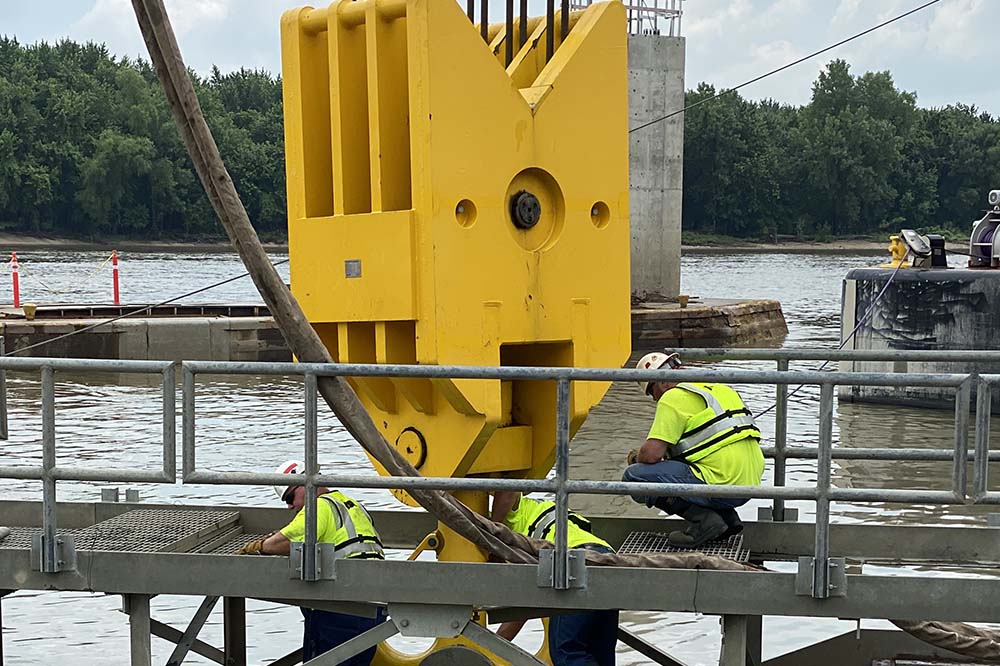
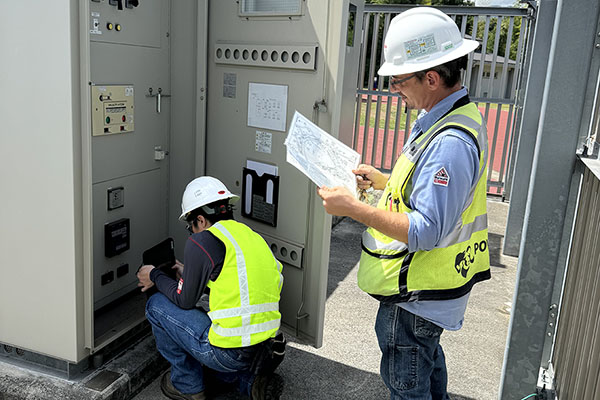
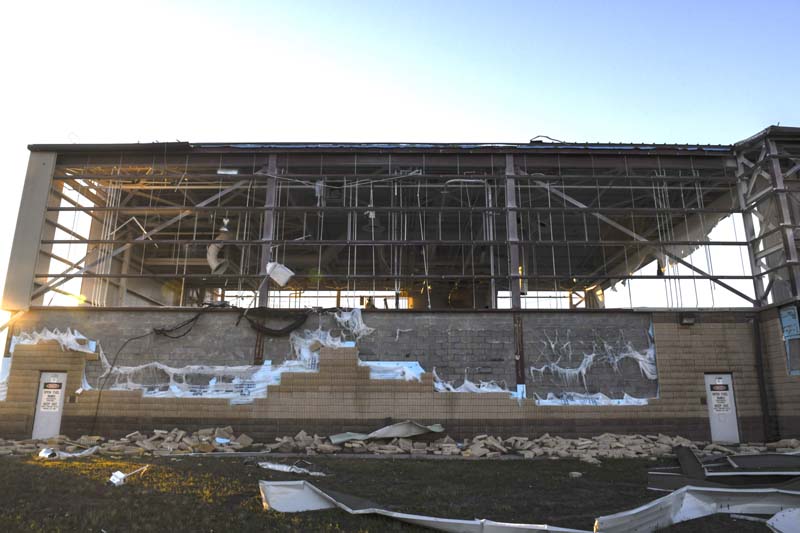
As electrical demands and threats to the grid from extreme weather and man-made events continue to grow, Prime Power operators with the 249th Engineer Battalion provide essential capability to respond to emergencies and strengthen national resilience.
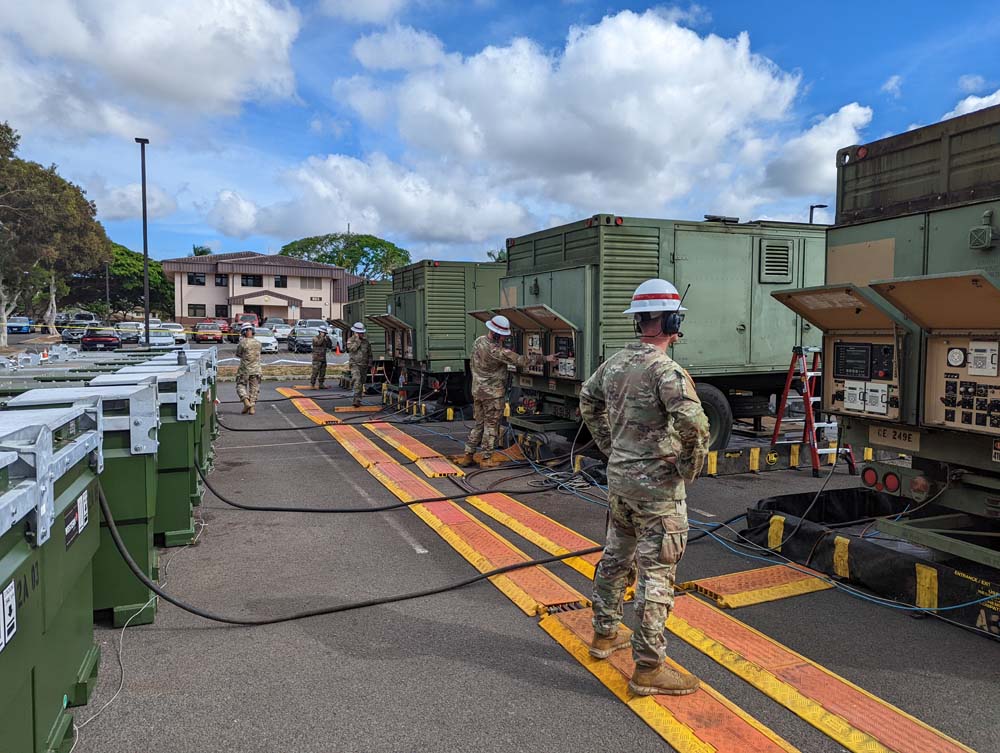
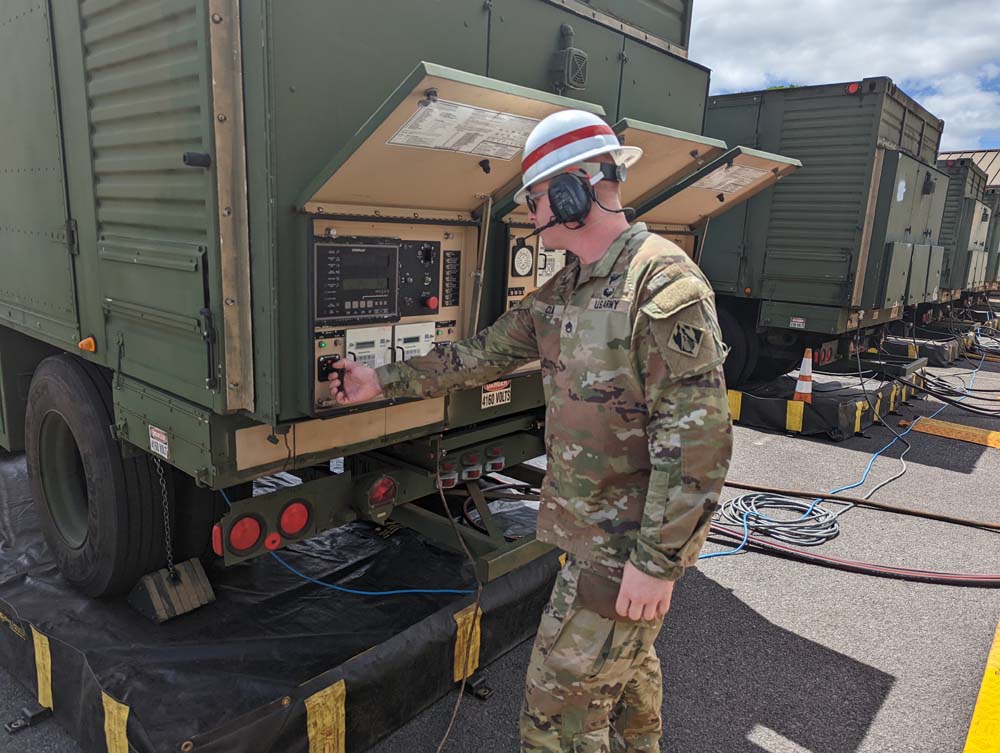
at Schofield Barracks, Hawaii. Photos by Maj. Greg Sacenti, USA.
Deep in the heart of Missouri at Fort Leonard Wood, the U.S. Army Prime Power School is training the military’s best emergency power generation experts. The school and its soldiers are within the engineer branch and are specifically aligned directly under the U.S. Army Corps of Engineers. While at Fort Leonard Wood, each soldier completes 12 months of rigorous academic and practical education, and fewer than 70 soldiers graduate each year.
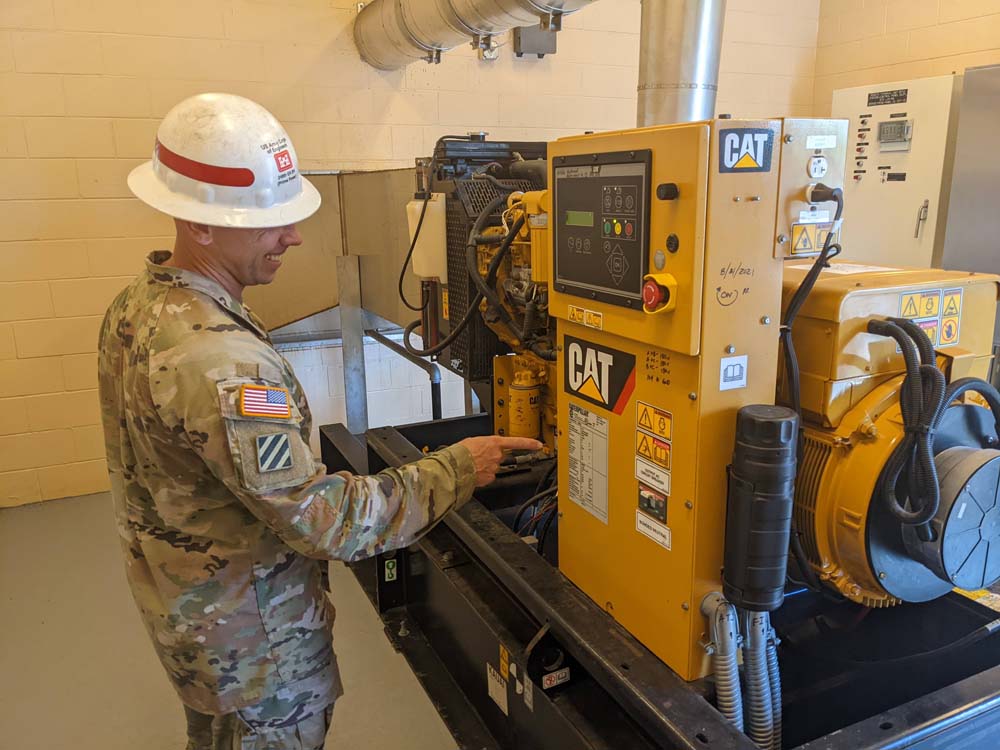
Officially titled Prime Power Production Specialists (Military Occupational Specialties: 12P and 12Q), these soldiers are a unique tactical blend between electricians, overhead linemen, and commercial-grade power plant operators. Their primary mission is to provide power in austere environments by utilizing their microgrid of power generation and transmission assets. Each power station (platoon) has a 3.2-MW capacity, enough to power a 1,200-man basecamp or roughly 2,600 homes.
Prime Power soldiers have supported countless communities in restoring power in the wake of natural disasters. After the attacks of Sept. 11, 2001, Prime Power returned electricity to Wall Street within 10 days. Other notable missions include responding to Hurricane Ian, the New Mexico wildfires, typhoons in Guam, and the Schofield Barracks power crisis in Hawaii. Just this winter, Prime Power deployed to support areas in the Southeast affected by power outages caused by Winter Storm Fern. Last summer, at Fort Hamilton in New York, soldiers responded to begin 24/7 operations when the installation’s substation became heavily strained due to prolonged extreme heat.
While on assignment, Prime Power soldiers cultivate partnerships with government agencies, including the Federal Emergency Management Agency, the Bureau of Land Management, the Bureau of Indian Affairs, and others. Prime Power deployments span the globe, from Guam and Florida to the Middle East and beyond.
Dual-Function Expertise
Assignments for these soldiers fall into two categories: global space and missile defense posts, or placement with the 249th Engineer Battalion (Prime Power), headquartered at Fort Belvoir, Va. From there, they are assigned to one of five subordinate company-level posts in Hawaii, North Carolina, Virginia, or Rhode Island.
An example of these professionals in action can be seen through the experience of Alpha Company, based at Schofield Barracks. The unit comprises 86 soldiers operating in an environment where deployments occur with little notice—often within hours—usually in anticipation of or response to natural disasters.
Leadership Oversight. Unlike a conventional Army company, each of the company’s four power stations is led by a chief warrant officer and a master sergeant, representing significantly more experienced leadership than the junior officers who typically lead Army platoons. In Prime Power, assigning experienced leaders to this echelon allows the unit to maintain operational agility across a wide range of missions. The margin for error is inherently smaller than in conventional formations, especially given the fact that Prime Power deploys small teams that must operate proficiently and collaboratively with various federal, municipal, and foreign stakeholders while on deployment.
Such a rare type of command offers equally unique leadership lessons: the management of time and priorities; the responsibility that comes with autonomy; and the importance of continuous organizational reflection. The available training time for the company is finite; and while it maintains a 12‑month training glide path, that path is regularly interrupted by real‑world missions. The difficulty of balancing training for the near-term “most likely” objectives while simultaneously training for the distant “worst-case scenarios” is a constant challenge.
For Prime Power’s Alpha Company, it is managed by nesting the short-term training goals within an overarching training focus, which is reassessed quarterly. Long-term goals are assessed and evenly distributed across the training events determined to most likely help the team reach them. The extra space between those events is filled with preparing for unique “worst-case” scenarios. This approach also allows the company to shift or sacrifice training as needed without hindering those long-term training objectives.
Flexible Mindset. Prime Power soldiers operating in austere locations need to be comfortable with autonomy. For Alpha Company, as an example, leaders need to operate effectively while 6,000-mi away from reach-back support in Virginia.
When on assignment, the team also relies on the assistance provided by operational support soldiers in Maintenance, Supply, Operations, and Communications to keep the work functioning. The solid foundation of meticulously maintained organizational processes provided by these personnel ensures the company meets each mission with success.
Leading The Charge
The future of Prime Power depends on the ability to attract and retain motivated, technically proficient soldiers to carry this unique Army occupational specialty forward. Their responsibilities will only be more in demand. An aging power grid, like what our nation faces, is vulnerable to extreme weather and natural disasters. Threats of electromagnetic pulses and substation attacks are becoming more prevalent. At the same time, consumer demand for electrical power and commercial requirements through the expansion of data centers continues to grow. The lack of redundancy across the grid becomes a self-inflicted threat.
Emerging technologies, such as mobile nuclear power, offer opportunities to strengthen national resilience. However, these military capabilities are contingent on the presence of mission-aligned experts such as Prime Power soldiers ready to respond. As threats evolve, the Army’s ability to field dependable power solutions to warfighters and American communities will continue to rely on these specialists and the expertise they bring.
Maj. Greg Sacenti, M.SAME, USA, is Deputy Resident Engineer, USACE Los Angeles District (previously Commander, Alpha Company, 249th Engineer Battalion);
greg.sacenti@gmail.com.
Published in the March-April 2026 issue of The Military Engineer

Check Out Related Articles From TME
-

Innovative PFAS Remediation at Camp Grayling
For project stakeholders and remediation managers confronted with PFAS, Regenesis demonstrates the efficacy of using Regenesis’ PlumeStop® colloidal activated carbon (CAC) at Camp Grayling, Michigan. -
A Standardized Approach to Aircraft Fire Training Infrastructure
To support enterprise-wide airmen readiness, the U.S. Air Force is modernizing its standard design for aircraft fire training facilities—introducing digital controls, dual-fuel systems, and PFAS-conscious infrastructure. -
Delivering Energetic Materials Manufacturing Facilities
Designing and constructing facilities that manufacture, process, handle, or store explosives and energetic materials present some of the most challenging defense projects—requiring technical experience, strict safety protocols, and a comprehensive understanding of regulatory frameworks. -
Forging Tradition and Innovation: A New Design Standard at Camp Lejeune
The II MEF Headquarters at Camp Lejeune blends Georgian Revival architecture with modern sustainability—delivering durability, efficiency, and precision that meets contemporary functional requirements while honoring heritage. -

Balancing Efficiency and Fiscal Responsibility
The continuing contracts clause offers the U.S. Army Corps of Engineers a way to improve project delivery and enhance fiscal responsibility by aligning funding with project execution. -
Next Steps for Digital Twin Development
U.S. Forces Japan is laying the groundwork for future integration of digital twin technology in order to validate and collect data that will offer comprehensive insights into utility conditions at installations and enhance overall decision-making, efficiency, and resilience.