Seeing Results: Construction at Tyndall Takes Shape
By Col. Robert Bartlow Jr., M.SAME, USAF
As construction got underway to rebuild Tyndall AFB as the Installation of the Future following the widespread damage caused by Hurricane Michael in 2018, contractors and base leadership navigated the overlapping challenges of constructing dozens of complex projects while the daily activities of an operational base continued.
Editor’s Note: This is the fourth in a series of articles detailing the recovery and rebuild of Tyndall AFB following Hurricane Michael, which struck the Florida Panhandle on Oct. 10, 2018. The multi-part feature covers the engineering challenges encountered by the U.S. Air Force, U.S. Army Corps of Engineers, and multiple private sector A-E firms and contractors to not only restore the base to operational status, but to transform it into the “Installation of the Future.”
After the devastation brought by Hurricane Michael in 2018 reshaped every corner of Tyndall AFB, Fla., the transformation first envisioned in the early days of recovery had begun to take form by 2020. A full‑scale construction effort had gotten underway as A-E firms and contractors worked in partnership alongside base personnel with the U.S. Air Force and many other military and government partners to not just rebuild, but to construct an “Installation of the Future.”
To fully appreciate the revival that arose at Tyndall, it is essential to understand the challenges of reconstructing an 85-year-old base and successfully meet aggressive construction milestones. Beyond the removal, first, of tons of debris, site preparations uncovered hidden and undocumented infrastructure that often presented obstacles throughout the process. In addition, executing dozens of projects in close proximity required an elaborate coordination between contractors and base personnel. Finally, successfully closing out projects involved a detailed manner to ensure the successful delivery of high-quality facilities.
In total, the work at Tyndall encompassed 44 MILCON projects, four replacement projects funded through Operations & Maintenance, and nearly 260 projects undertaken through Facility Sustainment, Restoration, and Modernization.
The Build-Out Begins
From the outset, the sheer magnitude of the rebuild required a far-reaching team across the defense enterprise. The Mobile District of the U.S. Army Corps of Engineers (USACE) served as design and construction agent, working closely with the Air Force to help ensure successful delivery of the work. Because of the size and scope of the program, Mobile District expanded what had been a small pre-hurricane presence it maintained on the base, eventually partnering with USACE Savannah District to support three construction zones.
Streamlining Close-Out
A final challenge for the Tyndall Rebuild would prove to be the successful close out and turnover of facilities to end users. During the close-out phase on other projects, the Air Force typically ensures that all work is completed satisfactorily and according to the contract, that the user’s operational needs are met, that all required construction contractor submittals have been received and accepted, that all facility construction deficiencies and punch list items have been remedied, and that the facility is ready for occupancy.
However, as the $3.2 billion Tyndall construction effort transitioned into acceptance and close-out, individual MILCON projects entered the six-month “red zone” with insufficient visibility concerning close out deliverables. As a result, the program needed to navigate challenges and lessons learned to ensure that successful completion of facility acceptance actions and secure area accreditation standards were met. For example, a significant lesson emerged after the completion of the first delivered asset, the Air Battle Manager Flight Simulator. This project lacked a standardized deliverable tracking process and faced significant issues during transfer to the Air Force. This pattern continued during transfer of the next 10 facilities. Without a dedicated close-out checklist, an average of 10-deliverables-per-asset remained outstanding—requiring substantial post-transfer intervention from government staff. That led to the introduction of the “Placed in Service Close-Out Deliverables Checklist” in May 2024.
By using a formal checklist, the delivery team comprised of the Air Force, USACE, and the construction contractor was able to work together to ensure the facility meets the user’s needs, was constructed in accordance with the drawings and specifications, and ready for occupancy. As the rebuild progressed, this process was integrated into the Natural Disaster Recovery Division’s Probabilistic Risk Implementation Model to proactively identify risks and apply early mitigation planning.
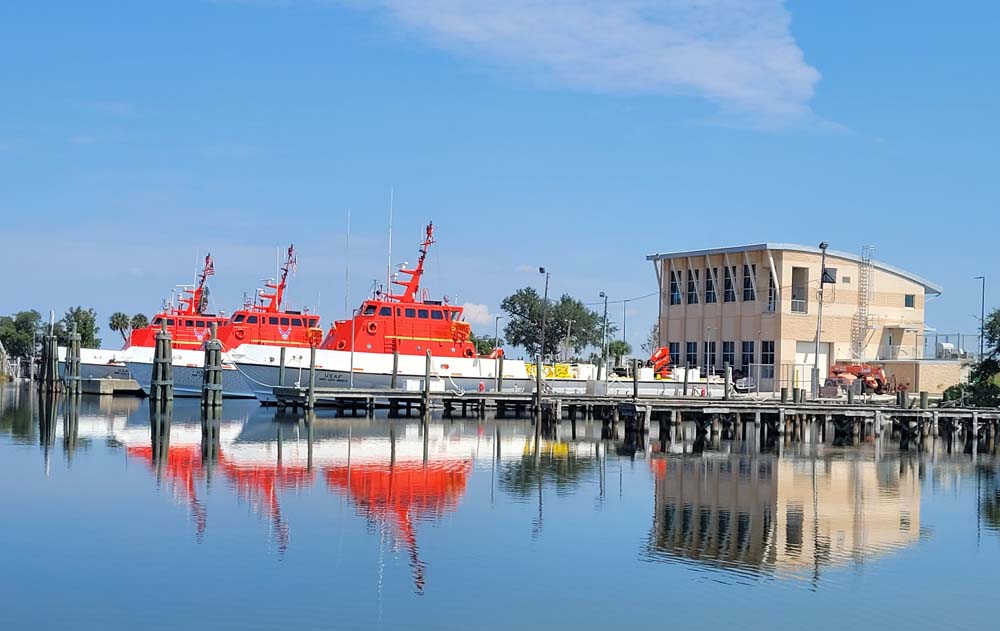
To jumpstart construction, the Air Force Civil Engineer Center’s Program Management Office (PMO) used an innovative approach that leveraged 10 USC 2854. This statute, for 2018, authorized up to $50 million in Operation & Maintenance Funds to replace disaster-damaged facilities. The PMO selected the Air Battle Manager Simulator Training Facility, Fire Station #2, and the 53rd Weapons Evaluation Group’s Large and Small Boat Maintenance Facilities for construction under this authority. Congress subsequentially increased funding to $100 million in 2019.
A groundbreaking event on Oct. 13, 2020 for the simulator, the first facility of the rebuild completed, served as a symbol of resilience and progress. Col. Greg Moseley, USAF, Commander, 325th Fighter Wing, called it a “visible sign of progress” in restoring operational capability. Work was moving ahead.
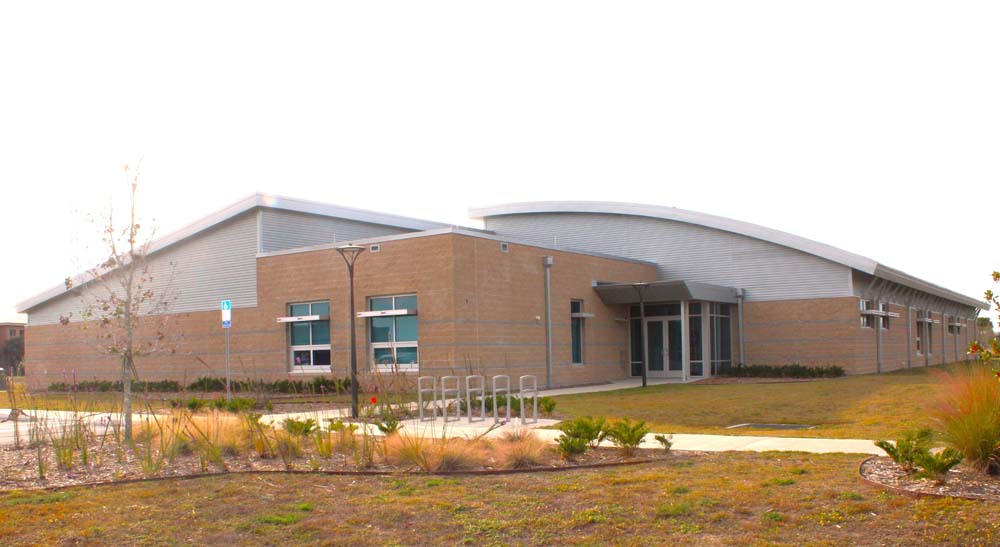
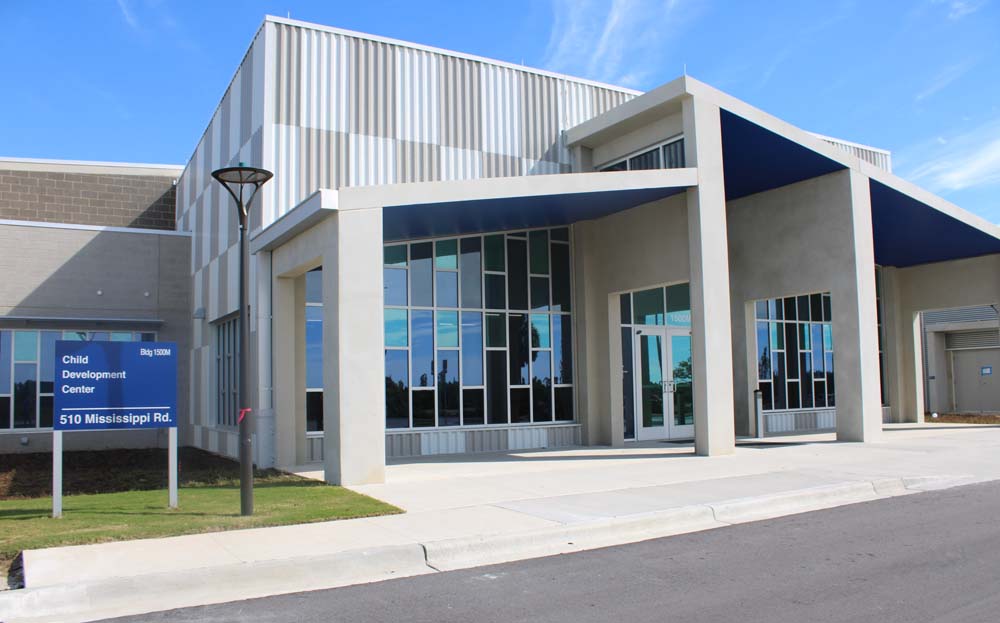
Dealing with Setbacks. Challenges related to construction began to appear quickly, though. The Child Development Center was considered a critical project due to the limited number of childcare facilities following the hurricane. Rebuilding it would play a major role in bringing airmen and their families back to work on the base. In September 2020, USACE, working closely with the PMO and the 325th Fighter Wing, made the childcare center the first MILCON project to be awarded as a tangible way of “Caring for our People.” A contract was awarded to Caddell on Sept. 25, 2020. Work progressed into 2022; then, a combination of construction delays, furniture, fixtures, equipment issues, and evolving child health and safety requirements pushed completion back to April 2024.
Despite what emerged as setbacks that needed to be worked around, progress at Tyndall pushed forward. Between 2021 and 2025, significant ground was gained. In early 2021, six projects were awarded, including the 325th Fighter Wing Headquarters. Completed in May 2024, the 27,265-ft² facility consolidated scattered command functions and enhanced security.
During 2022, USACE awarded 34 MILCON projects, including several flightline facilities for the 325th Fighter Wing and 53rd Weapons Evaluation Group. In addition, the 325th Civil Engineer Squadron and 325th Logistics Readiness Squadrons were collocated from their previous flightline location into a new industrial complex on the base’s south side. Several quality-of-life projects were awarded during this period, including a lodging facility and a three-building community commons complex.
Construction continued in 2023 with the first three MILCON facilities completed at the Silver Flag Exercise Site in October. The end of 2024 saw completion of the 325th Security Forces Squadron’s Mobility Storage and Small Arms Range Facility. The new year then brought the opening of the Airey and Tyndall Gates with multiple lanes and improved security. In the months following, the 325th Civil Engineer Squadron took ownership of the Emergency Operations Center, the recreational ballfield/swimming pool complex, marina, and two new dormitories.
By the end of 2025, Tyndall AFB had accepted 40 completed MILCON facilities. All were designed and constructed to withstand 165-mph winds and built above the region’s expected sea-level rise in 2100.
Large-Scale Recovery
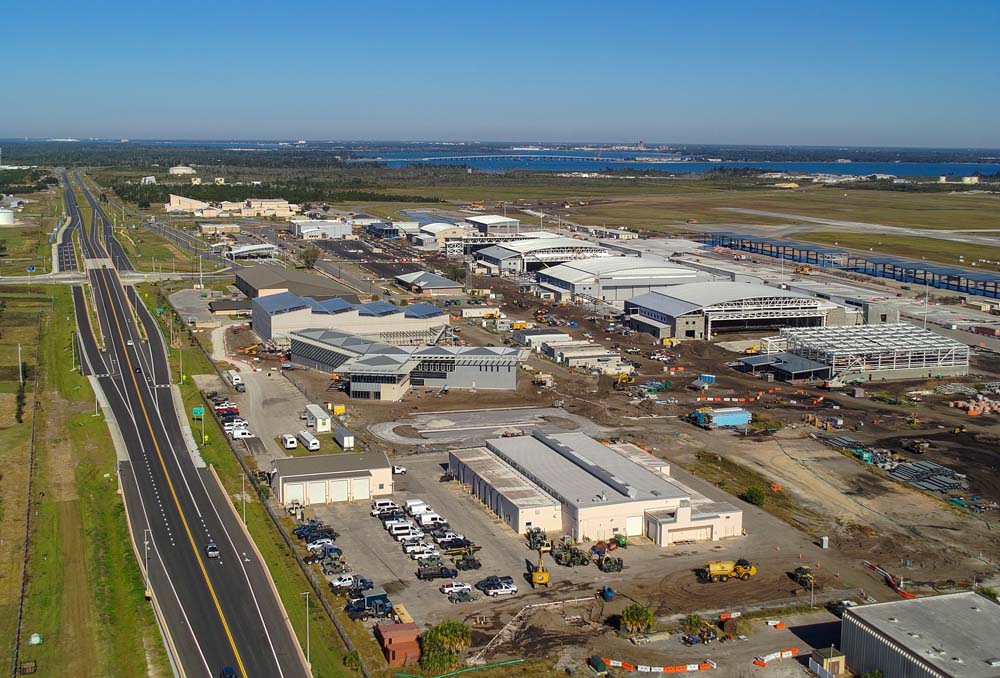
Zone 1 was the centerpiece of the rebuild. Hurricane Michael wreaked havoc on nearly every building along the flightline, 30 percent of which were more than 50 years old. To replace these assets, USACE awarded Hensel Phelps a contract for the F-35A Flightline projects for a total MILCON cost of $604.1 million, including contingency funding, on May 10, 2022. It was the largest Air Force MILCON project in recent history, comprising 11 structures and an aircraft parking apron.
- Designed to support three new F-35 squadrons, the work at Zone 1 included three aircraft maintenance unit hangars and a series of specialized facilities.
- F-35 Flight Simulator Facility
- F-35 Weapons Load Training Hangar
- F-35 Fuel Cell Maintenance Hangar
- F-35 Squadron Maintenance Facility
- Corrosion Control Facility
- Aerospace Ground Equipment Building
- F-35 Logistics Readiness Squadron Facility
- 325th Operations Group/325th Maintenance Group/Reserve Headquarters
With the first aircraft arrival set for August 2023, the mission was to have as much of Zone 1 ready as possible. Hangar 1 was considered the top priority, followed by the aircraft parking apron. Unlike other projects at Tyndall, USACE and the Air Force elected to pursue a design-bid-build approach for Zone 1 due to its size and complexity.
Unfortunately, work ran into problems from the beginning with unforeseen site conditions, including contaminated soil, high ground water levels, and buried objects. For example, concrete elements associated with 25,000-gal underground storage tanks that had been removed in the 1980s were discovered as deep as 30-ft below ground. Also, 2,500-gal underground storage tanks filled with concrete were found at the sites for Hangars 2/3 and required special equipment for removal. Adding to the complexity were the ongoing flightline operations. The high volume of equipment, vehicle traffic, and hundreds of laborers required vigilant management and close coordination between project partners and flightline operations.
With the first aircraft arrival set for August 2023, the mission was to have as much of Zone 1 ready as possible. Hangar 1 was considered the top priority, followed by the aircraft parking apron.
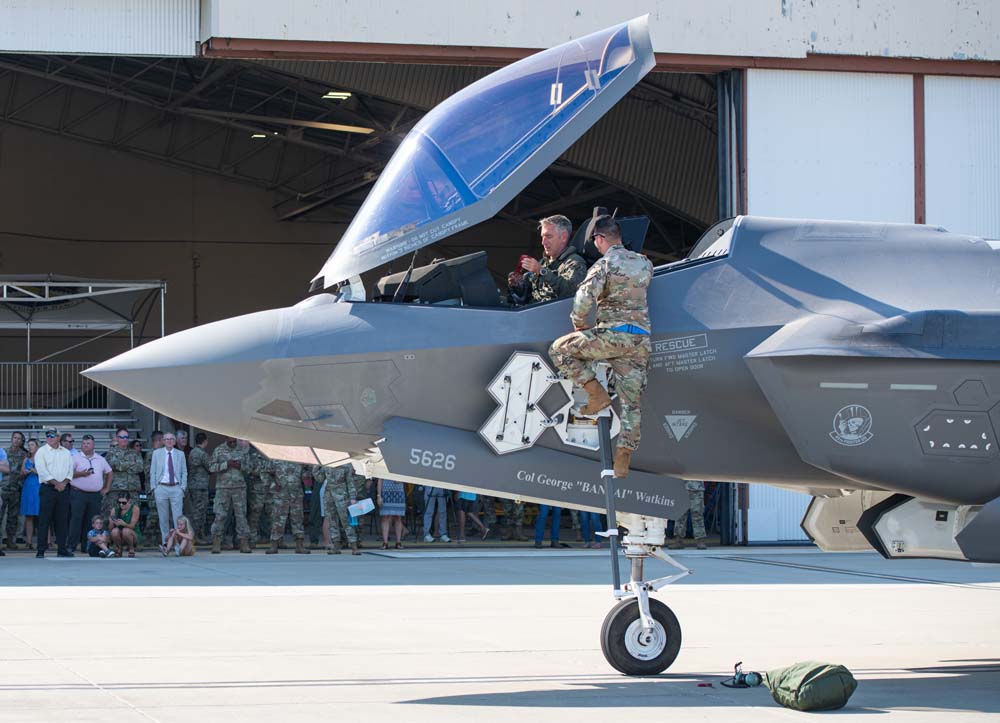
Despite ongoing construction, the first F-35A Lightning II arrived on Aug. 1, 2023, marking a transition for Tyndall from F-22 pilot training to an operational F-35 base. By early 2024, vertical construction was underway on all 11 facilities within Zone 1. A topping-out ceremony was held for Hangar 1 on March 13, 2024. Work continued throughout 2025 with an expected project delivery in spring 2026.
Although many projects at Tyndall are now complete or nearing conclusion, several remain in planning and design. The AFCEC Research, Development, Testing, and Evaluation Complex at the east end is yet to be awarded due to funding shortfalls. The Tyndall Installation Deployment Readiness Center will be built on the site where Hangar 4 is currently located. That area is waiting to be demolished until after the new Low Observable Component Repair Facility is completed at Joint Base Langley-Eustis, Va., which will assume the mission there.
Subsurface Rebuild
Along with the major destruction to Tyndall’s facilities and runways, Hurricane Michael also caused severe damage to the base’s utilities, water/wastewater, gas, electrical, sanitary sewer/storm drainage, and pavements. Early on in the acquisition strategy development for the rebuild, Col. Brent Hyden, USAF, PMO Director, recognized the advantages that would come from having a single program to replace these infrastructure systems.
This undertaking, which encompassed Zone 4, turned out to be a highly complicated and intricate set of projects that would touch every other job site on the base and require coordination with privatized utility contractors performing work on electrical, gas, and water systems. Ideally, the infrastructure program would have been the first tranche of work awarded so all subsequent projects could connect to the in-place utilities. However, because of the breadth and detail required, it would be among the last awarded.
Zone 4 also encompassed miles of new and upgraded roads with roundabouts, sidewalks, two new entry gates, a new commercial gate complex, and a network of communication systems. Timing had to be coordinated with other contractors to ensure the accurate alignment of utility elements among the various projects and coordinated with base leadership to ensure adequate traffic flow and parking.
Testbed For Tomorrow
The rebuilding of Tyndall AFB has delivered premiere structures engineered for resilience, flexibility, and mission integration. More than that, the multi-year program has positioned the base to become an installation built for the future, today, with enhanced capabilities for the nation’s warfighters.
In building back not just stronger but smarter, Tyndall also now stands ready to function as a testbed for the military in evaluating innovative capabilities and technologies for enhancing operations, security, and coastal resilience—capabilities that the installation is leveraging as it leads the way into tomorrow.
Col. Robert Bartlow Jr., M.SAME, USAF, is Chief, Natural Disaster Recovery Division,
Air Force Civil Engineer Center, Tyndall AFB, Fla.; robert.bartlow@us.af.mil.

Christine Walker, AFCEC Natural Disaster Recovery Division, contributed to this article.
Published in the March-April 2026 issue of The Military Engineer

Check Out Related Articles From TME
-

Innovative PFAS Remediation at Camp Grayling
For project stakeholders and remediation managers confronted with PFAS, Regenesis demonstrates the efficacy of using Regenesis’ PlumeStop® colloidal activated carbon (CAC) at Camp Grayling, Michigan. -
A Standardized Approach to Aircraft Fire Training Infrastructure
To support enterprise-wide airmen readiness, the U.S. Air Force is modernizing its standard design for aircraft fire training facilities—introducing digital controls, dual-fuel systems, and PFAS-conscious infrastructure. -
Delivering Energetic Materials Manufacturing Facilities
Designing and constructing facilities that manufacture, process, handle, or store explosives and energetic materials present some of the most challenging defense projects—requiring technical experience, strict safety protocols, and a comprehensive understanding of regulatory frameworks. -
Forging Tradition and Innovation: A New Design Standard at Camp Lejeune
The II MEF Headquarters at Camp Lejeune blends Georgian Revival architecture with modern sustainability—delivering durability, efficiency, and precision that meets contemporary functional requirements while honoring heritage. -

Balancing Efficiency and Fiscal Responsibility
The continuing contracts clause offers the U.S. Army Corps of Engineers a way to improve project delivery and enhance fiscal responsibility by aligning funding with project execution. -
Next Steps for Digital Twin Development
U.S. Forces Japan is laying the groundwork for future integration of digital twin technology in order to validate and collect data that will offer comprehensive insights into utility conditions at installations and enhance overall decision-making, efficiency, and resilience.