Building Without Breaking the Mission
By Heather Dorner, M.SAME, and Richard Pate, M.SAME
A complex renovation at Naval Air Station II Sigonella demonstrates how early integration, collaboration, and alternative delivery method-aligned practices can preserve mission readiness despite shifting requirements.
At Naval Air Station II Sigonella in Italy, maintaining the ability to enable uninterrupted operations is non-negotiable. Ensuring readiness and power projection demands facilities and infrastructure performing as expected, and when complex renovations are required to sustain that guarantee, contractors must navigate project delivery without disrupting base activities and communications.
This exact situation recently played out in the execution of a mission-critical facility renovation to increase warfighter capability within the 6th Fleet area of responsibility. Complicating the project further were evolving base access requirements, late-stage design scope changes, and an extended hold of the Construction Security Plan (CSP), with a 12-month schedule impact on final issuance.
Obstacles to Opportunities
On installations like Sigonella that are geographically closer to kinetic situations, delays in critical requirements can affect schedules and cause disruption to mission-critical operations. The reality of missed milestones can be drastic, compromising readiness and eroding trust among stakeholders. In this environment, traditional project delivery methods often fall short. The project at Sigonella may very well have experienced these impacts, if not anticipated by the contractor and government teams at the earliest stages of the contract.
The CSP governs how contractors access secure areas, handle materials, and sequence work. When the CSP at Sigonella was reissued nearly a year after contract award, it introduced new requirements that affected access, sequencing, and execution, threatening to cause serious schedule disruption. Additionally, midway through execution, the entire telecommunications design package was descoped and reissued, which created a high-risk situation on a mission-critical facility with complex IT and communications requirements. Finally, before the contractor could proceed from Phase 1 to Phase 2, the government had to complete significant out-of-scope work.
Performing overseas military construction is challenging under even ideal conditions. Contractors must navigate international logistics, security protocols, skilled labor availability, and cultural differences while meeting client and stakeholder needs and complying with both U.S. and host nation standards. Complicate that with evolving requirements and external dependencies, and the stakes rise dramatically.
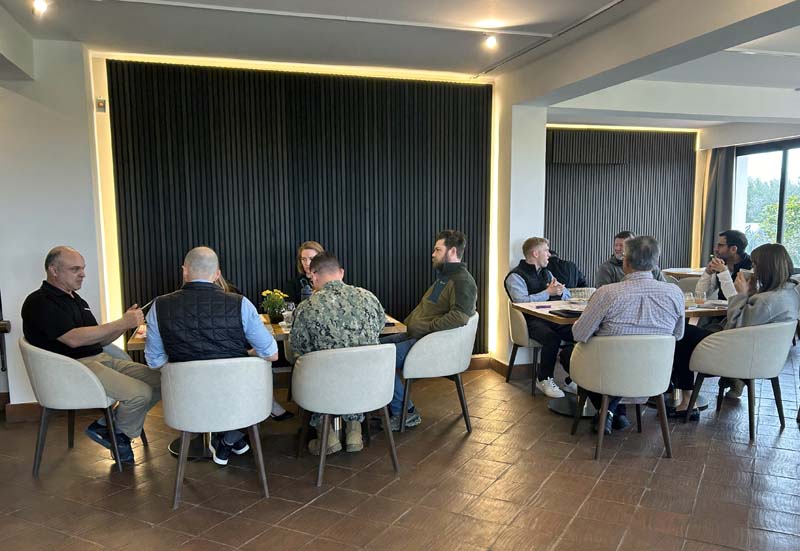
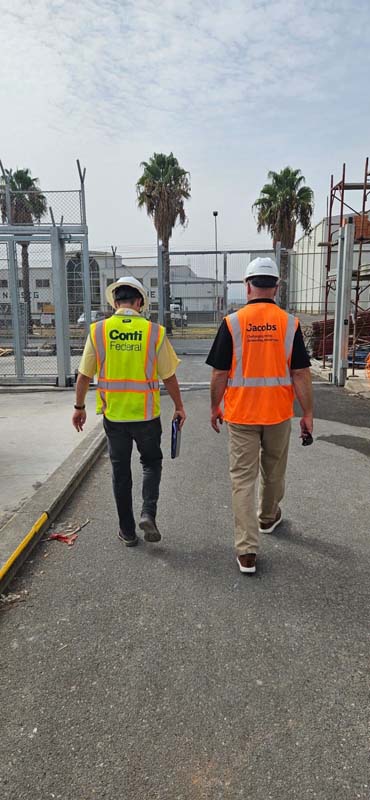
Thinking outside the box becomes essential. Rather than treating challenges as contract crises, the project team supporting Sigonella (Jacobs and Conti Federal) embraced a proactive mindset and drew on execution approaches rooted in alternative delivery principles. This fostered a collaborative environment based on teamwork, flexibility, and early integration of key elements for successful project delivery. These principles, when executed with full commitment and support of all stakeholders, ensure project success.
While not formally required by the contract, the team adopted alternative delivery method-aligned strategies at Sigonella. The initiative was applied through leadership, discipline, and a shared mission focus—rather than by contractual mandate. This helped maintain schedule continuity and mission readiness.
Absorbing Revisions
Instead of waiting for formal clarifications or treating the update as a downstream compliance issue, the revised requirements were immediately integrated across the scope of work.
- Access planning: Adjusting schedules to align with new clearance protocols.
- Labor strategies: Balancing cleared and uncleared workforces to maintain productivity.
- Material logistics: Revising delivery and storage plans to comply with updated security measures.
The project team engaged early with base security and the agency-of-record, Naval Facilities Engineering Systems Command Europe, Africa, Central (NAVFAC EURAFCENT), to ensure that interpretations of CSP language and intent were clarified. The contractors discussed constructability and sequencing impacts collaboratively before execution to avoid conflicts in the field. This proactive stance avoided extended work stoppages and preserved schedule continuity during secure area work. While not formally outlined in the contract, the use of an early contractor involvement mentality allowed the CSP re-issue to be treated as a shared project constraint rather than a schedule-breaking event.
Leaning heavily on the integrated project delivery team model brought all stakeholders into a shared decision-making framework. This approach allowed actions to proceed on an efficient timeline; it also compressed recovery time and reduced rework exposure.
- Real-time constructability feedback: Construction leadership evaluated routing feasibility and secure pathway constraints during redesign, preventing impractical solutions.
- Concurrent planning: Procurement and installation strategies were adjusted in parallel with design updates, rather than waiting for a “perfect” reissue.
- Momentum preservation: Adjacent scopes continued while telecom redesign progressed, minimizing downtime.
When applied properly, integrated project delivery principles can transform high-risk redesigns into manageable pivots.
Speeding Schedules
As part of its approach to mitigating risks throughout the schedule, the contractors hosted dedicated partnering workshops to address phasing with NAVFAC EURAFCENT, as well as the mission-holder, base stakeholders, and specialty consultants. The sessions focused on defining physical and access boundaries to establish clear demarcations for contractor and government responsibilities. Together, the group developed realistic handoff conditions and aligned expectations for readiness before mobilization. To prevent bottlenecks, sequencing activities considered and coordinated government-performed work with contractor schedules.
As a result, Phase 2 mobilization occurred without extended idle time. Schedule compression also was avoided. Proactive phasing coordination allowed construction to move forward despite prerequisites that were outside the contractor’s original scope and control.
To avoid delays and a breakdown in alignment, emerging issues were approached through joint problem-solving, transparent discussion of impacts, and alignment on mission priorities. That allowed sequencing decisions to guide contract mechanisms prior to finalization. This cultural shift preserved trust across the project stakeholders and maintained progress during periods of evolving requirements. Rather than cause further schedule delays, the team proposed solutions in real-time and provided the government with executable proposals.
Accelerating Delivery
Renovating a secure facility without disrupting operations is the construction equivalent of performing open-heart surgery. Every move must be precise, coordinated, and executed without compromising mission execution.
When responsible for critical projects, it is essential to integrate early and often. As requirements shift, immediate alignment prevents downstream disruption. Leveraging integrated project delivery model frameworks means real-time collaboration. Partnering workshops are key to clarify responsibilities and maintain momentum. Team culture is critical as well.
Having an alternative delivery method-aligned mindset paired with collaborative execution practices provided concrete tools to achieve success at Naval Air Station II Sigonella. By treating emergent requirements as shared goals rather than schedule-breaking events, the project team demonstrated that partnership accelerates delivery in complex international environments.
Heather Dorner, M.SAME, is Marketing Manager, and Richard Pate, M.SAME, is Project Executive/Country Manager – Italy, Conti Federal. They can be reached at hdorner@contifederal.com; and rpate@contifederal.com.
Published in the May-June 2026 issue of The Military Engineer
Check Out Related Articles From TME
-

Innovative PFAS Remediation at Camp Grayling
For project stakeholders and remediation managers confronted with PFAS, Regenesis demonstrates the efficacy of using Regenesis’ PlumeStop® colloidal activated carbon (CAC) at Camp Grayling, Michigan. -
A Standardized Approach to Aircraft Fire Training Infrastructure
To support enterprise-wide airmen readiness, the U.S. Air Force is modernizing its standard design for aircraft fire training facilities—introducing digital controls, dual-fuel systems, and PFAS-conscious infrastructure. -
Delivering Energetic Materials Manufacturing Facilities
Designing and constructing facilities that manufacture, process, handle, or store explosives and energetic materials present some of the most challenging defense projects—requiring technical experience, strict safety protocols, and a comprehensive understanding of regulatory frameworks. -
Forging Tradition and Innovation: A New Design Standard at Camp Lejeune
The II MEF Headquarters at Camp Lejeune blends Georgian Revival architecture with modern sustainability—delivering durability, efficiency, and precision that meets contemporary functional requirements while honoring heritage. -

Balancing Efficiency and Fiscal Responsibility
The continuing contracts clause offers the U.S. Army Corps of Engineers a way to improve project delivery and enhance fiscal responsibility by aligning funding with project execution. -
Next Steps for Digital Twin Development
U.S. Forces Japan is laying the groundwork for future integration of digital twin technology in order to validate and collect data that will offer comprehensive insights into utility conditions at installations and enhance overall decision-making, efficiency, and resilience.