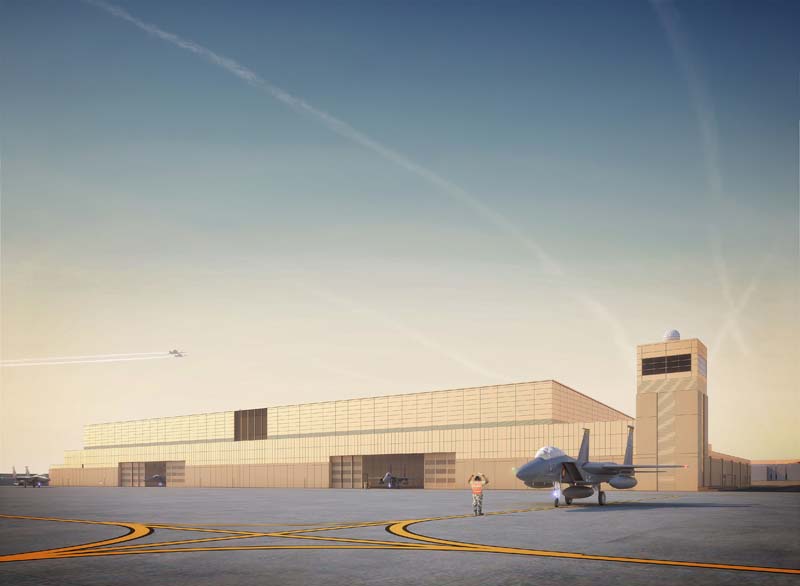
Delivering Facility Design Best Practices for International Defense Partners
By Bill Clendenin, P.E., LEED AP, M.SAME
Successfully delivering engineering and design in support of Foreign Military Sales requires early alignment on codes, life safety, construction capabilities, and communication.
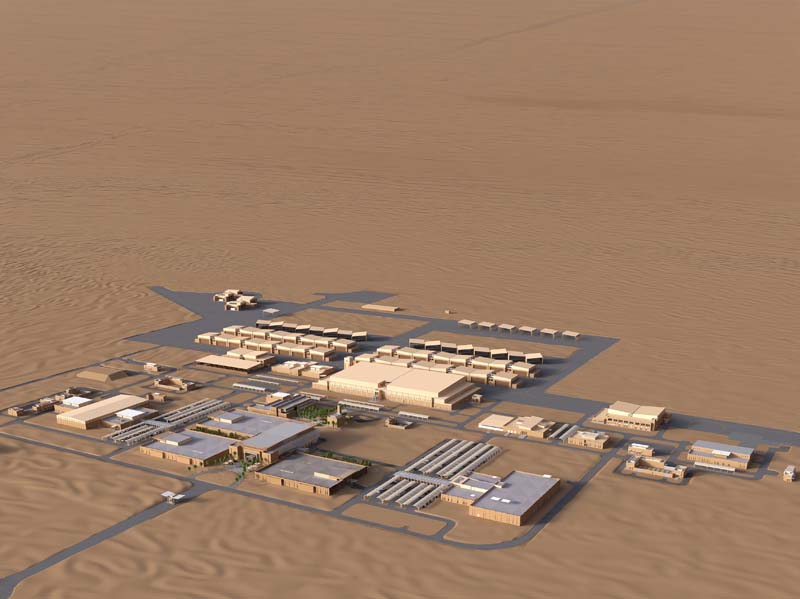
In FY2024, U.S. Foreign Military Sales reached a record $117.9 billion. While headlines often focus on aircraft, Foreign Military Sales also includes the planning, design, and construction needed to deploy, house, and sustain the aircraft. Since facility and infrastructure costs are a fraction of the aircraft investment, these projects are often initiated late in the schedule.
To keep the supporting infrastructure on pace with the aircraft delivery, project teams are adopting proven frameworks that integrate early planning, streamline decision-making, and optimize construction and commissioning schedules.
Advancing large aircraft beddowns typically requires a significant investment in new or renovated base facilities and infrastructure. Given the scope and complexity of these programs, it is essential to have a large, diverse team that brings specialized skills. A recent large-scale beddown executed through Foreign Military Sales included over 300 professionals spanning 30 offices around the world. A multidisciplinary AECOM team mobilized to meet an extremely aggressive design and construction timeline.
Integrating Requirements
For projects funded through Foreign Military Sales, collaboration is equally important between subject matter experts with partner nations and the Department of Defense (DOD).
This relationship is instrumental for integrating defense best practices with local requirements throughout the project.
Design Criteria. Partner nation design and construction criteria vary significantly among nations. Just as partner nations seek advanced U.S. aircraft, they also seek to adopt DOD best practices for designing the necessary supporting facilities. For success, both sides must agree early on the ways that U.S. best practices will be applied and integrated with partner nation criteria.
A key effort that subject matter experts must work together on is to develop a code comparison matrix that identifies similarities and differences between criteria. This foundation for the proposed path forward is reviewed and approved by U.S. and partner nation clients. During this collaboration, the design team often needs to explain the rationale and historical context behind key criteria, especially in fire protection and life safety. By clearly articulating why specific requirements exist, consensus and compliance with critical safety measures can be built.
Another best practice is thoroughly documenting the basis of design. In Foreign Military Sales, where partner nation project teams have higher turnover rates, comprehensive documentation preserves continuity and gives new team members a reliable roadmap for future phases.
The same emphasis on documentation extends to coordinating requirements with the original equipment manufacturers aircraft design team. Questions routinely surface, particularly in the installation and fit-out phase, when specialized equipment is integrated to support aircraft systems training, operations, and maintenance. Having detailed documentation minimizes disruptions and speeds resolution of late-stage challenges.
Life and Fire Safety. Around the world, life safety and fire protection codes differ significantly. While scopes of work sometimes call for “the most stringent requirements” from both U.S. and partner nation codes, that is not always optimal. Many codes are built on scenario-driven logic; combining the strictest provisions from each framework can increase cost and complexity without enhancing performance.
Defining a clear design approach early is critical because life safety and fire protection decisions influence nearly every technical discipline and most aspects of construction and commissioning. Some partner nations may not formally designate an authority having jurisdiction, in which case the U.S. government client may assume decision authority. When a partner nation authority having jurisdiction does exist, engaging them early alongside the U.S. client and design team helps to align objectives, methodologies, and code equivalencies.
Construction Capabilities. In partner nations, construction materials, methods, and operation and maintenance capabilities can differ significantly from those in the United States. This variability plays a major role in how contractors approach facility design to achieve long-term functionality. For instance, U.S. military facilities often rely on complex, high-efficiency central distribution systems that utilize water-cooled chillers, variable-speed pumping, and sophisticated energy management controls. However, if not maintained and operated properly, they can underperform or fail. Because replacement products common in the United States may not be readily available in partner nations, it may be more appropriate to propose alternative, simpler direct-expansion cooling systems that are easier to maintain and repair.
The power supply source of the host nation adds another layer of complexity. While original equipment manufacturers typically plan to procure equipment compatible with local power sources, some equipment may only be designed for U.S. power sources. This discrepancy may necessitate power conversion systems.
Local Permitting. The permitting process can vary significantly. In some locations, the U.S. client approves facility design and construction; in other nations, multiple agencies must approve. It is crucial to understand permitting requirements early on.
Additionally, the permitting process may not be as well defined as in the United States. The pace of review timelines and agency feedback can fall outside the control of the architect-engineer team, making it challenging to establish accurate schedules.
The design staff for local partner nations play a critical role as well. Their familiarity with local permitting can help guide U.S. teams that may not routinely operate there.
Language Barriers
While many partner nation team members are fluent in English, this is not always the case. When it is required to have design discussions and presentations in the native language of the partner nation, local design staff can add significant value to the process.
For example, on a beddown project conducted during the COVID-19 pandemic through Foreign Military Sales, AECOM needed to assess existing facilities to determine what modifications and new construction would be required to support the scope of work. The partner nation team spoke very limited English. Although AECOM had anticipated this, the original plan depended on having both U.S. and local design teams on-site for field investigations and client discussions. Adding to the complexity, the local design team was unfamiliar with DOD design standards and the project’s unique beddown requirements.
When travel restrictions prevented U.S. personnel from entering the country, the design team rapidly pivoted its approach and implemented new revisions. The U.S. team created a detailed “facility checklist” based on original equipment manufacturer facility design standards to guide the local team performing assessments. Leveraging the time difference, the team held daily cross-continent meetings with DOD subject matter experts to review progress, address questions, and provide guidance. All technical discussions and presentations were prepared in English for U.S. clients and translated into Mandarin and Traditional Chinese for the partner nation clients.
Ensuring Quality
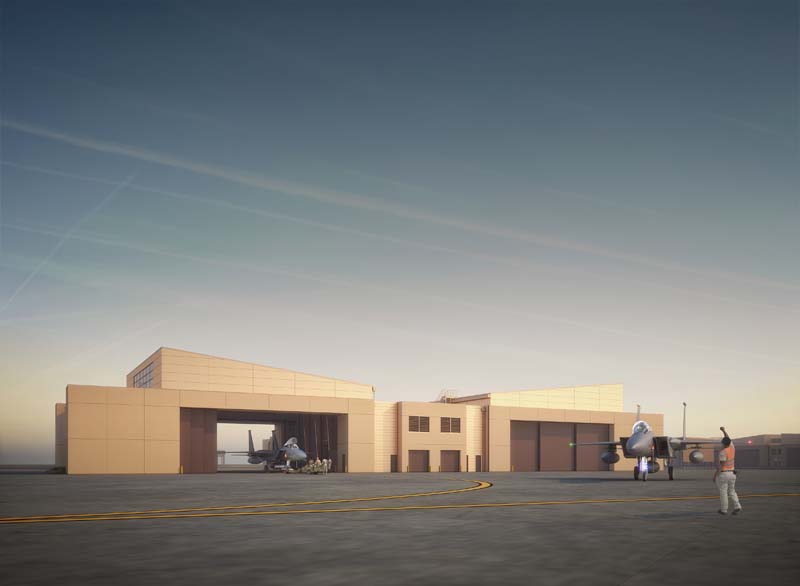
Many projects contracted through Foreign Military Sales are built by overseas contractors that may have limited experience with DOD standards. As a result, the U.S. government often relies on U.S.-based architecture-engineering firms to provide on-site quality assurance support throughout construction. By deploying a dedicated quality assurance team with direct reach-back to the design team, this approach strengthens project delivery overall.
Successful overseas delivery depends on integrating DOD best practices with local knowledge, capabilities, and constraints. When multidisciplinary teams collaborate early, communicate clearly, and design with long‑term operations in mind, projects can be delivered with strategic outcomes prioritized.
Bill Clendenin, P.E., LEED AP, M.SAME, is Vice President, Program Manager, AECOM;
bill.clendenin@aecom.com.
Published in the May-June 2026 issue of The Military Engineer
Check Out Related Articles From TME
-

Innovative PFAS Remediation at Camp Grayling
For project stakeholders and remediation managers confronted with PFAS, Regenesis demonstrates the efficacy of using Regenesis’ PlumeStop® colloidal activated carbon (CAC) at Camp Grayling, Michigan. -
A Standardized Approach to Aircraft Fire Training Infrastructure
To support enterprise-wide airmen readiness, the U.S. Air Force is modernizing its standard design for aircraft fire training facilities—introducing digital controls, dual-fuel systems, and PFAS-conscious infrastructure. -
Delivering Energetic Materials Manufacturing Facilities
Designing and constructing facilities that manufacture, process, handle, or store explosives and energetic materials present some of the most challenging defense projects—requiring technical experience, strict safety protocols, and a comprehensive understanding of regulatory frameworks. -
Forging Tradition and Innovation: A New Design Standard at Camp Lejeune
The II MEF Headquarters at Camp Lejeune blends Georgian Revival architecture with modern sustainability—delivering durability, efficiency, and precision that meets contemporary functional requirements while honoring heritage. -

Balancing Efficiency and Fiscal Responsibility
The continuing contracts clause offers the U.S. Army Corps of Engineers a way to improve project delivery and enhance fiscal responsibility by aligning funding with project execution. -
Next Steps for Digital Twin Development
U.S. Forces Japan is laying the groundwork for future integration of digital twin technology in order to validate and collect data that will offer comprehensive insights into utility conditions at installations and enhance overall decision-making, efficiency, and resilience.