ENGINEERS IN CRISIS: The 9/11 Pentagon Response
By Col. Aaron Barta, M.SAME, USA (Ret.)
When a hijacked Flight 77 crashed into the Pentagon on the morning of Sept. 11, 2001, a specially trained military engineering unit based at Fort Belvoir was among the first groups to respond—and its adaptive readiness and selfless service epitomize the legacy of all who swear to “honor and defend the Constitution of the United States against all enemies foreign and domestic.”
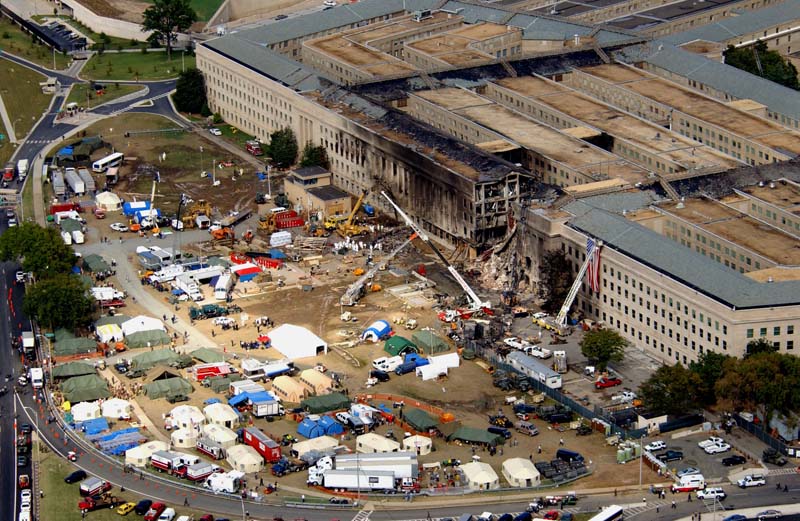
Editor’s Note: In this look back honoring the 25th Anniversary of 9/11, the former commander of the Military District of Washington Engineer Company recounts the team’s search and rescue operations at the Pentagon over the hours and days immediately after the terrorist attacks that forever changed our nation and the lives of millions.
As the Huey carrying eight of us rose above the tree line at Fort Belvoir, Va., 20-mi south of the Pentagon, the clear late summer morning sky allowed me to see the large black plume of smoke rising in the distance. The helicopter quickly turned. I caught a glance of a second helicopter lifting our urban search and rescue gear off the Humvee. Everybody was silent as we mentally prepared for this watershed event.
The attack on the Pentagon, Sept. 11, 2001, was exactly the type of scenario we had trained to execute as the Military District of Washington Engineer Company (MDWEC). Our unit was created for a sole purpose: to conduct urban search and rescue operations for the centers of government in Washington, D.C. Due to the sensitive nature of what contents and which individuals may be inside federal buildings, the 100-person MDWEC served as a strategic enabler. Its unique mission continues to this day.
Getting the Call
In our unit, Mondays were dedicated to vehicle and equipment maintenance. Tuesdays were for training: 9/11 was a Tuesday.
After cleaning up from morning physical fitness, I was pulling into my office and heard the news of an airliner crashing into the World Trade Center at 8:46 a.m. But at that moment, I was focused on my day. Every soldier in the company was cramming into the classroom wearing their rescue suits ready to begin training. Soon after 9:03 a.m., we heard about the second impact in New York. The sergeant leading our training kept scolding soldiers for the persistent side conversations about what had just happened. Their attention, understandably, was elsewhere. Then, no more than three minutes after the Pentagon was hit at 9:37 a.m., we got the call. A captain at the operations center at Fort McNair in Washington, D.C., had stepped outside for a sip of coffee and saw black smoke beginning to rise from the Pentagon.
Our rescue gear was always pre-packed in our vehicles. With all our soldiers already dressed and assembled, we quickly manned our vehicles. By 9:45 a.m., we were ready to roll out. Instead of charging out the gates, however, we were instructed to hold in place. In a time before livestreams and instant news on mobile phones, everyone sat in their vehicles waiting, listening to the radio. After what felt like an eternity, we were given permission to fly our advance team to Fort McNair.
It did not take long before Maj. Gen. James Jackson, USA, Commander of the Military District of Washington, called me over to his government car and said, “We’re driving to the Pentagon.” Before leaving I turned to the sergeant in charge of my squad and instructed them to find a way to get themselves and their gear to the Pentagon when they got the green light to move.
As we pulled into the Pentagon parking lot nearest the impact point, Jackson turned to me and said something to the effect of: “Get out, and figure out what to do next.”
His words lingered only an moment. I knew what was needed, but also knew that I would have to make it up as we went along.
Everyone understood the mission intent; we were confident in our training and confident in our leaders. On paper, we were in support of the FEMA teams, but that didn’t stop us from leading from the front.
First Response
There are several urban search and rescue organizations near the nation’s capital operated by the Federal Emergency Management Agency (FEMA), notably Maryland Task Force-1 (MD-1) and Virginia Task Force-1 (VA-1). Our MDWEC unit had collaborated with them regularly as part of our training regimen. These task forces consist of seasoned and experienced firefighters, medical technicians, and other emergency-focused professionals who volunteer to deploy worldwide when earthquakes or other disasters strike. They are the best of our first responders.
Given its proximity to the Pentagon, Arlington County Emergency Response was already on the scene trying to put out the fire and attend to the injured who had evacuated the building. I found the county mobile emergency command center, with two out-of-central-casting-looking fire chiefs inside. Both had bushy mustaches, thick gray hair, and seasoned faces showing decades of subduing the heat of many emergencies. I was a thin, “youthful” 28-year-old with a high and tight haircut in a uniform they did not recognize and certainly did not ask for. Although we had worked and trained often with MD-1 and VA-1, we had never worked with county emergency response leadership. After explaining to them who I was and what our soldiers could bring, all they could say was that I would have to wait until they got the fire under control. Until then, nobody was going into the Pentagon except firefighters.
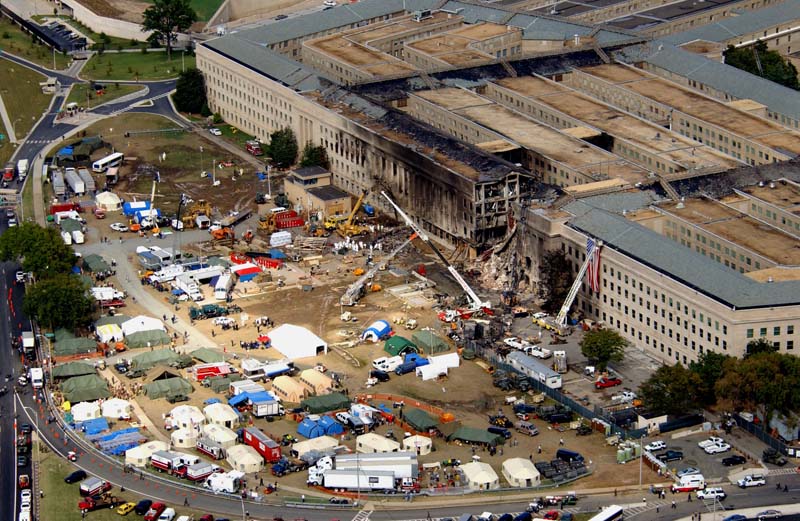
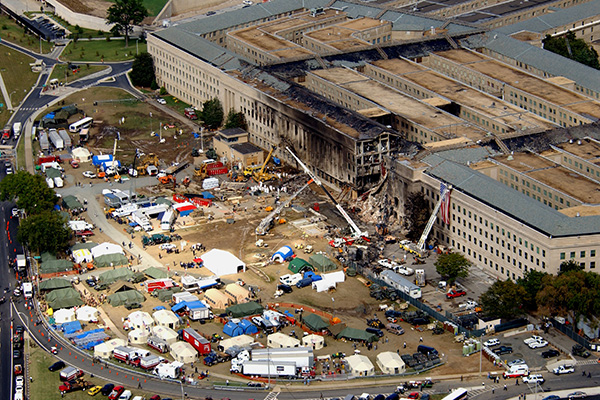
As this was happening, MDWEC was finally released. A pair of Humvees had picked up the stranded squad and the rest of the company rolled past Mount Vernon, through the City of Alexandria, and pulled into the Pentagon around 11:30 a.m. Even though we showed up much later than we could have, we were still the first urban search and rescue organization to arrive and occupied the space right in front of the point of impact. We unloaded our gear, put out our timber to be used for bracing unstable structures, and set up as we had always rehearsed, eagerly waiting for permission to go inside and find trapped survivors.
MD-1 and VA-1 soon arrived, and their leadership vouched for our legitimacy. An incident command structure began to form on the ground, with the Military District of Washington in support of Arlington County Emergency Response.
Conducting Searches
Approximately 7,000-gal of jet fuel from the crashed plane made it intensely difficult to extinguish the fires. Flames continued to spontaneously reignite even after being suppressed. Late into the evening, even while burning and smoke still threatened everyone’s safety, rescue units were given limited permission to enter the building. We assessed what could be done to search for survivors.
As we probed the interior of the impact zone, oxygen monitors would occasionally tell us it was too dangerous to go further, as if the searing heat was not already announcing the same.
The ground floor was calf-deep with water from the firefighting effort and severed water pipes. From above, hot water dripped, soaking our uniforms. We waded through a swamp-like mixture of ash, jet fuel, and broken sewer pipes. Our senses were overwhelmed by the sights, sounds, smells, and adrenaline. Throughout the night and into the next morning, the three urban search and rescue teams searched in vain.
Flight 77 had hit low, just at the ground floor. As I walked up and down all five floors at the point of impact, it became clearer how events had unfolded in the minutes after. The ground floor was devastated. The second floor had less blast damage but had been totally consumed by fire. The third floor did not have fire damage, but the office carpets were curled up as the still-hot level below melted the binding glue. Purses and jackets had been left behind as people scrambled to evacuate. Donuts and still-full coffee cups sat on tables alongside documents with the words “SECRET” stamped on the page borders. The feeling of lives forever changing in an instant hung in the air. On the fourth floor, desks were cleared and jackets and purses had been carried out by their owners. On the top floor, except for the smell of smoke, you would not have known any of the colossal loss and destruction that had occurred.
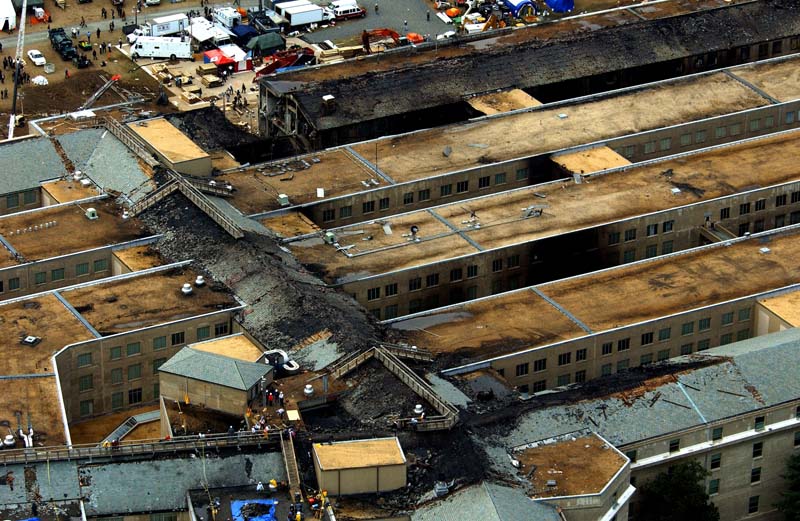
Flight 77 had hit at an angle, heading left when viewed from outside the Pentagon. It would take two days of clearing debris before we could clearly see the blast path. From the exterior of the collapsed Pentagon, the area of damage looked relatively minimal, but the path of destruction caused by the impact and fire was much larger. The plane and all debris pushed in front of it stopped right at the interior side of the building’s third of five rings. It would be three days later that we found the large and heavy front landing gear just inside the third ring wall, buried in debris.
By the end of our second day, the incident command decided that the rescue operations would be split into 12-hour shifts. One FEMA task force would run operations during the day; the other would be in charge overnight. MDWEC would be split in half, acting in support of our partners and the two shifts. While our command was broken up, we soldiered on and threw ourselves into the mission at hand, half supporting the day operations, and the other half supporting night operations. Rescue units spent the hours removing debris by hand, having shifted from rescue operations to victim recovery.
Flight 77 had hit with incredible force. While removing debris from the crash site, we worked around destroyed structural columns somehow holding up the floors above us. Using our training, we placed wooden braces around each column to provide structural support to the higher floors. The columns on the higher floors lined up with the columns on the floor below to preserve as much shear integrity as possible.
Doing More, Together
Through the entire mission, MDWEC soldiers worked hard, remained positive, and maintained their motivation. FEMA task force members and Arlington County leadership complimented the professionalism, energy, and, what stood out most to me, the initiative our sergeants repeatedly demonstrated. Our soldiers were continually finding ways to do more. My mechanics volunteered to weld tools and crane parts. My supply sergeant worked with the task forces to help control equipment use and accountability. We set up and ran the wood-cutting stations used for bracing. Each of these micro-tasks happened because of their initiative. I am proud to say that nobody waited for my direction, and I trusted my lieutenants and sergeants to lead. Everyone understood the mission intent. We were confident in our training and confident in our leaders. On paper, we were in support of the FEMA teams, but that did not stop us from leading from the front.
FEMA’s VA-2 and TX-1 relieved the first urban search and rescue teams after sever days. MDWEC remained. Then on Sept. 21,
it was declared that the mission was officially over—at least in the sense of immediate response and recovery at the site. We retrieved our gear, drove back home, and returned to our families.
Late into the evening, even while burning and smoke still threatened everyone’s safety, rescue units were given limited permission to enter the building. We assessed what could be done to search for survivors.
Leading Forward
After the initial days following the attack, our company asked for the U.S. Army Corps of Engineers flag from Fort Belvoir and flew it above a rescue truck. The next time you see pictures of the Pentagon response, look for the flag. It is now displayed at the Army Engineer Museum, Fort Leonard Wood, Mo., signed by all of our soldiers.
Every few years, when a new group rotates through MDWEC, which has been redesignated as the 911th Technical Rescue Engineer Company, I stop by and talk about how this fateful event unfolded. By framing the challenges of our experience and the situations these soldiers may face in the future in simple concepts, I hope to help them better understand how to manage the seemingly unmanageable. The aim is not to brush off the stress of what we faced or diminish the magnitude of the inevitable next crisis.
It is important that the next-generation of soldiers train on and master their basic technical urban search and rescue skills. Their success is dependent on developing a culture that integrates adaptability, communication, and initiative into everything they do. Nothing about my 9/11 experience or any of the thousands of other servicemembers and civilians who responded that September morning and over the next decade of conflict resembled anything close to what we expected to encounter—or will be a predictor of challenges that lie ahead. By fostering a leadership climate built on effective training and principles we were taught, those who come tomorrow will adapt as events unfold and rise to the occasion.
The future we cannot know. Being prepared: that we can control.
Our country lost 189 people in the attacks on the Pentagon, 125 in the building and 64 aboard Flight 77. Thousands more died in New York City and the fields of Pennsylvania. Recounting the numbers alone does not remember the names, the faces, the voices of those gone, or their loved ones lives forever changed.
Through our reflections of 9/11, in public ceremonies, memorials, stories, and quiet moments by ourselves, we have honored the fallen now for 25 years…and always will. Never Forget.
Col. Aaron Barta, M.SAME, USA (Ret.), is Vice President - Federal, Huitt-Zollars Inc.; abarta@huitt-zollars.com.
Published in the September-October 2026 issue of The Military Engineer
Check Out Related Articles From TME
-

Innovative PFAS Remediation at Camp Grayling
For project stakeholders and remediation managers confronted with PFAS, Regenesis demonstrates the efficacy of using Regenesis’ PlumeStop® colloidal activated carbon (CAC) at Camp Grayling, Michigan. -
A Standardized Approach to Aircraft Fire Training Infrastructure
To support enterprise-wide airmen readiness, the U.S. Air Force is modernizing its standard design for aircraft fire training facilities—introducing digital controls, dual-fuel systems, and PFAS-conscious infrastructure. -
Delivering Energetic Materials Manufacturing Facilities
Designing and constructing facilities that manufacture, process, handle, or store explosives and energetic materials present some of the most challenging defense projects—requiring technical experience, strict safety protocols, and a comprehensive understanding of regulatory frameworks. -
Forging Tradition and Innovation: A New Design Standard at Camp Lejeune
The II MEF Headquarters at Camp Lejeune blends Georgian Revival architecture with modern sustainability—delivering durability, efficiency, and precision that meets contemporary functional requirements while honoring heritage. -

Balancing Efficiency and Fiscal Responsibility
The continuing contracts clause offers the U.S. Army Corps of Engineers a way to improve project delivery and enhance fiscal responsibility by aligning funding with project execution. -
Next Steps for Digital Twin Development
U.S. Forces Japan is laying the groundwork for future integration of digital twin technology in order to validate and collect data that will offer comprehensive insights into utility conditions at installations and enhance overall decision-making, efficiency, and resilience.