Finding Common Ground: Military Planning Across Europe
By Lucas Strittmatter, AICP, M.SAME
A cross-country assessment of European military installations in support of U.S. Army Europe and Africa highlights how addressing gaps in master planning, cultural norms, and certifications can improve NATO’s ability to deliver interoperable infrastructure at increasing scale.
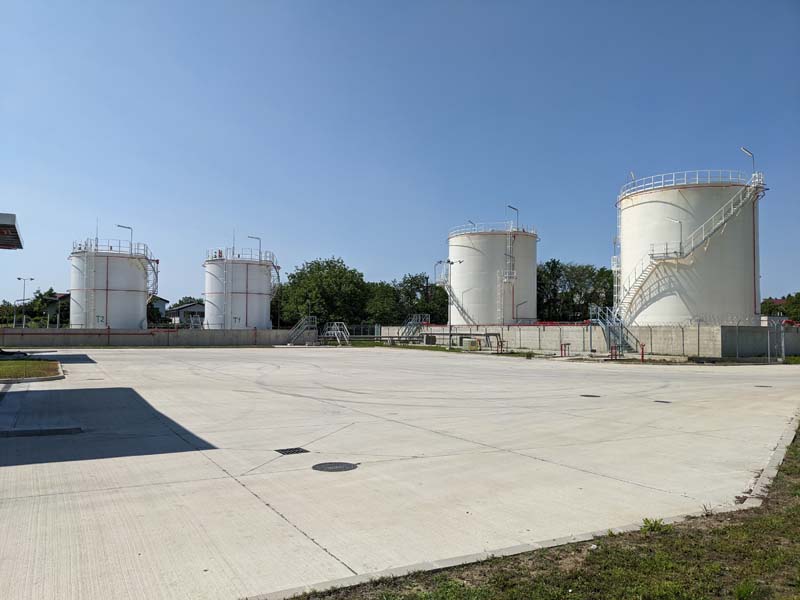
Over the past 18 months, a comprehensive assessment has been undertaken to support U.S. Army Europe and Africa in developing a theater plan for fuel and munitions storage. The work, a joint effort led by MDLE and Wiley|Wilson, involved site visits to more than 50 locations (military, government, and private sector) across 12 NATO nations. Despite the vast differences in regional regulations and infrastructure management, these observations and engagements with U.S. and host nation personnel provided critical, on-the-ground insights that remote analysis cannot capture.
The challenges arrive at a pivotal moment of unprecedented NATO defense investment. Since the 2022 invasion of Ukraine, European allies and Canada have realigned their fiscal priorities. The number of nations meeting NATO’s 2 percent GDP defense spending benchmark rose from just six countries in 2021 to 23 in 2024, with all 32 members confirming that they met the target in 2025—the first time in alliance history. At the 2025 Hague Summit, allies further committed to a new 5 percent GDP goal by 2035. This surge in funding, and the pace at which it will only accelerate, intensifies the urgency to resolve long-standing planning and regulatory barriers before they become bottlenecks to delivering operational capability.
Process Disparities
A granular understanding of the structural, cultural, and regulatory differences within European installations is the only way to bridge the gaps in planning doctrine and technical standards. For the engineering community, these insights are essential for effective infrastructure delivery. By synchronizing these disparate systems, the United States and NATO partners can deliver mission-critical assets that ensure efficiency, safety, and, most importantly, alliance-wide interoperability.
The fundamental challenge in modernizing European military infrastructure lies in a significant doctrinal gap between U.S. and host nation planning. In the United States, master planning has shifted from ad-hoc project siting to a holistic, codified process following the issuance in 2005 of DOD Instruction 4165.70. This, later, was formalized in UFC 2-100-01, which mandated that installations be viewed as integrated ecosystems; mission requirements must balance with safety, sustainability, and long-term resilience.
By contrast, many European installations, particularly those in Eastern Europe, are still operating under a legacy framework where “master plans” function more as simple site maps for proposed projects rather than comprehensive development strategies. Consequently, core elements of U.S. planning such as integrated environmental and cultural analysis, transportation planning, and cohesive land-use frameworks are limited or entirely absent on host nation installations. Without these baseline elements, U.S. engineers lack the essential data required to make informed decisions regarding civil engineering, utility capacity, and logistical throughput.
This disparity is further complicated by the National Security Strategy (November 2025), which emphasizes “burden-sharing” and “burden-shifting.” Under this policy, the majority of future infrastructure emerging from Area Development Plans is expected to be funded by host nations or NATO. Because these projects are not legally bound by U.S. standards or Unified Facilities Criteria, long-term development becomes harder to coordinate and increasingly unpredictable.
Absent a concerted effort to align these planning doctrines, NATO risks crucial project delays, costly redesigns, and a fragmented infrastructure footprint that fails to meet the requirements of modern interoperability.
Cultural Headwinds
In several European nations, infrastructure planning is shaped by systemic cultural and organizational barriers. These variables complicate project execution, particularly as the United States takes a reduced role in funding overseas defense infrastructure. In this environment, successful project delivery depends less on exporting U.S. standards and more on domestic-based firms possessing a thorough understanding of host nation and European regulatory codes, approval processes, and institutional norms.
In parts of Eastern Europe, legacy organizational norms continue to shape project outcomes. A traditionally top-down, centralized decision-making culture can hinder the flow of critical information. Local installation personnel may be hesitant to raise site-specific concerns or propose alternatives. The lack of “ground-up” feedback often isolates critical decisions within a distant ministry of defense. Without the detailed, site-level insights that are typical of a U.S. design charrette, synchronized, mission-focused planning becomes difficult to achieve. These discrepancies leave a disconnect between high-level strategy and site-level feasibility.
A frequent structural barrier to theater modernization involves the dual authority between a ministry of defense and ministry of forestry. In many European partner nations, the ministry of forestry maintains jurisdiction over vast tracts of forested land, including significant acreage located within active military installation boundaries. While the current geopolitical climate has fostered greater cooperation, with reasonable land-transfer requests increasingly being approved, the administrative process remains labor-intensive and legally complex. Unlike the integrated, legislatively driven environmental review process used in the United States, forestry ministries in Europe often retain final authority over land-use decisions.
This divided authority imposes constraints on execution timelines. Tree clearing, for instance, is strictly limited to the non-nesting season, and requests must be submitted no later than the end of March for work to begin the following year; planners must initiate the process at least 12 months in advance to avoid halting construction. When these environmental and bureaucratic hurdles are compounded by ad-hoc project siting and centralized decision-making, the result is persistent delays and uncertainty that increasingly dictates the speed at which the alliance can translate funding into operational capability.
Some NATO allies are beginning to respond legislatively. Poland, Estonia, Lithuania, and Denmark have each passed measures to streamline or bypass environmental and planning requirements for defense construction on national security grounds—a trend reinforced by a joint statement from more than 10 defense ministers calling for environmental regulations to be reformed. However, it would be premature to view these actions as a resolution to the known barriers. The realities of implementing these reforms remain largely untested, and planners should continue to account for delays until a meaningful track record has been established. As NATO defense investment scales, long-standing friction points increasingly dictate the speed and effectiveness with which the alliance can translate funding into operational capability.
Certification Gaps
The gap between U.S. technical standards and the varied, country-specific European standards is especially clear in Class V storage (munitions), affecting both the storage structures and the safety arcs that surround them.
Unlike the integrated, legislatively driven environmental review process used in the United States, forestry ministries in Europe often retain final authority over land-use decisions.
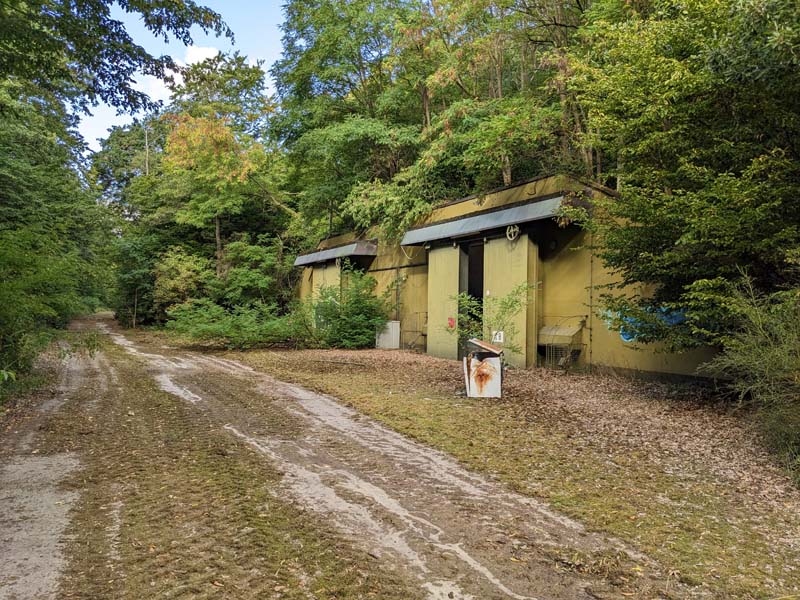
While NATO nations maintain proprietary magazine designs and safety approaches, there is currently no central-level authority responsible for certifying structural compliance. Although NATO standards like AASTP-1 define blast criteria for achieving a 7-bar rating similar to U.S. requirements, the lack of a unified review body to certify that a facility design meets these standards poses a significant risk. The United States is frequently required to classify all host nation earth-covered magazines as “undefined.” This lack of certification, as well as difficulty in confirming key safety parameters such as the minimum soil-cover thickness required for blast mitigation, severely restricts the ability to optimize explosives planning at these sites.
Safety arcs introduce an additional layer of complexity. NATO’s own criteria are generally more conservative than U.S. standards, requiring greater setback distances from inhabited buildings. Compounding this, individual member nations also frequently maintain their own arc standards that diverge significantly from NATO and U.S. requirements (creating a patchwork of overlapping and sometimes conflicting safety thresholds). In practical terms, this distinction limits what the United States can propose or fund on European installations—as projects sited within distances that a host nation deems are unsafe relative to munitions storage cannot move forward regardless of the U.S. assessment.
Improved Planning
As the Defense Department strengthens its posture in Europe while deepening interoperability with NATO partners, military planners and engineers must understand host nation institutions, planning traditions, and regulatory frameworks.
Encouragingly, the outlook for improving infrastructure planning throughout the continent is increasingly positive. NATO partners are showing greater interest in consistent planning practices, such as joint workshops, shared engineering standards, and coordinated reviews that align U.S. and host nation methods.
Technical cooperation is growing as well. Better alignment on safety criteria, especially for high-risk facilities, may eventually support a NATO-level review and certification process, improving consistency and trust in shared infrastructure. Emerging data-driven tools, including geospatial analysis and standardized assessment platforms, offer immediate opportunities to strengthen decisions and incorporate local input.
Continued investment in shared training and planning doctrine will be paramount. Through steady collaboration, the United States and NATO can develop a more coordinated, resilient, and mission-ready infrastructure portfolio, ensuring the alliance can effectively absorb new spending and operationalize investments.
Lucas Strittmatter, AICP, M.SAME, is Senior Planner, MDLE; lucas.strittmatter@md-le.com.
Published in the May-June 2026 issue of The Military Engineer
Check Out Related Articles From TME
-

Innovative PFAS Remediation at Camp Grayling
For project stakeholders and remediation managers confronted with PFAS, Regenesis demonstrates the efficacy of using Regenesis’ PlumeStop® colloidal activated carbon (CAC) at Camp Grayling, Michigan. -
A Standardized Approach to Aircraft Fire Training Infrastructure
To support enterprise-wide airmen readiness, the U.S. Air Force is modernizing its standard design for aircraft fire training facilities—introducing digital controls, dual-fuel systems, and PFAS-conscious infrastructure. -
Delivering Energetic Materials Manufacturing Facilities
Designing and constructing facilities that manufacture, process, handle, or store explosives and energetic materials present some of the most challenging defense projects—requiring technical experience, strict safety protocols, and a comprehensive understanding of regulatory frameworks. -
Forging Tradition and Innovation: A New Design Standard at Camp Lejeune
The II MEF Headquarters at Camp Lejeune blends Georgian Revival architecture with modern sustainability—delivering durability, efficiency, and precision that meets contemporary functional requirements while honoring heritage. -

Balancing Efficiency and Fiscal Responsibility
The continuing contracts clause offers the U.S. Army Corps of Engineers a way to improve project delivery and enhance fiscal responsibility by aligning funding with project execution. -
Next Steps for Digital Twin Development
U.S. Forces Japan is laying the groundwork for future integration of digital twin technology in order to validate and collect data that will offer comprehensive insights into utility conditions at installations and enhance overall decision-making, efficiency, and resilience.