Generating Resiliency: Protecting Federal Electrical Infrastructure
By Joseph Manzella, P.E., LEED AP, M.SAME, and Anthony Kim, P.E.
As storm-related damages, flooding, and sea level rise threaten the operations of military facilities, greater investment in resilient electrical infrastructure and proactive mitigation measures can reduce risk and enhance readiness.
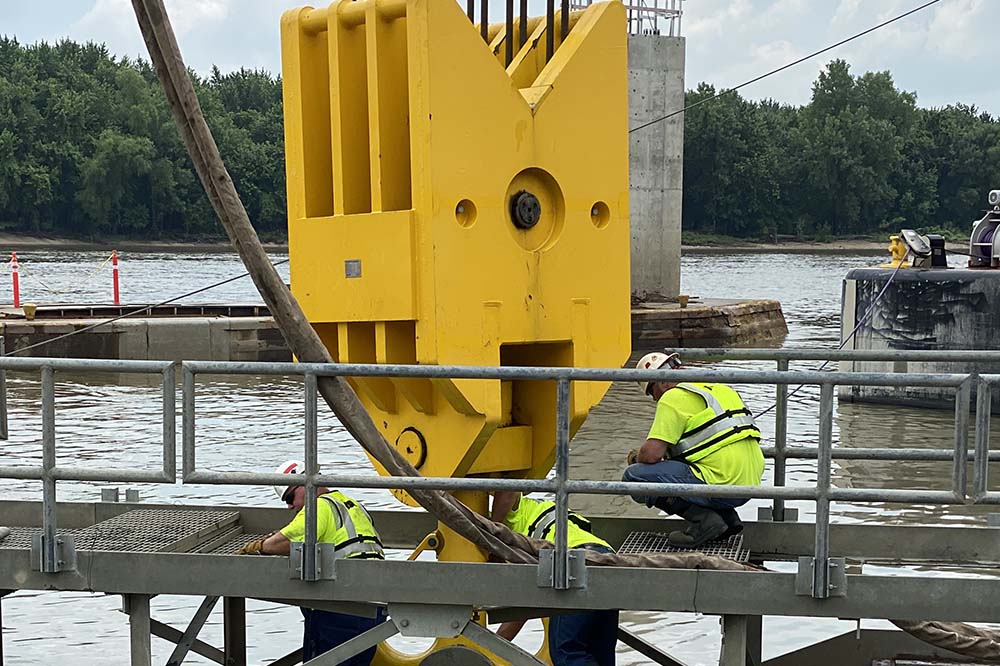
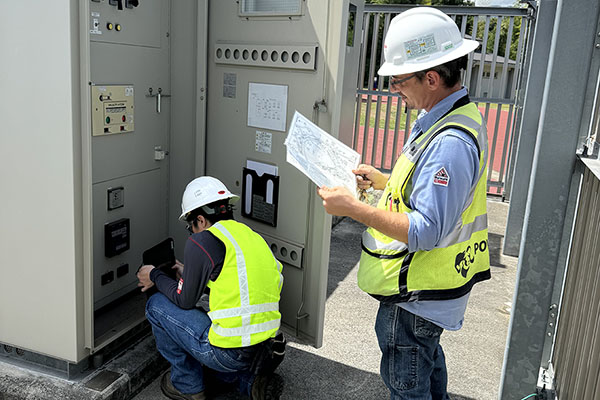
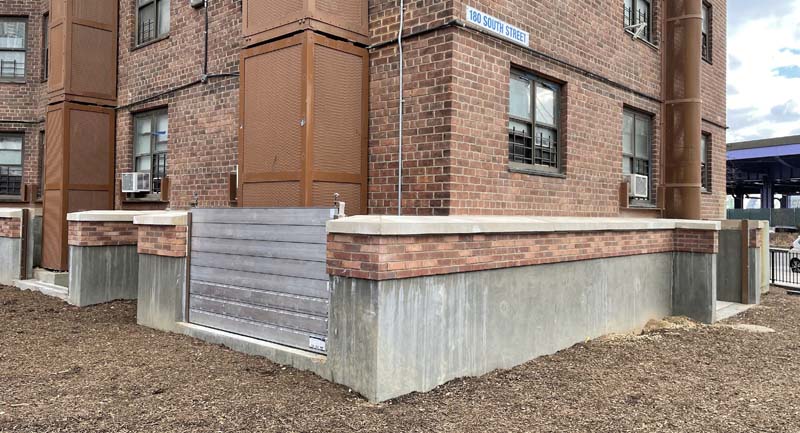
Increased risks from flooding, storm surge, and natural disasters make protecting electrical infrastructure a critical component of long-term mission readiness. Photos courtesy H2M architects + engineers.
The U.S. military maintains more than 450 domestic installations and over 800 facilities around the globe, managing, in total, north of $1 trillion worth of assets. Keeping these buildings, structures, and weapons platforms operational means contending with damage from natural disasters and other climate-related events, among many varied and evolving threats.
It has been estimated that defense facilities and those aligned under other federal departments will incur upwards of $387 billion in storm-related damages throughout the next several decades. At many locations, including Marine Corps Base Camp Lejeune, N.C., and Marine Corps Base Quantico, Va., damages could each cost tens of billions of dollars alone.
Protecting electrical infrastructure is a key element of effective storm damage mitigation. When floods impact a facility’s electrical infrastructure, the results can be catastrophic. Water from storm surges carries contaminants that can render equipment ineffective at best and outright dangerous at worst. Contaminant infiltration can cause short circuits, power failures, and even arc flashes. These issues pose a threat to safety, but even more so when combined with conductive floodwaters. Given these escalating risks, the Defense Department must prioritize investments in storm resilient infrastructure, particularly electrical infrastructure.
Existing Guidance
The Department of Defense, through the Unified Facilities Criteria (UFC), mandates a formal set of technical criteria and guide specifications for the planning, design, construction, operation, and maintenance of military facilities. The guidance provided by the program (developed through the collaborative efforts of the National Aeronautics & Space Administration, U.S. Army Corps of Engineers, Naval Facilities Engineering Systems Command, and Air Force Civil Engineer Center) is designed to ensure that both new and updated facilities are sufficiently protected from natural and anthropogenic disasters.
The UFC provides guidance pertaining to the resilience and reliability of energy systems within or adjacent to military facilities. This includes guidelines for evaluating system resilience; designing or upgrading new or existing systems; determining operational requirements for meeting resiliency objectives; and analyzing potential modes of failure. Current policy also mandates that flood hazard mapping be provided for every U.S. military installation and that critical infrastructure is not sited within flood hazard areas unless absolutely necessary.
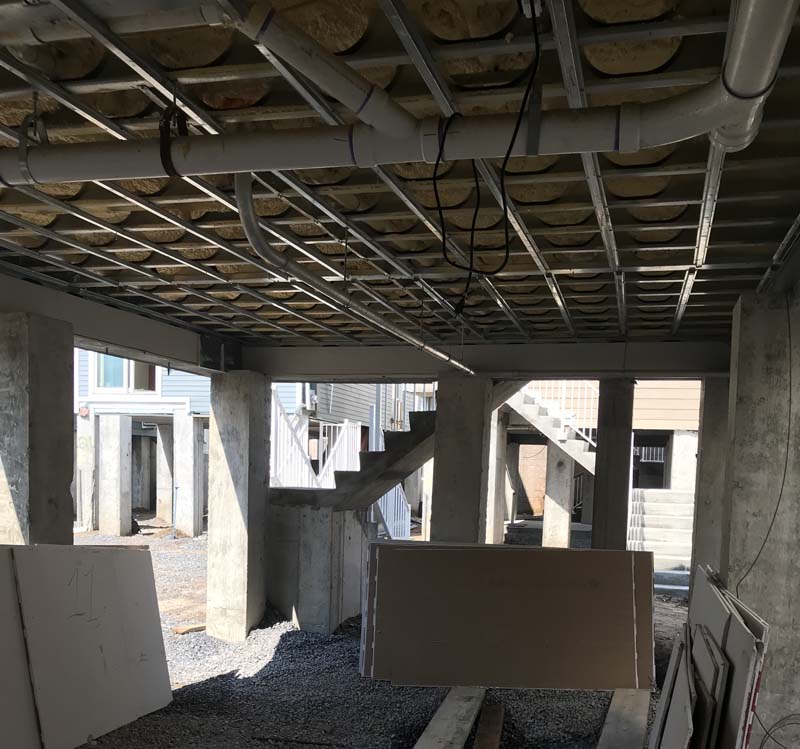
Redundant power systems, hardened infrastructure, and facility-specific resilience planning can help installations maintain operations and recover quickly after natural disasters.
Mitigation Techniques
While the UFC may be a thorough resource that is required to be incorporated into all military facility projects, there are a number of specific mitigation techniques that should be followed as well.
Elevate Electrical Infrastructure. A universal precaution is to relocate critical electrical infrastructure above the mitigation design elevation (MDE). Unlike an area’s base flood elevation (BFE), which is determined by the area’s flood history, MDE accounts for future rising sea levels and storms of increasing severity. If BFE anticipates the floods of the present, MDE anticipates the floods of the future by incorporating anticipated sea level rise and an additional 1-ft to 3-ft margin (a freeboard) above the BFE.
The types of critical infrastructure that should sit above MDE includes substation control rooms, relay rooms, battery energy storage systems, and any hardware related to supervisory control and data acquisition. Equipment such as electrical panels, circuit breakers, transformers, and electrical wiring should also be kept out of the reach of floodwaters. Additionally, because storms can uproot trees and displace rocks and other objects at dangerously high speeds, any structural foundations supporting electrical equipment should be reinforced to withstand impacts.
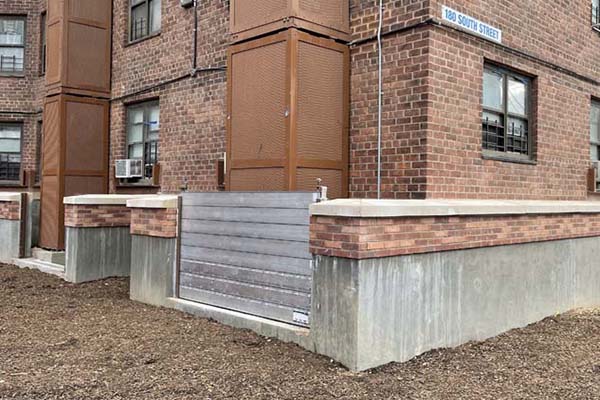
Protect Infrastructure Housing. Even with vital electrical equipment elevated above MDE, buildings that house the infrastructure are at risk of serious damage without proper flood protection. Floodproofing systems protect by either blocking water from entering a building (dry floodproofing) or by redirecting it somewhere else (wet floodproofing).
Dry floodproofing systems insulate the structure from floods; they allow no more than 4-in of water to enter within a 24-hour time span. The system components include floodproof doors, which compress against the doorframe in response to increasing water pressure to create a waterproof seal, and flood barriers, which activate automatically as water levels rise. When installing a dry floodproofing system, it is important to seal off any openings that could allow water into the space, like areas where wiring has to travel through walls, ceilings, or floors.
Even when water intrusion into a structure is effectively blocked, hydrostatic pressure from groundwater beneath the building footprint can push water up through the floor. A structural slab tied to perimeter foundation walls will resist this upward buoyancy pressure. Steel-reinforced concrete performs remarkably well under compression and tension and can be formed to fit the constraints of the existing building envelope.
Wet floodproofing allows water to infiltrate a structure through vents and breakaway wall systems, then flow through areas that are resilient to water damage. These spaces should be constructed out of materials that resist fungal and bacterial growth. Where dry floodproofing can place external pressure on a structure, wet floodproofing avoids this by allowing hydrostatic pressures to equalize inside and outside of the structure. Both types of floodproofing can be activated without the need for electricity or human intervention, enabling flood protection even when a building is unoccupied or without power.
Create Redundancies. Redundancy, in the form of using duplicative infrastructure to prevent equipment failures from causing power loss, is another integral part of resilient operations.
Duplicating certain infrastructure components, such as substations and generators, can help ensure that facilities can remain online even when damaged by storms. Utilizing duplicate electrical infrastructure also allows repairs and upgrades to be made without disrupting a facility’s operations.
Given these escalating risks, the Defense Department must prioritize investments in storm resilient infrastructure, particularly electrical infrastructure.
Necessary Investment
The specifics of any single flood mitigation plan will differ based on factors including location, size, and layout of the facility, as well as the levels of technology and integration housed within.
Protecting military facilities from natural disasters and severe flood events will require significant but thoughtful investment in resiliency measures. The consequences of losing functional bases and power projection platforms, however, is even costlier.
Joseph Manzella, P.E., LEED AP, M.SAME, is Senior Vice President and Public Agency Market Director, and Anthony Kim, P.E., is Vice President and Department Manager for Electrical Engineering, H2M architects + engineers. They can be reached at jmanzella@h2m.com; and akim@h2m.com.
Published in the September-October 2026 issue of The Military Engineer

Check Out Related Articles From TME
-

Innovative PFAS Remediation at Camp Grayling
For project stakeholders and remediation managers confronted with PFAS, Regenesis demonstrates the efficacy of using Regenesis’ PlumeStop® colloidal activated carbon (CAC) at Camp Grayling, Michigan. -
A Standardized Approach to Aircraft Fire Training Infrastructure
To support enterprise-wide airmen readiness, the U.S. Air Force is modernizing its standard design for aircraft fire training facilities—introducing digital controls, dual-fuel systems, and PFAS-conscious infrastructure. -
Delivering Energetic Materials Manufacturing Facilities
Designing and constructing facilities that manufacture, process, handle, or store explosives and energetic materials present some of the most challenging defense projects—requiring technical experience, strict safety protocols, and a comprehensive understanding of regulatory frameworks. -
Forging Tradition and Innovation: A New Design Standard at Camp Lejeune
The II MEF Headquarters at Camp Lejeune blends Georgian Revival architecture with modern sustainability—delivering durability, efficiency, and precision that meets contemporary functional requirements while honoring heritage. -

Balancing Efficiency and Fiscal Responsibility
The continuing contracts clause offers the U.S. Army Corps of Engineers a way to improve project delivery and enhance fiscal responsibility by aligning funding with project execution. -
Next Steps for Digital Twin Development
U.S. Forces Japan is laying the groundwork for future integration of digital twin technology in order to validate and collect data that will offer comprehensive insights into utility conditions at installations and enhance overall decision-making, efficiency, and resilience.