Leveraging SBIR/STTR in San Antonio, and Beyond
By Lindsey Burelison, P.E., M.SAME
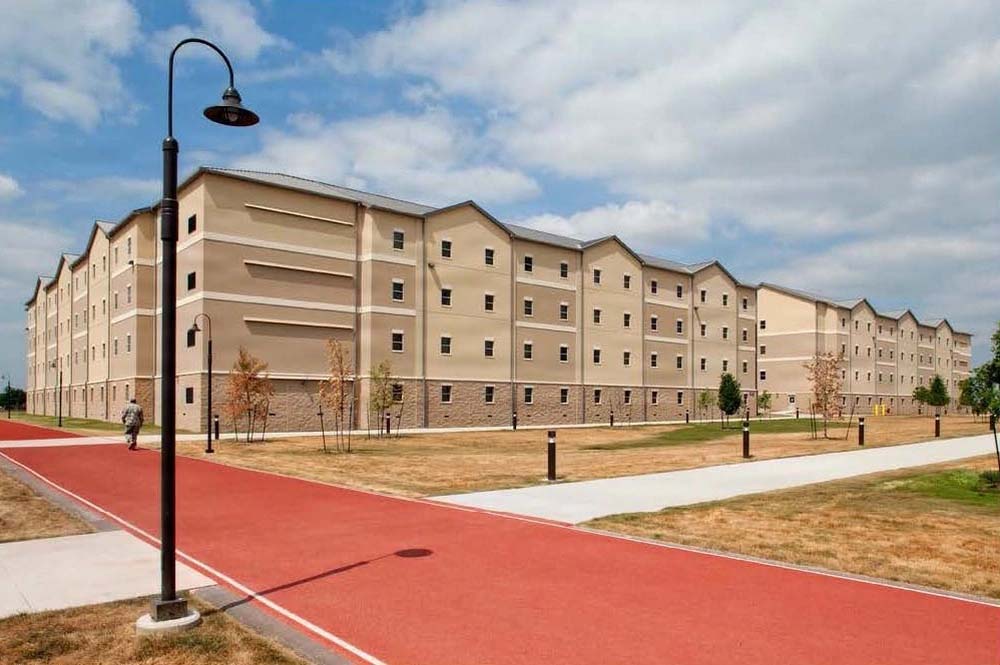
A dormitory maintenance solution created for Joint Base San Antonio demonstrates how projects developed through the unique federal funding mechanisms of Small Business Innovation Research and Small Business Technology Transfer can accelerate innovation across the military enterprise.
For organizations seeking novel solutions to complex operational challenges across the engineering landscape, a pair of federal funding programs, Small Business Innovation Research (SBIR) and Small Business Technology Transfer (STTR), represent an underutilized strategic asset. Administered across multiple government agencies and recently reauthorized until 2031 through the Small Business Innovation and Economic Security Act these investment markets offer a streamlined pathway to access emerging technologies, fund custom solutions, and accelerate the transition of commercial innovations into operational capabilities.
Additionally, recent successes also demonstrate the program’s inherent potential to deliver mission impact far beyond initial applications, while strengthening the nation’s industrial base.
Enterprise Scalability
The evolution of a recently developed facility readiness solution illustrates how strategic engagement through SBIR/STTR can deliver compound benefits.
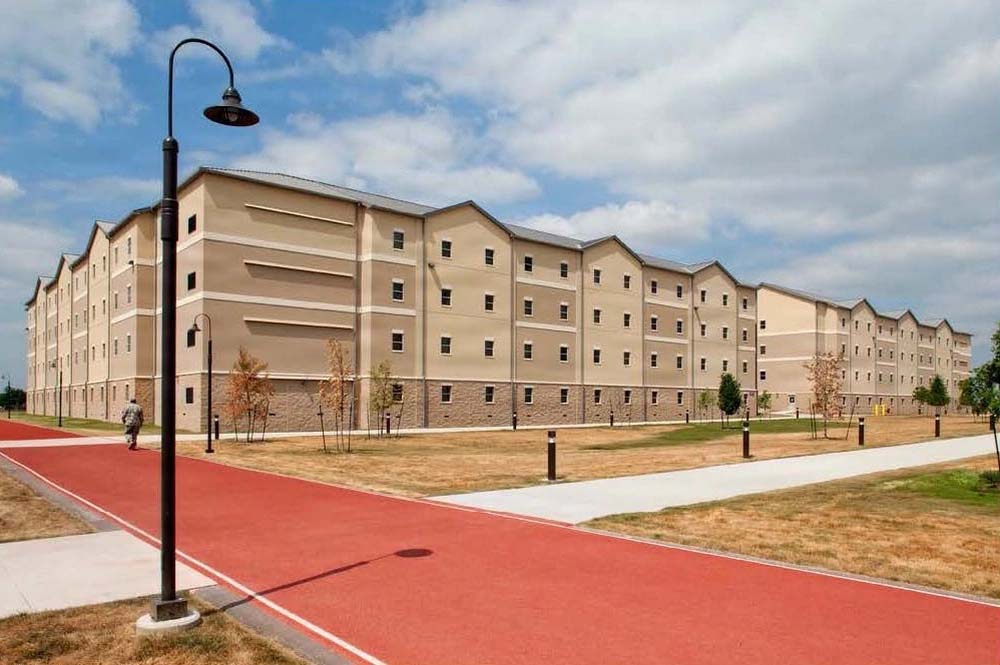
Joint Base San Antonio had been facing a persistent challenge: dormitory maintenance requests were submitted through inconsistent methods (paper forms, emails), which created inefficiencies and miscommunication. Working with Matrix Design Group through the SBIR program, base engineers developed the Dorm Readiness Tool, which transformed this fragmented process into an integrated digital workflow. Now, residents submit spatially accurate maintenance requests through mobile-optimized QR codes with photo attachments, and facility managers review and validate requests through a centralized database with automated prioritization. Through this process, leadership gains real-time visibility of dormitory readiness across the entire portfolio through informative dashboards.
The results were immediately tangible. Maintenance request submission shifted from emails and paper forms to mobile-
optimized surveys. Reviews from dorm managers evolved from manual intake and in-person room visits to a dashboard with live data and automated prioritization. Tracking of requests moved from inconsistent spreadsheets to integrated, real-time updates.
What makes this project particularly instructive is not the specific dormitory application, but what happened next. The SBIR award was not structured around a single-purpose tool but rather the underlying technological framework: crowdsourced data collection, automated workflow management, and real-time data visualization. This broader scope created immediate opportunities for functions across different mission areas.
Following the initial implementation at Joint Base San Antonio, the U.S. Space Force subsequently leveraged Matrix’s Direct to Phase II SBIR technology to advance two critical initiatives: process improvements for Combat Forces Command and digital infrastructure planning under Spaceport of the Future, a long-range investment framework to support greater projected operational demand. By building on the same technological foundation that streamlined dormitory maintenance, the Space Force is able to enhance operational effectiveness and strengthen infrastructure to support the nation’s evolving space missions.
This adoption also exemplifies a critical lesson in scalability: defining problems at the process and methodology level, rather than as application-specific requirements, multiplies the return on investment.
Articulating Challenges
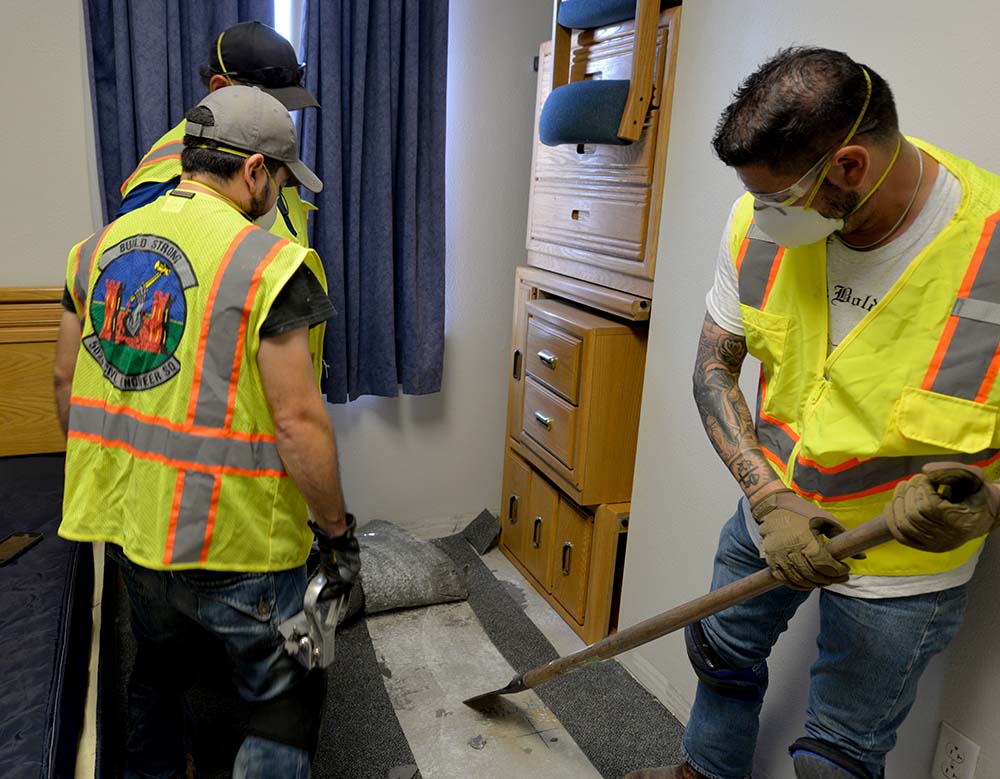
Successfully leveraging SBIR/STTR requires deliberate planning and problem articulation. The most successful projects address well-defined problems with clear success metrics. Taking on specific challenges like “reduce non-mission capable room identification time from 72 hours to 24 hours” are more effective. SBIR/STTR projects should align to underlying processes and capabilities. A requirement to “enable resident-initiated, spatially accurate facility deficiency reporting with supporting documentation” effectively opens solution space while still maintaining outcome focus.
Even if initial implementation targets a single asset, engineers should consider how solutions might scale. Projects that demonstrate broad applicability and commercialization potential are more likely to secure Phase III transition funding.
Lastly, early engagement is key. SBIR/STTR works best when engineers engage during problem definition rather than after failed attempts with commercial solutions.
Pathways to Opportunity
Several entry points exist for those ready to explore SBIR/STTR opportunities. Begin by collaborating with innovation offices or acquisition departments to frame problem statements for submission through SBIR/STTR Open Topic. This process asks for ideas that articulate the operational challenge, describe current approaches and limitations, identify desired outcomes, and specify success metrics.
As a second entry point, the program periodically hosts pitch events where small businesses present solutions to military challenges. There, installations can evaluate emerging technologies and identify potential matches for their requirements.
Lastly, many Phase I and Phase II awardees are actively seeking government partners to expand their applications. Organizations facing similar challenges can potentially leverage existing contracts through modifications or Phase III follow-on awards.
Addressing Concerns
Despite clear benefits, some still hesitate to pursue SBIR/STTR opportunities. For every perceived limitation, there is a counter explanation that provides motivation to explore these research and development programs.
“We don’t have funding for innovation projects.” Phase I and II awards are funded through SBIR appropriations, not unit budgets. Their engineers provide problem definition and operational access rather than funding.
“Small businesses can’t handle government requirements.” Contrarily, companies participating in SBIR/STTR specifically target federal markets and understand government requirements, including security, compliance, and documentation standards.
“This will take too long.” While comprehensive acquisition programs require years to field capabilities, SBIR/STTR can deliver working prototypes in months. The Dorm Readiness Tool moved from concept to operational deployment faster than traditional procurement approaches would have completed requirements definition.
“Our problem is too unique.” The diversity of successfully funded SBIR/STTR projects spans from hypersonic propulsion to food service logistics. Unique challenges often make the most compelling proposals because they demonstrate clear differentiation from commercial markets.
Accelerating Answers
As the defense sector faces increasingly complex operational challenges, the ability to rapidly deploy innovative solutions becomes a force multiplier. SBIR/STTR are designed to bridge the gap between agency requirements and commercial innovation.
The transformation of a dormitory maintenance system at Joint Base San Antonio demonstrates both the immediate tactical value and long-term strategic potential of thoughtful SBIR/STTR engagement. By defining challenges at the process level rather than the application level, engineers create opportunities for solutions to scale across missions and commands.
The question should not be whether to engage with SBIR/STTR—it is how quickly organizations can identify problems worth solving and begin the collaboration process. The program infrastructure exists, the funding is available, and innovative small businesses are actively seeking partnership opportunities.
Lindsey Burelison, P.E., M.SAME, is Senior Associate, Matrix Design Group, lindsey.
burelison@matrixdesigngroup.com.
Published in the May-June 2026 issue of The Military Engineer

Check Out Related Articles From TME
-

Innovative PFAS Remediation at Camp Grayling
For project stakeholders and remediation managers confronted with PFAS, Regenesis demonstrates the efficacy of using Regenesis’ PlumeStop® colloidal activated carbon (CAC) at Camp Grayling, Michigan. -
A Standardized Approach to Aircraft Fire Training Infrastructure
To support enterprise-wide airmen readiness, the U.S. Air Force is modernizing its standard design for aircraft fire training facilities—introducing digital controls, dual-fuel systems, and PFAS-conscious infrastructure. -
Delivering Energetic Materials Manufacturing Facilities
Designing and constructing facilities that manufacture, process, handle, or store explosives and energetic materials present some of the most challenging defense projects—requiring technical experience, strict safety protocols, and a comprehensive understanding of regulatory frameworks. -
Forging Tradition and Innovation: A New Design Standard at Camp Lejeune
The II MEF Headquarters at Camp Lejeune blends Georgian Revival architecture with modern sustainability—delivering durability, efficiency, and precision that meets contemporary functional requirements while honoring heritage. -

Balancing Efficiency and Fiscal Responsibility
The continuing contracts clause offers the U.S. Army Corps of Engineers a way to improve project delivery and enhance fiscal responsibility by aligning funding with project execution. -
Next Steps for Digital Twin Development
U.S. Forces Japan is laying the groundwork for future integration of digital twin technology in order to validate and collect data that will offer comprehensive insights into utility conditions at installations and enhance overall decision-making, efficiency, and resilience.