Mapping a Smarter Waste to Energy Future
By Macey Tilk, PMP, and René Parker, PMP, M.SAME
The Waste to Energy Geographical Information System Gap Analysis Tool provides a better way to visualize potential waste-to-energy conversion opportunities for military bases—offering increased security, reliability, and resilience.
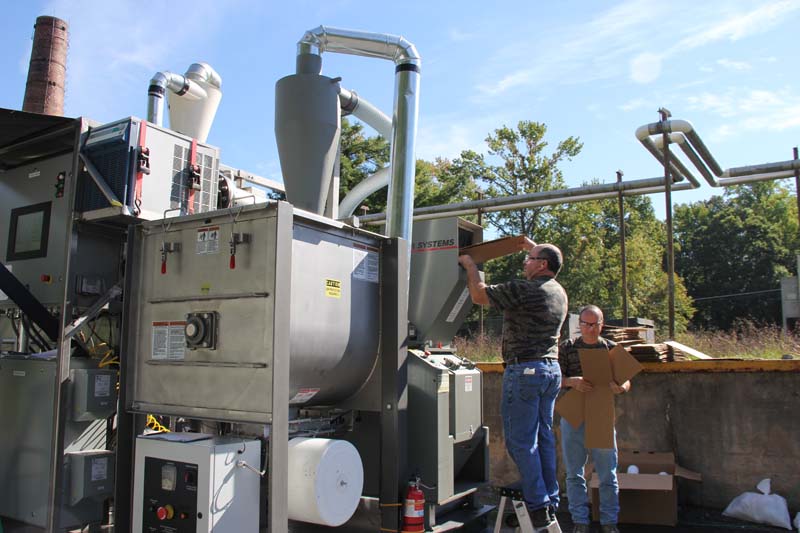
The Waste to Energy Geographical Information System Gap Analysis Tool can help installations identify waste-to-energy opportunities that reduce disposal costs, strengthen energy security, and support mission assurance. U.S. Army photo.
As landfill costs escalate and disposal options shrink, solid waste is becoming a significant operational concern for the Department of Defense (DOD). Each year, military installations generate nearly 6-million-T of waste, all of which must be hauled, processed, and paid for. In 2024 alone, average landfill tipping fees jumped 10 percent nationwide, pushing costs past $62/T. At the same time, landfills across the country are closing, forcing waste to travel farther and driving costs even higher. What is often overlooked is that this growing liability also represents a steady, locally available energy source that can be leveraged to actually improve installation resilience while reducing long-term disposal expenses.
The conversion of waste material into usable heat, electricity, or fuel through a variety of engineering processes is the basis of waste-to-energy (WTE). These methods include combustion, gasification, pyrolization, anaerobic digestion, and landfill gas recovery. The Defense Department has become particularly interested in WTE because it diverts waste from landfills and can provide energy resiliency. The technology is a viable option for installations looking to reduce burden on landfills, manage waste economically, and reduce installation dependency on the grid.
Many installations are interested in WTE solutions but lack the necessary data to determine if it is a viable option. To address this opportunity, the U.S. Army Engineer Research & Development Center’s Construction Engineering Research Laboratory (ERDC-CERL) partnered with Select Engineering Services (SES) to create the Waste to Energy Geographical Information System Gap Analysis Tool. Specifically tailored for defense users, the platform allows for the visualization of military bases alongside regional waste infrastructure, costs, regulations, and incentives.
Centralized Access
The gap analysis tool functions by providing interactive map layers, where users can quickly assess nearby landfills, tipping fees, composting facilities, WTE facilities, and other assets that shape waste management decisions. Rather than navigating scattered datasets, decision-makers are able to see the full waste landscape.
Partnering Benefits. An installation may not have sufficient solid waste to justify the construction of a WTE system on its property. By looking outside the gate, however, they may find opportunities where waste could be diverted to a larger facility. In turn, the base could receive a portion of the electricity or steam generated. The economics of large-scale WTE facilities require several solid waste producers to contribute to make the system financially viable. The tool that ERDC-CERL/SES developed identifies some of those larger producers to help provide the most complete picture of local waste streams.
Built on a modern online mapping platform, the tool consolidates diverse data and presents it visually. This workflow enables users to identify, explore, and assess areas where current technologies may fall short of mission requirements. At its core, the platform supports a gap analysis, which is a structured comparison between existing capabilities and desired performance or outcomes. In military settings, gap analysis is critical for prioritizing investments, allocating resources, and shaping research and development strategies. The effort reveals mismatches between what is available and what is needed, supporting informed decisions about where to focus acquisition, innovation, and modernization efforts.
Financial Analysis. Assessing the upfront investments and long-term maintenance projection is critical in building and operating a WTE facility. The new tool provides information on the average tipping fee by state, along with state level incentives/laws and regulations that might be applicable. For example, several states have implemented food waste diversion laws that require high-volume generators to divert food waste from landfills. These regulations provide an opportunity to put the diverted food waste into an anaerobic digester that can generate electricity or renewable natural gas.
Currently, data within the tool is for the continental United States, Hawaii, and Alaska. However, U.S. installations overseas face similar challenges surrounding energy resiliency and managing waste. Expanding the dataset could help decision-makers in remote locations better understand their waste management options in the future.
Specifically tailored for defense users, the platform allows for the visualization of military bases alongside regional waste infrastructure, costs, regulations, and incentives.
Making Data Visible
A distinguishing feature of the tool is how it utilizes geospatial information. By placing data in a geographic context, gaps in capability, infrastructure, or technology adoption become visible on a map rather than buried in spreadsheets. By layering datasets that represent current technology deployments, environmental factors, or other relevant information, users are able to see where capability shortfalls occur and how they relate to location-specific variables.
For instance, users can find maps and downloadable datasets showing patterns of infrastructure or waste characterization relevant to specific regions. Information can be viewed as well as extracted for further study or inclusion in reports. Beyond mapping, the tool also serves as a central hub for WTE knowledge. It houses current research, technology summaries, and a compatibility assessment that helps in identifying which conversion technology best matches an installation’s waste streams and operational needs.
Cross-Departmental Development
The Waste to Energy Geographical Information System Gap Analysis Tool is being used by the DOD Waste to Energy Working Group, which was established by ERDC-CERL in 2021 to bring stakeholders together to evaluate technologies, identify gaps, and advance demonstration projects aligned with defense requirements.
The working group includes representatives from each of the military services as well as the Department of Energy and Environmental Protection Agency. It conducts meetings to identify needs, issues, opportunities, and technology gaps, and also provides opportunities for vendors/sponsors to discuss demonstration project outcomes or plans for demonstrations. The gap analysis tool was developed alongside input from the working group to gain insight from those interested in WTE, directly optimizing the technology for users.
Advancing Security
As DOD prioritizes more efficient waste management practices across its physical footprint, the Waste to Energy Gap Analysis Tool offers a critical decision support capability. By systematically identifying inefficiencies, quantifying recoverable resources, and evaluating feasible technologies, the tool empowers installation managers to transition from traditional disposal methods toward circular resource use. Moreover, it enhances mission assurance by reducing reliance on external waste infrastructure and mitigating logistical vulnerabilities.
With resiliency targets becoming increasingly central to defense planning, the continued adoption and refinement of analytical frameworks will play an essential role in advancing energy security and operational sustainability across the enterprise. Taking a data-driven approach to waste management offers the services a clearer path forward, effectively (and efficiently) turning a rising expense into a strategic resource.
Macey Tilk, PMP, is Energy and Sustainability Project Manager, and René Parker, PMP, M.SAME, is CEO & President, Select Engineering Services (SES). They can be reached at macey.tilk@sesut.com; and rene.parker@sesut.com.
Published in the September-October 2026 issue of The Military Engineer
Check Out Related Articles From TME
-

Innovative PFAS Remediation at Camp Grayling
For project stakeholders and remediation managers confronted with PFAS, Regenesis demonstrates the efficacy of using Regenesis’ PlumeStop® colloidal activated carbon (CAC) at Camp Grayling, Michigan. -
A Standardized Approach to Aircraft Fire Training Infrastructure
To support enterprise-wide airmen readiness, the U.S. Air Force is modernizing its standard design for aircraft fire training facilities—introducing digital controls, dual-fuel systems, and PFAS-conscious infrastructure. -
Delivering Energetic Materials Manufacturing Facilities
Designing and constructing facilities that manufacture, process, handle, or store explosives and energetic materials present some of the most challenging defense projects—requiring technical experience, strict safety protocols, and a comprehensive understanding of regulatory frameworks. -
Forging Tradition and Innovation: A New Design Standard at Camp Lejeune
The II MEF Headquarters at Camp Lejeune blends Georgian Revival architecture with modern sustainability—delivering durability, efficiency, and precision that meets contemporary functional requirements while honoring heritage. -

Balancing Efficiency and Fiscal Responsibility
The continuing contracts clause offers the U.S. Army Corps of Engineers a way to improve project delivery and enhance fiscal responsibility by aligning funding with project execution. -
Next Steps for Digital Twin Development
U.S. Forces Japan is laying the groundwork for future integration of digital twin technology in order to validate and collect data that will offer comprehensive insights into utility conditions at installations and enhance overall decision-making, efficiency, and resilience.