Models for Resilience in California’s Battery Investment
By Christopher Farnie, P.E., LEED AP, M.SAME
As California expands battery energy storage, a project in San Jacinto provides a practical model for installations seeking to maintain energy continuity.
In January 2025, wildfires across Southern California burned thousands of acres and destroyed entire communities. What began as isolated ignitions quickly escalated into a regional crisis, disrupting the grid and forcing utilities to de-energize portions of the system.
This crisis exposed how planning assumptions do not always hold under real-world conditions. For mission-critical sites, resilience is now defined by the ability to maintain power when the surrounding network is compromised, rather than relying on broader grid reliability. Battery energy storage systems (BESS) demonstrate how that capability is built.
When integrated with substation infrastructure, coordinated controls, real-time SCADA visibility, and thorough commissioning, storage can support installation islanding and stabilize power during volatile conditions. As compound weather events challenge grid performance, this approach is shaping how military bases and other campuses prepare for disruptions.
Growing Capacity
California’s perennial sunshine, sprawling technology and innovation ecosystem, and sustained investment in clean energy have positioned the state at the forefront of renewable deployment. Over decades, regulators have built a policy framework that incentivizes adoption and creates long-term market certainty.
In 2015, California’s installed battery storage capacity stood at just 112-MW. A decade later, that figure has grown to nearly 17,000-MW—an increase of more than 15,000 percent and a significant step toward the state’s 2045 decarbonization targets. The presence of large-scale battery systems now punctuate the grid, allowing operators to store energy when solar generation is abundant and relatively inexpensive during low-demand daytime hours, then dispatch it as demand rises in the evening.
However, this growth has unfolded alongside increasing operational stress. Wildfire-related shutoffs, transmission constraints, and localized outages continue to test how power is delivered in real time. In those moments, the grid depends on assets that can respond immediately, communicate clearly with operators, and perform under constrained conditions. This is where battery storage has taken on a more central role. It serves as both a tool for balancing supply and demand and a resource for maintaining continuity when normal grid operations are disrupted.
Integrated Solution
For preparedness planners, the appeal of a BESS is simple: it provides immediate, on-site power when the grid is unavailable, enabling operations to continue independently rather than waiting for grid restoration. In practice, that means operators are not waiting on restoration timelines or reacting to rolling outages; they have a controllable resource on site when conditions deteriorate. A well-integrated BESS can also smooth volatility, support microgrids, reduce strain on local infrastructure, and bridge short-duration disturbances. At an installation level, this supports continuity for command facilities, communications systems, medical operations, water systems, and other loads that cannot go offline without cascading consequences.
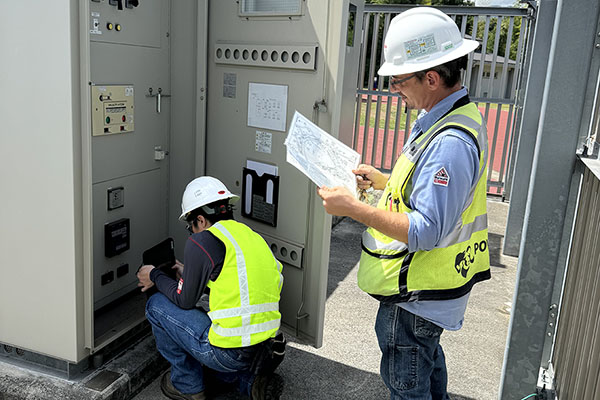
The important qualifier is “well-integrated.” A battery is not resilient simply because cells and inverters are installed. The value comes from the engineering around it: substation connections aligned with grid conditions; protection schemes that isolate faults; controls that respond as intended; supervisory systems that give operators real-time visibility; communications that remain functional under stress; and documentation that supports long-term maintenance.
Without these elements to serve as a backbone, battery capacity remains inert. With them, storage becomes an operational asset. In high-pressure scenarios, gaps in an integration surface quickly.
Scalable Path Forward
Large-scale battery storage deployments in high-demand regions are clarifying how energy can be generated, stored, and deployed with greater precision. For military installations, this evolution presents a direct path toward stronger preparedness and resilience.
Installations operate in environments where power reliability is directly tied to mission readiness. Traditional backup strategies, like diesel generation, are designed for response. BESS supports a more proactive posture that is focused on control, flexibility, and anticipation. By storing energy on site, installations gain the ability to operate independently from the grid and manage how and when power is used, rather than reacting only after disruptions occur.
This shift enables a more dynamic energy posture. Stored energy can be deployed during outages, peak demand, or fuel supply constraints, supporting critical operations without interruption. When integrated with microgrid controls, protection systems, and SCADA platforms, BESS allows installations to isolate from the grid, prioritize essential loads, and maintain real-time visibility into system performance. These capabilities give operators greater control in conditions where speed and clarity of response are critical.
The broader implication is a move toward greater energy independence. BESS reduces reliance on external power and fuel logistics with more flexibility for future demand, including electrification and evolving load profiles. As defense agencies prioritize resilience, BESS is becoming a baseline component of infrastructure—built to operate through disruption, not just respond to it.
Multitude Of Benefits
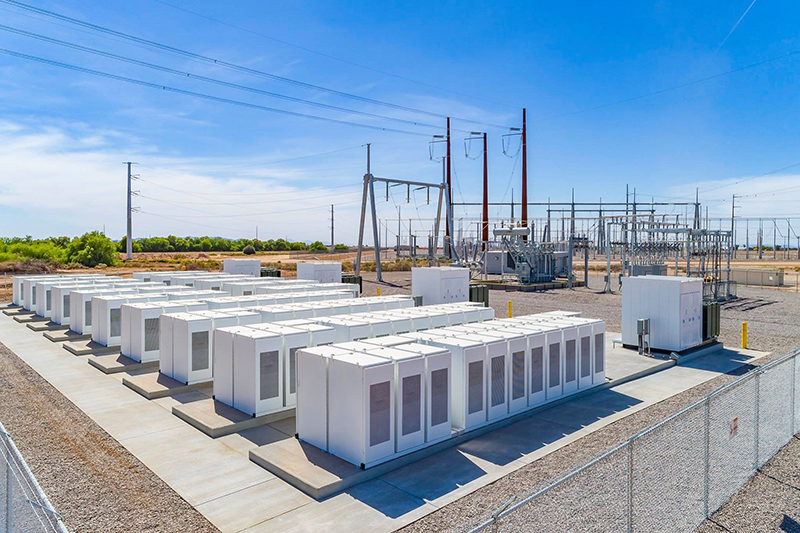
In Southern California, a 130-MWh BESS and associated substation in San Jacinto illustrates what integrated storage looks like in practice. Located in a region with aggressive renewable targets and growing demand, the system was designed to store excess generation and dispatch it during peak demand or grid stress.
What makes this project instructive is that performance depends on more than the battery itself. Large-scale systems like this reflect a shift toward storage as critical infrastructure—where outcomes are shaped by coordination across engineering disciplines. Electrical, civil, structural, and fire protection engineers each influence how the system performs under both normal and abnormal conditions. Among these, fire protection plays a central role due to the risks associated with lithium-ion systems and California’s stringent regulatory environment.
Fire protection begins early in the design process. On the San Jacinto contract and similar project, layout decisions are informed by hazard analysis, fire modeling, and codes such as NFPA 855. These choices are intended to limit the spread of battery fires or overheating incidents and influence how the site is permitted and constructed. Civil and structural design reinforce this approach through fire access, equipment spacing, and drainage strategies tied to suppression efforts.
Pond, an ENERCON Company, supported these elements during construction, but the broader takeaway extends beyond a single project: resilience is determined by how systems are integrated, tested, protected, monitored, and maintained.
The result is a system designed to respond to real-time grid needs and maintain operations when those grid conditions deteriorate or fail entirely. For the San Jacinto region, that means a more flexible use of renewable energy and fewer constraints tied to intermittency. At a broader level, projects like this support continued clean energy growth without introducing new reliability risks. They also provide a repeatable model for installations and resilience planners, demonstrating how storage can be deployed within existing infrastructure to maintain operations during disruptions and support future demand.
Christopher Farnie, P.E., LEED AP, M.SAME, is Vice President, Pond, an ENERCON Company; farniec@pondco.com.
Published in the July-August 2026 issue of The Military Engineer

Check Out Related Articles From TME
-

Innovative PFAS Remediation at Camp Grayling
For project stakeholders and remediation managers confronted with PFAS, Regenesis demonstrates the efficacy of using Regenesis’ PlumeStop® colloidal activated carbon (CAC) at Camp Grayling, Michigan. -
A Standardized Approach to Aircraft Fire Training Infrastructure
To support enterprise-wide airmen readiness, the U.S. Air Force is modernizing its standard design for aircraft fire training facilities—introducing digital controls, dual-fuel systems, and PFAS-conscious infrastructure. -
Delivering Energetic Materials Manufacturing Facilities
Designing and constructing facilities that manufacture, process, handle, or store explosives and energetic materials present some of the most challenging defense projects—requiring technical experience, strict safety protocols, and a comprehensive understanding of regulatory frameworks. -
Forging Tradition and Innovation: A New Design Standard at Camp Lejeune
The II MEF Headquarters at Camp Lejeune blends Georgian Revival architecture with modern sustainability—delivering durability, efficiency, and precision that meets contemporary functional requirements while honoring heritage. -

Balancing Efficiency and Fiscal Responsibility
The continuing contracts clause offers the U.S. Army Corps of Engineers a way to improve project delivery and enhance fiscal responsibility by aligning funding with project execution. -
Next Steps for Digital Twin Development
U.S. Forces Japan is laying the groundwork for future integration of digital twin technology in order to validate and collect data that will offer comprehensive insights into utility conditions at installations and enhance overall decision-making, efficiency, and resilience.