The Indo-Pacific’s Strategic Advantage: Airmen in a Contested Theater
By Brig. Gen. Mike Zuhlsdorf, M.SAME, USAF, Capt. Olamide Adeyeye, USAF, and Capt. Meredith Vaughan, M.SAME, USAF
In the world’s largest theater, airmen with Pacific Air Forces are the difference-makers who enable Agile Combat Employment, leveraging highly trained specialists, multi-capable personnel, and integrated partnerships to overcome the tyranny of distance and advance prospects for a free and open region.
In the Indo-Pacific, strategic advantage is shaped less by platforms and even policies than by the airmen who build, sustain, protect, and enable operations. This reality is embodied by Agile Combat Employment (ACE): dispersed air forces that generate combat power at the time and place of America’s choosing. The airmen of the U.S. Air Force create asymmetric advantage by enabling distributed operations that disrupt adversaries, complicate targeting, strengthen partnerships, and sustain high operational tempo with minimal footprint requirements—core attributes identified as the theater’s competitive edge.
Through resilience, speed, adaptability, and the ability to project power under pressure, airmen can transform a network of individual bases into a connected, agile, combat-credible enterprise enabling the missions of Pacific Air Forces (PACAF). When we speak of asymmetric advantage in the Indo-Pacific, it is not a platform, weapon, or software—it is the airmen who deter, compete, and guarantee we prevail.
Agile, Asymmetrical
When the general public discusses military power, the focus typically centers on hardware and software—aircraft, weapons systems, information networks. But the truth is more nuanced, and decidedly human-centric. It is the U.S. airman at the nexus of those platforms who generates asymmetric advantage, bringing to bear a defining level of capability, adaptability, and judgment.
Without question, U.S. airmen are fundamental to the nation’s security and the future of global stability. While technology matters, the human element transforms capability into dominance. This idea is embedded in the Air Force’s ACE concept, which defines how dispersed, adaptable airmen increase survivability while generating combat power.
Our enduring asymmetric advantage resides in people, and not just those in the cockpit or managing a satellite or missile silo. It is carried out by ACE airmen who enable power projection, create and sustain readiness, and preserve resilience. These are the servicemembers who generate the mission, build and maintain installations, protect the force, maintain the fleet, and provide the fuel and logistics that keep operations moving at the speed of relevance. This is the human engine that turns ACE from concept into practice across posture, command and control, maneuver, protection, and sustainment.
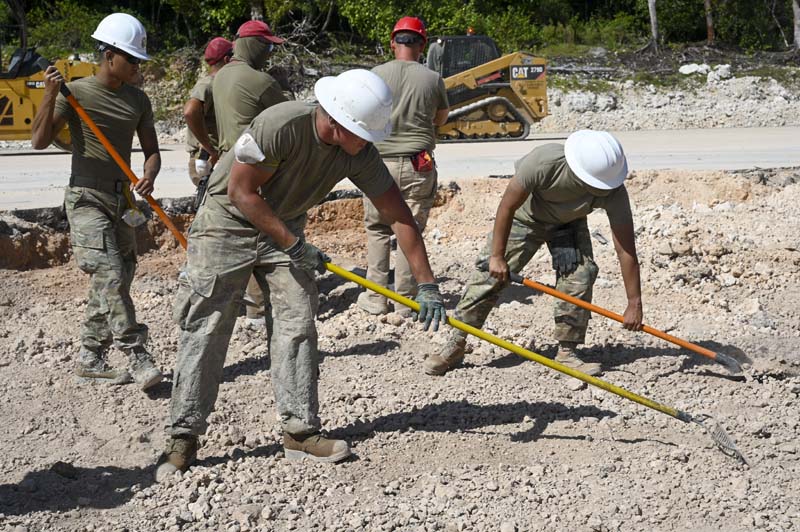
These airmen are the backbone of PACAF’s foundational strength. Their skill, adaptability, and focus (fortified by centralized planning, decentralized execution, and robust training) give senior leaders the ability to deter aggression, compete with confidence, and prevail whenever called. Their collective efforts ensure the United States maintains freedom of action throughout the Indo-Pacific.
Regionally Responsive
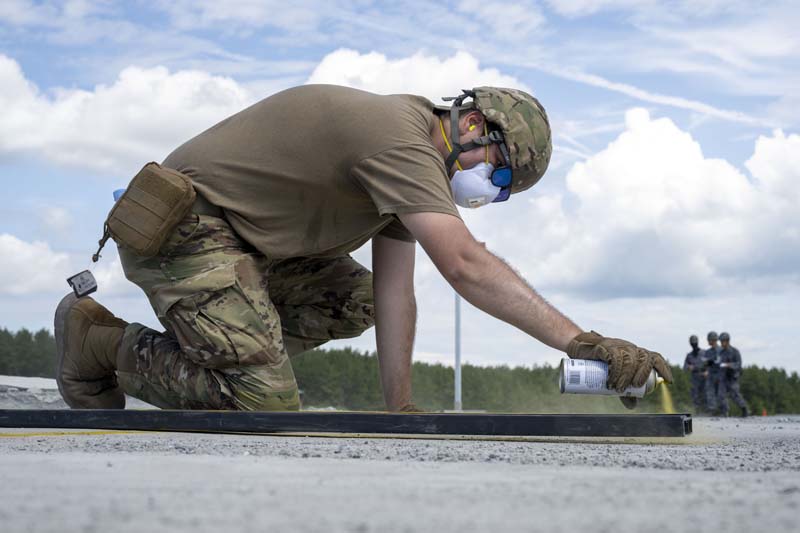
In what is largest and most complex operational theater covering half the planet, Air Force logisticians move people and equipment with precision, agility, and purpose. They build supply chains to remain functional even when contested, and they make the ACE concept real. Where others see distance as an obstacle, our logisticians turn it into opportunity. As the logistics environment becomes increasingly contested, PACAF security forces, medics, maintainers, fuelers, and engineers form a lattice of operational strength, turning routine tasks into strategic leverage.
Guardians of Agile Power Projection (Security Forces). PACAF security forces play a pivotal role in projecting combat power across the Indo-Pacific. They secure expeditionary airfields, critical infrastructure, and high-value assets so air operations can continue despite adversary pressure. Their ability to rapidly establish and defend forward operating locations is essential to ACE.
A growing element of this mission is the integration of point-defense capabilities and counter-small unmanned aircraft systems to defeat emerging aerial threats. Defenders employ layered defenses, advanced sensors, and rapid-response tactics to detect, track, and neutralize hostile drones and other low-signature threats. (This is in alignment with the War Department’s Strategy for Countering Unmanned Systems and the Air Force’s ongoing fielding of deployable small drone kits and Red Air Cell Training.) By integrating with joint forces and allied partners, Security Forces contribute to a unified defensive network that strengthens deterrence and enhances regional stability, ensuring that distributed operations remain resilient, responsive, and ready to generate combat airpower when and where needed.
Sustaining the Human Weapon System (Medics). Medics are a critical advantage opportunity. These airmen deliver high-quality care in austere, resource-limited environments, preserving force health and operational endurance. Their capabilities extend beyond routine care, however. They provide preventive medicine, trauma care, prolonged field care, and advanced diagnostics that keep airmen in the fight. This mission includes expeditionary blood support, which comprises the management of blood banks, conducting rapid blood typing and screening, and enabling lifesaving transfusions where traditional medical logistics cannot reach.
Air Force medics also strengthen regional trust through humanitarian missions and medical exchanges, which are a frequent endeavor across the vast geographic distances.
The Hidden Engine of Airpower (Maintainers). Air Force maintenance units maximize aircraft readiness and sortie generation despite resource constraints. They innovate to keep diverse fleets mission-capable. Facing heat, humidity, salt air, and a relentless operational tempo and uncertain security environment, maintainers keep aircraft flying. They sustain fifth-generation platforms across thousands of miles, solve problems with limited resources, and adapt to degraded communications and contested logistics. The current rotations at Kadena AB, Japan, for example, underscore this burden and the professionalism needed to keep a steady-state fighter presence in the First Island Chain.
Lifeblood of Air Mobility and Reach (Fuelers). In the Indo‑Pacific, fuel and range are critical for airpower relevance, and fuelers make both possible. This career field enables ACE by delivering fuel in remote, improvised, or contested areas and keeping tankers ready to extend the reach of aircraft in the theater.
In summer 2025, creative problem-solving by airmen in the field allowed new refueling concepts to be tested and refined during exercises. PACAF airmen advising the 11th Air Task Force and 36th Logistics Readiness Squadron during HH-60W and C-130 operations at Saipan engineered a fuel-nozzle adapter to overcome a commercial refueler shortfall. This configuration allowed commercial hydrant systems to safely service military aircraft equipped with main-body single-point receptacles. The innovation enabled fully compliant operations and uninterrupted sortie flow, as well as a tangible demonstration of ACE in practice.
When, recently, a petroleum, oils, and lubricants vendor across the Second Island Chain raised concerns about transaction processing, PACAF airmen partnered with the group immediately, validating the existing open fuel release and ensuring uninterrupted support. These relationships now provide flexibility and highlight how peacetime process refinement translates to wartime resilience.
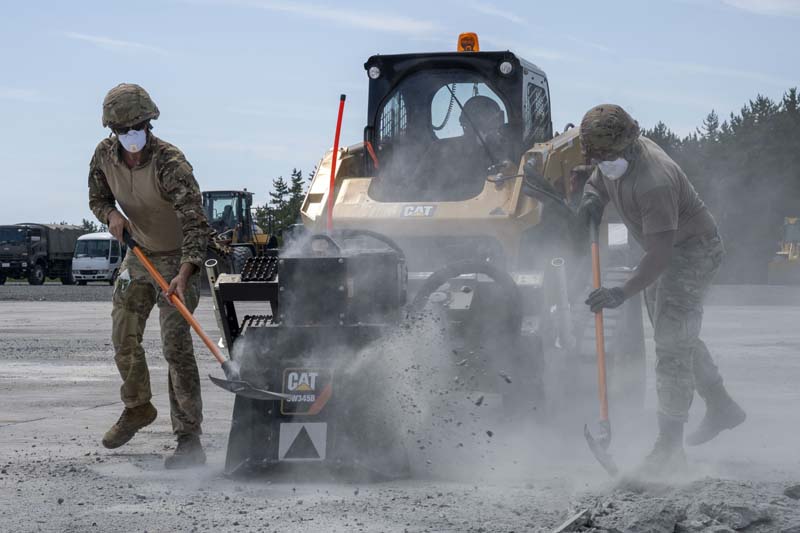
Architects of Operational Flexibility (Engineers). The civil engineers throughout PACAF design, build, and repair infrastructure that enables rapid deployment and sustainment for joint and coalition partners around the globe. Beyond maintaining infrastructure, engineers also forge the projection platforms needed to deliver combat airpower. They harden airfields, build forward operating locations, and repair runways in hours.
However, their work extends beyond physical structures. PACAF engineers integrate resilient communications and power systems that keep command and control functioning even in degraded environments. A key component of this effort is the 356th Expeditionary Theater Support Group, which is setting the theater by building and sustaining the infrastructure needed for ACE and a “fight tonight” posture across the region. Their work sustains the ability to conduct operations from austere, contested locations and provide rapid response when needed.
Redefining Training
While each occupation contributes to the fight, skills must extend beyond a specialty code in developing multi-capable airmen (MCA).
This training approach supports ACE by enabling rapid deployment, dispersed operations, and sustained aircraft generation. MCA is how a maintainer will become a defender or a civil engineer to do logistical duties or minor aircraft maintenance. By integrating cross-trained airmen into agile, distributed teams, MCA strengthen operational resilience and ensure our force can generate combat power anytime, anywhere.
Our airmen also work shoulder-to-shoulder with allies and partners to ensure regional stability and security in the Indo-Pacific. Through combined exercises, shared basing access, intelligence cooperation, and interoperability efforts, the partnerships developed across the theater multiply combat power and complicate adversary planning. This network of capable allies creates strategic depth in the region.
Meeting Today’s Needs
The ingenuity and innovation of our airmen remain the nation’s decisive advantage, but the ability to bring this edge to bear is challenged by legacy systems built for a different era of conflict. Today’s airmen require flexible, resilient logistics support capable of augmenting operations across vast distances. They need reliable aircraft, pre-positioned materiel, and distributed supply nodes that reduce reliance on large, vulnerable hubs. Equally essential are secure, redundant communication networks that maintain uninterrupted data flow across islands, maritime platforms, and joint or allied forces, even electromagnetic interference. Airmen also require robust personnel support systems to sustain their performance during deployments in remote, austere environments.
The presence of forward infrastructure (modernized airfields, fuel storage, power generation, and facilities that support rapid dispersal) forms the physical backbone of ACE and enables forces to operate from austere or rapidly shifting locations. Access to allied and partner networks can extend our reach, providing shared basing options, interoperable systems, and combined logistics that multiply capability. A runway rehabilitation and planned fuel/C2 improvements at Basa AB in the Philippines, for instance, exemplifies how posture investments directly translate into substantial operational payoff.
Still, chronic underinvestment in infrastructure is eroding physical readiness and undermining the combat credibility of installations in the Indo-Pacific. Reversing this trend requires elevating critical facility and infrastructure upgrades at both main operating bases and forward operating locations within the Future Years Defense Program. These investments, in addition to enhanced defense cooperation agreements, will expand airfield capacity, strengthen war reserve materiel and fuel storage, and build resilient communication networks that ensure mission success in contested environments.
The Air Force’s logistics command and control architecture has to evolve to meet the speed, scale, and ambiguity of the Indo-Pacific. Built for predictability, efficiency, and steady-state operations, legacy constructs provide limited asset visibility. The future logistics enterprise must deliver true decision advantage. That means accelerating the adoption of the Basing & Logistics Analytics Data Environment on Advana and replacing legacy LIMS EV/GCSSAF dependencies, improving machine-assisted analytics, and pushing coalition-releasable data to the edge. Right now, airmen also are looking ahead in physical scenarios, identifying assets such as munitions or equipment to preposition and enable rapid dispersal of forces and warfighting should the need arise.
The civil engineers throughout PACAF design, build, and repair infrastructure that enables rapid deployment and sustainment for joint and coalition partners around the globe. Beyond maintaining infrastructure, engineers also forge the projection platforms needed to deliver combat airpower. They harden airfields, build forward operating locations, and repair runways in hours.
Those in the Arena
When we say that our airmen are our decisive factor, it is not a slogan. It is a strategic reality. They are the ones in the arena, preparing for what may be asked of them. Technology can be copied. Hardware can be stolen. Tactics can be observed. But people cannot be replicated. Creativity, discipline, adaptability, integrity, ingenuity: these are the qualities that give the United States its enduring advantage.
In the Indo-Pacific, strategic dominance is not defined solely by advanced platforms or kinetic capability. It is shaped by the quiet, relentless excellence of airmen who sustain, protect, and enable operations. That is the essence of ACE: dispersed forces that complicate adversary targeting while still generating combat power potential and remaining resilient and ready, always.
Allies, Partners, Progress
Across the Defense Department, the need for reliable, on-demand power has never been more urgent. As installations face mounting challenges from grid vulnerabilities, aging infrastructure, and global fuel supply disruptions, a transformative solution is emerging: generating baseload power directly from the waste military bases already produce.
Central to PACAF’s mission is working alongside allies and partners to ensure regional stability and security. While speaking at the 2024 Air, Space, and Cyber Conference, Gen. Kevin Schneider, USAF, PACAF Commander, underscored the three asymmetric advantages that adversaries cannot match: the growing network of alliances and partnerships, the professionalism and discipline of our people, and the inherent strength of the joint force.
Schneider reinforced this in a 2025 interview with Janes, describing deepening interoperability with allies and partners as a defining advantage—modernizing together to ensure agility and effectiveness across the full spectrum of challenges in the theater. “We continue to integrate and operate with our network of allies and partners more deeply than ever before,” he said. “We modernize alongside them to ensure interoperability and agility across the full spectrum of challenges.”
Brig. Gen. Mike Zuhlsdorf, M.SAME, USAF, is Director of Logistics, Engineering & Force Protection, Capt. Olamide Adeyeye, USAF, is Deputy Branch Chief, Future Plans Branch, Directorate of Logistics, Engineering & Force Protection, and Capt. Meredith Vaughan, M.SAME, USAF, is Director of Personnel Recovery, 613th Air Operations Center, HQ Pacific Air Forces, Joint Base Pearl Harbor Hickam, Hawaii. They can be reached at michael.zuhlsdorf@us.af.mil; olamide.adeyeye.1@us.af.mil; and meredith.vaughan@us.af.mil.
Published in the May-June 2026 issue of The Military Engineer
Check Out Related Articles From TME
-

Innovative PFAS Remediation at Camp Grayling
For project stakeholders and remediation managers confronted with PFAS, Regenesis demonstrates the efficacy of using Regenesis’ PlumeStop® colloidal activated carbon (CAC) at Camp Grayling, Michigan. -
A Standardized Approach to Aircraft Fire Training Infrastructure
To support enterprise-wide airmen readiness, the U.S. Air Force is modernizing its standard design for aircraft fire training facilities—introducing digital controls, dual-fuel systems, and PFAS-conscious infrastructure. -
Delivering Energetic Materials Manufacturing Facilities
Designing and constructing facilities that manufacture, process, handle, or store explosives and energetic materials present some of the most challenging defense projects—requiring technical experience, strict safety protocols, and a comprehensive understanding of regulatory frameworks. -
Forging Tradition and Innovation: A New Design Standard at Camp Lejeune
The II MEF Headquarters at Camp Lejeune blends Georgian Revival architecture with modern sustainability—delivering durability, efficiency, and precision that meets contemporary functional requirements while honoring heritage. -

Balancing Efficiency and Fiscal Responsibility
The continuing contracts clause offers the U.S. Army Corps of Engineers a way to improve project delivery and enhance fiscal responsibility by aligning funding with project execution. -
Next Steps for Digital Twin Development
U.S. Forces Japan is laying the groundwork for future integration of digital twin technology in order to validate and collect data that will offer comprehensive insights into utility conditions at installations and enhance overall decision-making, efficiency, and resilience.