Accelerating MILCON Through OTAs and Progressive Design-Build
By Brian Yerby, P.E., PG, M.SAME
The usage of Other Transaction Authority and progressive design-build are reshaping military project delivery, with the goal to drive earlier collaboration, greater flexibility, and more integrated approaches to planning and construction.
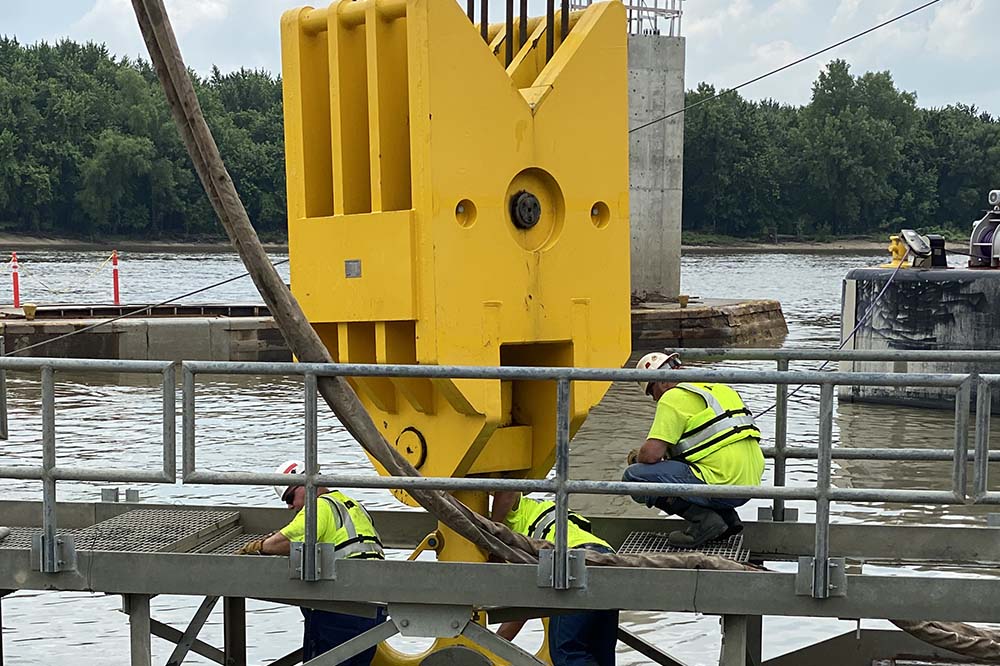
Recent legislation permitting the use of Other Transaction Authority and progressive design-build on federal/military projects is creating opportunities to accelerate facility delivery, improve decision-making, and make risks visible sooner. USACE photo by Charles Delano.
The federal construction market has changed significantly in the last year. The National Defense Authorization Act for Fiscal Year 2026, in formally creating 10 U.S.C. §2808(a), authorized military departments when contracting for facility planning, design, engineering, and construction to use Other Transaction Authority (OTA). The legislation also codified 10 U.S.C. §3241(g), authorizing the use of progressive design-build for military construction. Together, these implementations combine a most flexible transaction structure with a more collaborative project delivery process.
The shift within the federal market from design-bid-build to design-build also represents a business-model change for architecture-engineering (A-E) firms. The era of design-bid-build gave federally focused A-Es greater design control and a more predictable professional-services role working directly for government agencies. By contrast, design-build A-Es operate as part of an integrated team, influencing in real time cost, schedule, constructability, and facility mission performance.
With these new authorities being leveraged by the government, the A-E firms that are able to flex their mindset and adapt to change quickly will find expanded opportunities to deliver their services.
Engaging Early On
The A/E/C industry operates on reputation, trust, and long-term relationships. The OTA era requires teaming at breakneck speed, often with new partners, to best fit project requirements. These new relationships require a common understanding before participating in an OTA/progressive design-build process. The A-E must understand how design decisions affect cost and schedule along with the importance of developing alternatives, recommending innovations, and identifying long-lead items. Likewise, general contractors have a responsibility to avoid commoditizing design. They also must understand that design practitioners carry professional obligations, licensing requirements, technical judgment, and a standard of care that differs from a contractor’s guarantee of price, schedule, or construction performance.
The federal agency awarding the OTA can improve overall outcomes by expressing project priorities and distinguishing between the information needed to select a capable team and the information that should be developed after award. Both installation owners and end users are important to the design-build process. They need to recognize the importance of engaging early and throughout the process to make timely decisions to achieve desired efficiencies.
Balancing Considerations
The Brooks Act, which stipulates that the U.S. government select engineering and architecture firms based on competency, qualifications and experience, remains relevant to the marketplace, but OTAs have shifted much of the practical implementation of professional selection principles into commercial teaming arrangements. These “best-fit” arrangements are trying to match A-E professional judgment with the design-builder to a particular facility or location.
OTA flexibility allows general contractors to negotiate suitable terms. It also means that familiar protections through the Federal Acquisition Regulation may not appear unless they are written into the agreement. A-E firms must negotiate suitable commercial terms tied to the ordinary standard of care to balance against a contractor’s guarantees of cost, schedule, performance, or project results. Indemnity provisions attributable to negligent acts, errors, or omissions need to be addressed and balanced against flow-downs, liability for liquidated damages, contractor delays, and consequential damages.
Performance guarantees also require careful allocation to the party best able to control the risk. Additionally, there is a need to address ownership and permitted use of design documents, BIM models, calculations, specifications, proprietary tools, and emerging innovations.
Unlocking Potential
Both OTAs and progressive design-build can unlock significant potential. However, progressive design-build is a process, not a deliverable, and its success requires leadership at the organizational, project, and technical levels.
Moving forward, organizational leaders must balance timely risk decisions with suitable commercial terms as their federal design-build portfolio substantially increases and traditional federal acquisition rules no longer apply.
- Design project managers must be adept at leading external organizations through a continuous, integrated process.
- Technical leaders are also challenged in the OTA era to lead their federal practitioners to challenge traditional thought in an integrated fast paced team.
- Adaptability, creativity, commercial awareness, and construction literacy are now the differentiators.
The expanded use of OTAs and progressive design-build (as well as other alternative delivery methods) create opportunities for A-E firms with the right mindset. The companies that think collaboratively like design-builders while preserving the rigor of their professional practice, and which are able to operate under commercial terms, are well-positioned for this change. Their long-term success will be measured by how well they support project teams in delivering facilities faster, with better-informed decisions and stronger connections among design, construction, cost, schedule, and mission value.
Emerging Approaches
Among the first section 2808(a) OTAs issued was the U.S. Army Mission and Installation Contracting Command Joint Base Lewis-McChord FORGE 1 (Facilities, Operations, Readiness, Growth, and Experience). The Army used the flexibility of the OTA to bundle multiple installation-modernization efforts to make the agreement a program-management vehicle rather than a method for single project.
The Army Corps of Engineers has formalized its approach by soliciting industry feedback through its “USACE PDB with OTA Playbook,” signaling a more deliberate process. The agency’s approach is likely related to its role as an execution organization serving multiple military/federal agencies, requiring a need to scale consistently across diverse end users and facilities. The Corps of Engineers has expressed a desire to move forward in a manner that looks more like the civilian sector in its use of design-build, stating that changing the culture is a goal across its 47 separate offices.
For Naval Facilities Engineering Systems Command (NAVFAC), its emerging OTA approach is focused on delivering repeatable facility programs at greater speed and scale. Initial efforts have targeted barracks and child development centers, where standardized designs and industrialized construction can be applied across multiple installations. NAVFAC is pairing these methods with progressive design-build to bring government, designers, builders, and manufacturers together earlier to refine scope, design, cost, and schedule. At least initially, section 2808(a) appears to be a targeted addition to NAVFAC’s acquisition toolbox rather than a replacement for multiple award construction constructions and other existing delivery methods.
The U.S. Air Force’s emerging OTA models, including those developed by the Air Force Civil Engineer Center (AFCEC), reflect a deliberate process for seeing infrastructure as an integrated mission system. The Arnold Engineering Development Complex in Tennessee is using 2808(a) authority for its Velocity Alliance. The Military Construction Directorate at AFCEC has indicated its intention to balance speed and fundamentals with telling industry what it wants, but not necessarily how to achieve it. The agency also has cautioned that industry should have patience as the Air Force builds the administrative capacity needed to execute OTAs effectively.
There are other OTA models that are emerging and playing out on large-scale programs, such as the U.S. Space Command Headquarters, to be built in Huntsville, Ala. With a goal to cut the facility delivery process by 50 percent, Army Contracting Command – Rock Island Arsenal is serving as the government agreement-awarding office in conjunction with AFCEC and Space Command providing mission and technical direction. An owner’s advisor will be a foundational partner in shaping the requirements, governance, design-build process, and construction oversight.
Brian Yerby, P.E., PG, M.SAME, is Design-Build Program Manager, Federal Programs, Pond, an ENERCON Company; brian.yerby@enercon.com.
Published in the November-December 2026 issue of The Military Engineer
Check Out Related Articles From TME
-

Innovative PFAS Remediation at Camp Grayling
For project stakeholders and remediation managers confronted with PFAS, Regenesis demonstrates the efficacy of using Regenesis’ PlumeStop® colloidal activated carbon (CAC) at Camp Grayling, Michigan. -
A Standardized Approach to Aircraft Fire Training Infrastructure
To support enterprise-wide airmen readiness, the U.S. Air Force is modernizing its standard design for aircraft fire training facilities—introducing digital controls, dual-fuel systems, and PFAS-conscious infrastructure. -
Delivering Energetic Materials Manufacturing Facilities
Designing and constructing facilities that manufacture, process, handle, or store explosives and energetic materials present some of the most challenging defense projects—requiring technical experience, strict safety protocols, and a comprehensive understanding of regulatory frameworks. -
Forging Tradition and Innovation: A New Design Standard at Camp Lejeune
The II MEF Headquarters at Camp Lejeune blends Georgian Revival architecture with modern sustainability—delivering durability, efficiency, and precision that meets contemporary functional requirements while honoring heritage. -

Balancing Efficiency and Fiscal Responsibility
The continuing contracts clause offers the U.S. Army Corps of Engineers a way to improve project delivery and enhance fiscal responsibility by aligning funding with project execution. -
Next Steps for Digital Twin Development
U.S. Forces Japan is laying the groundwork for future integration of digital twin technology in order to validate and collect data that will offer comprehensive insights into utility conditions at installations and enhance overall decision-making, efficiency, and resilience.