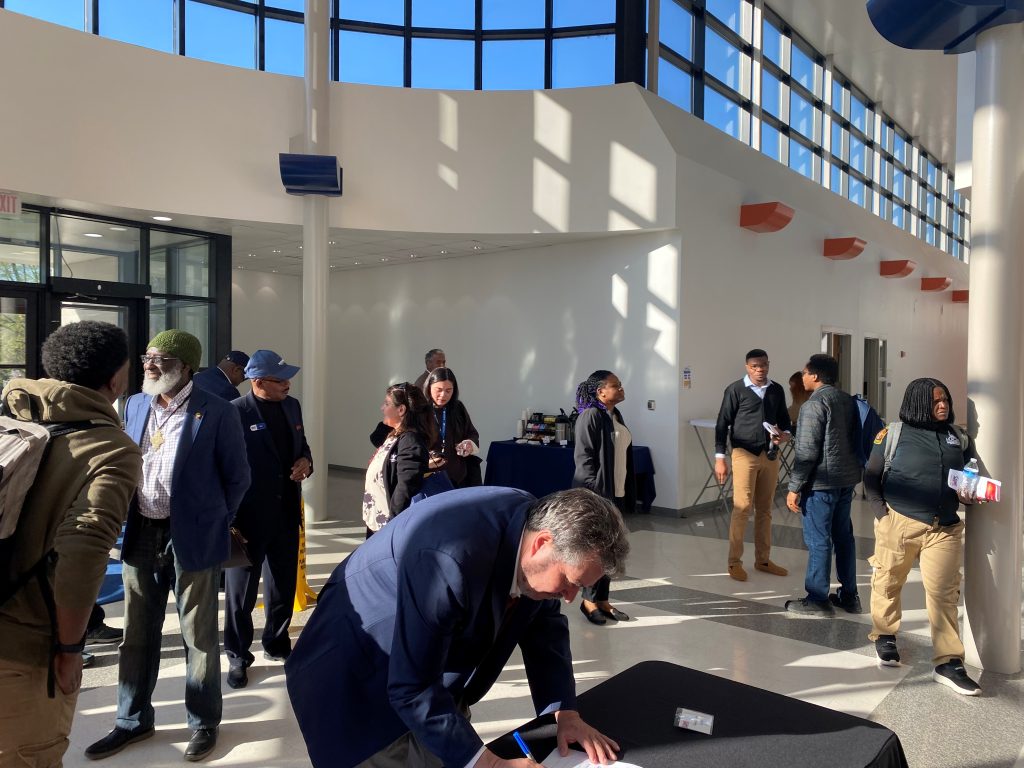
Hosted April 8 at Morgan State University, the Baltimore Post and Morgan State University Student Chapter convened more than 40 attendees to share PFAS updates spanning research, regulation, and remediation practice.
On April 8, 2026, the Baltimore Post—partnering with the Morgan State University SAME Student Chapter—hosted PFAS Progress: Science, Policy, and Practical Strategies at Morgan State University’s Shaeffer Engineering Building. The session brought together more than 40 students and professionals from federal and state agencies, academia, and industry to exchange perspectives on per- and polyfluoroalkyl substances (PFAS), a class of widely used compounds that can persist in the environment and are driving increased monitoring, regulatory attention, and cleanup activity across the country.
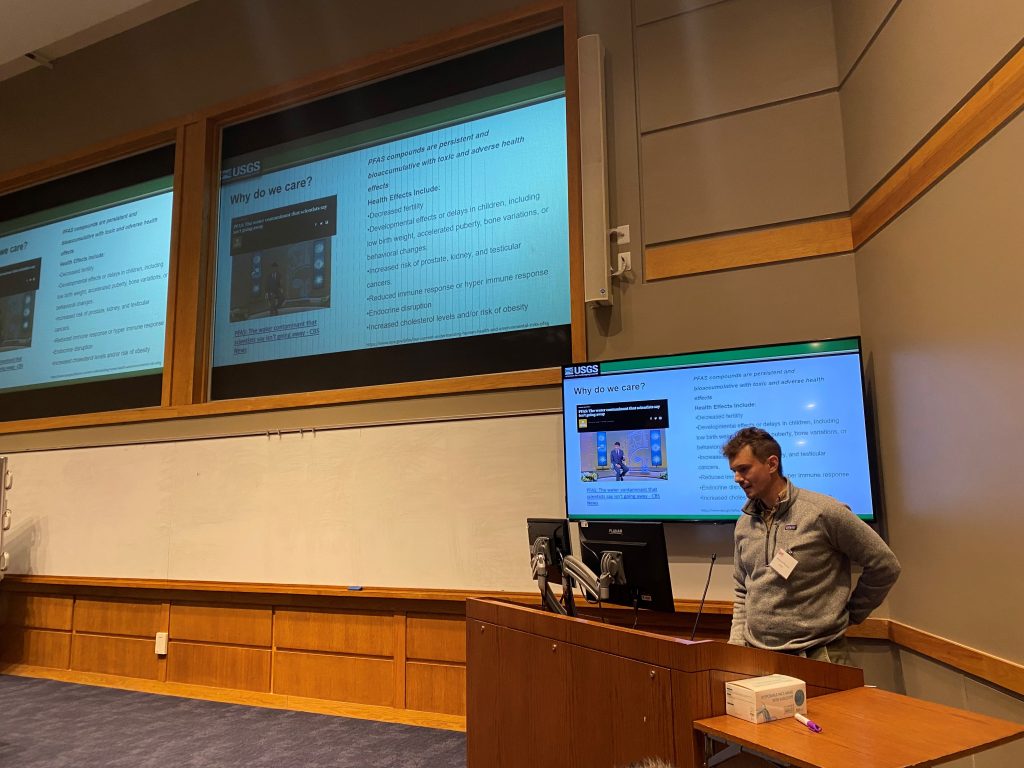
Andrew Psoras, lead chemist at the U.S. Geological Survey’s Maryland–Delaware–D.C. Water Science Center, opened with a PFAS primer, covering core chemistry concepts, environmental fate and transport considerations, and current monitoring approaches used to characterize PFAS occurrence in water and related media. The overview established a shared technical baseline for the presentations that followed.
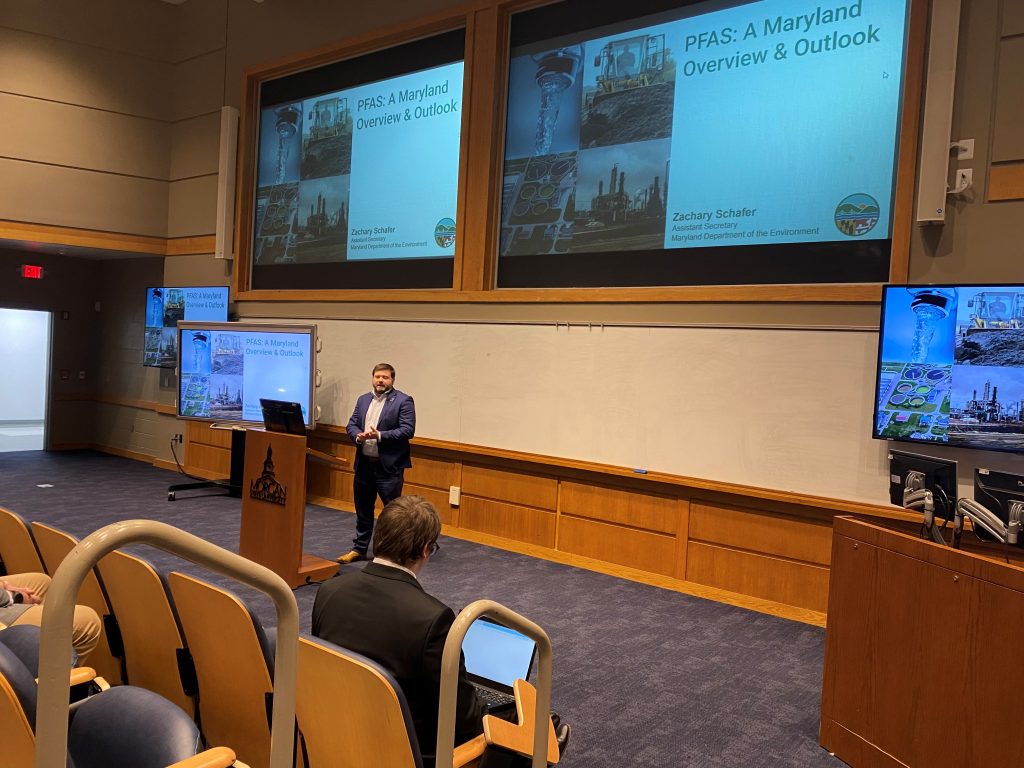
Zachary Schafer, assistant secretary at the Maryland Department of the Environment, provided an update on Maryland’s PFAS response, summarizing key regulatory actions and policy initiatives and describing how programs are coordinating to evaluate risk and guide statewide management.
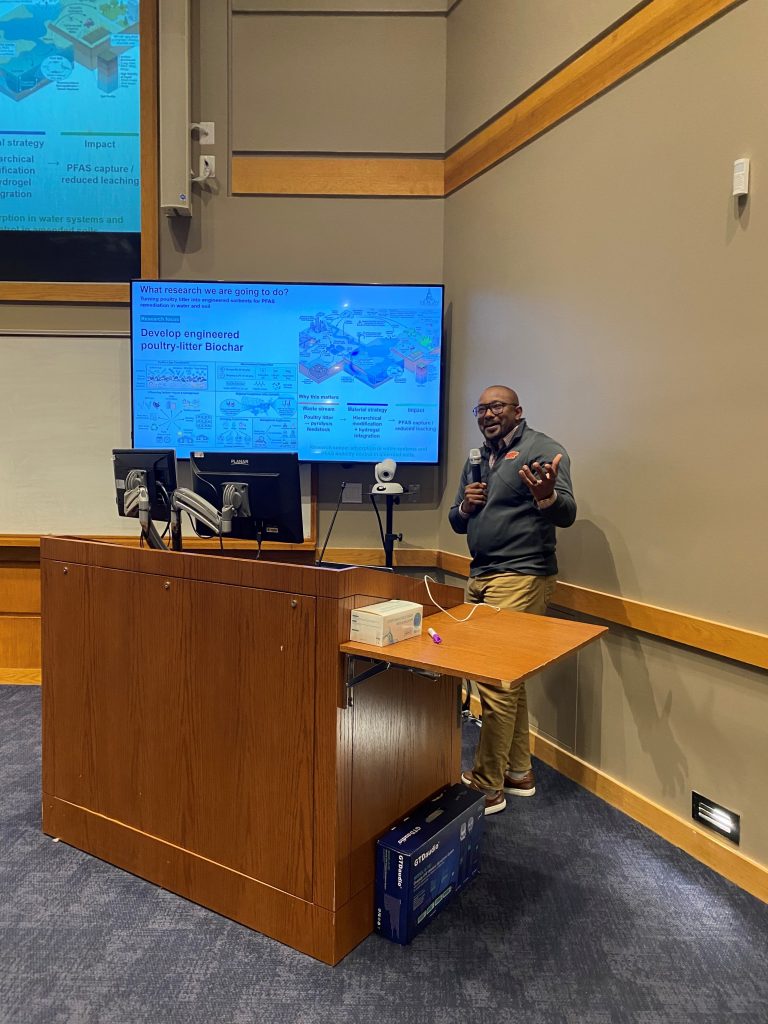
Dr. James Hunter highlighted Morgan State University’s growing PFAS research and laboratory capabilities, including expanded capacity for PFAS analysis and applied research. He also noted opportunities for partnership with government and industry and the importance of developing the next generation of technical professionals to support long-term PFAS assessment and response efforts.
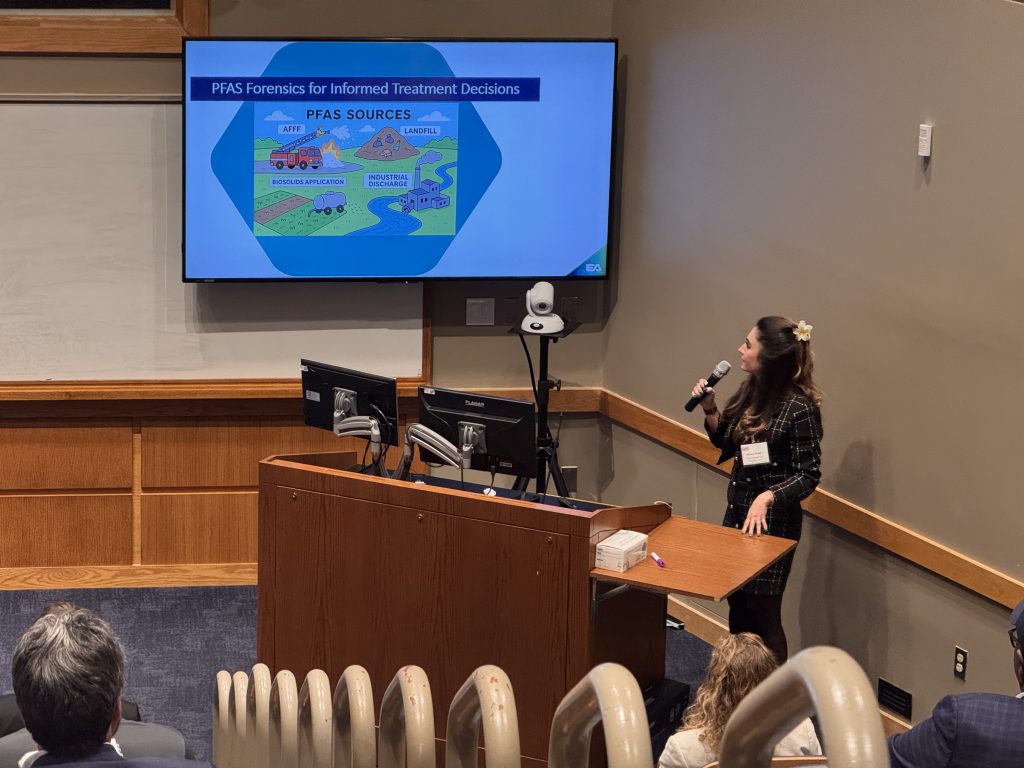
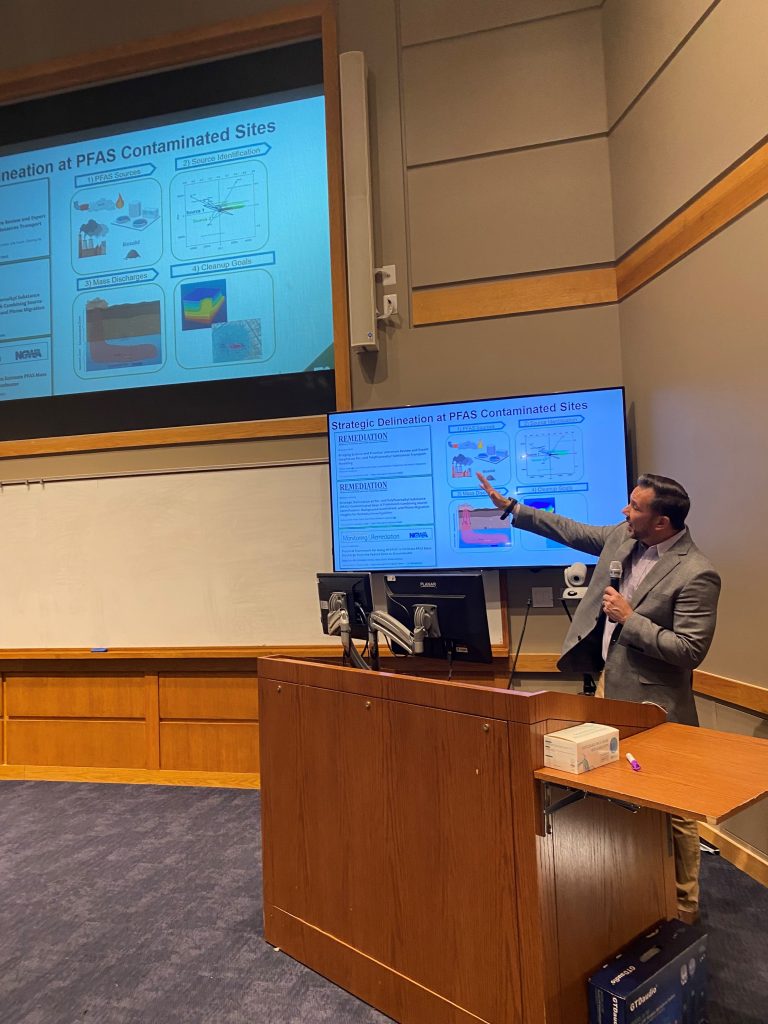
The final presentation, delivered by Mike Hertz and Dr. Mahsa Modiri of EA Engineering, Science, and Technology, Inc., PBC, focused on applying mass discharge analysis to support PFAS source prioritization. The speakers described how integrating site characterization data can clarify PFAS source contributions, inform conceptual site models, and help teams sequence investigation, treatment, and remediation decisions at complex sites.
Organizers emphasized that effective PFAS response depends on continued alignment among research, policy, and implementation—supported by collaboration across agencies, universities, and practitioners. Events like this provide a venue for professional development, knowledge-sharing, and relationship-building, while helping students connect classroom learning to real-world environmental challenges.
Thanks to our organizers for this event: Ivy Harvey, Kristen Nash, and Bill Burris!