
When government leaders, military engineers, A/E/C executives, technology innovators, investors, and researchers gather in Palo Alto, Calif., at Stanford University’s Center for Integrated Facility Engineering (CIFE) on September 9-10 for the 2026 Federal AI Summit: AI for Architecture, Engineering, and Construction (A/E/C), they will be participating in a collaborative forum that widens the aperture for the conversation around what responsible AI adoption looks like for federal infrastructure. The connections they make during the week will be the catalyst to future exploration, implementation, and advancement, as SAME President Ben Matthews (who will speak during the event) might say.
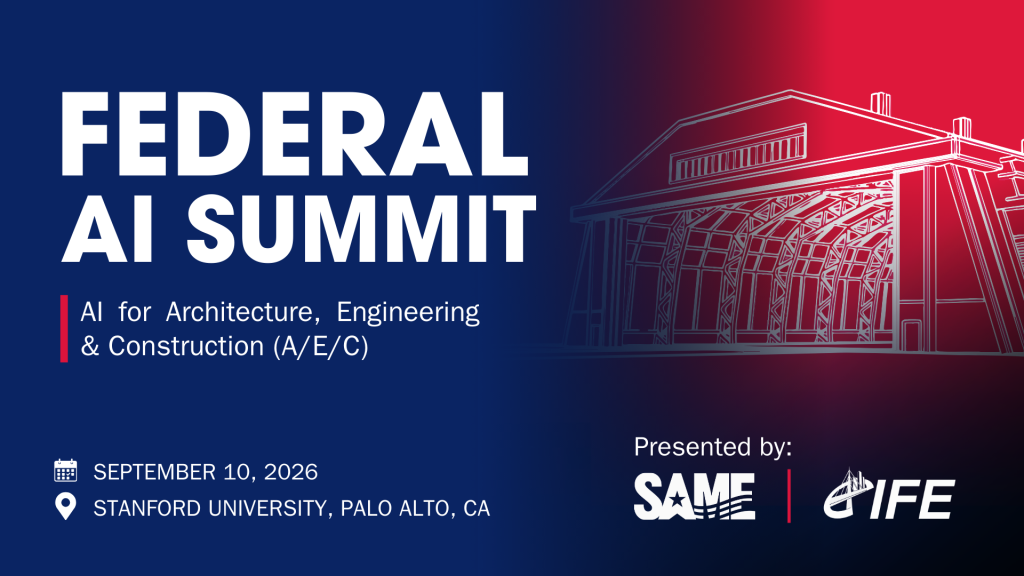
Developed through a partnership between CIFE, SAME’s National AI IGE Project Team, SAME’s National AI Working Group, and the San Francisco Post, the event has its roots in recognizing a need for a broad forum to explore one of the most significant modern technological shifts affecting the profession: artificial intelligence. What began as a series of workshops and exploratory discussions has evolved into a national event that will bring together leaders for a cross-sector dialogue—the kind of collaboration that SAME specializes in driving through its multidisciplined membership, time-trusted platform, and mission-driven mindset. This event is the first showcase of the AI Working Group and the IGE team.
Throughout its 106 years of history, the Society has adapted alongside the engineering profession. As new mission requirements emerge and technologies transform the engineering profession, SAME has evolved and expanded its reach accordingly. From acquisition reform and alternative delivery methods to CAD and digital engineering, geospatial information systems, and cybersecurity, SAME consistently creates space for conversations that cut across disciplines and organizations. The Federal AI Summit advances this legacy for the present day: bringing together the right people to address national challenges that no single entity can, or should, solve alone.
Planting the Seeds
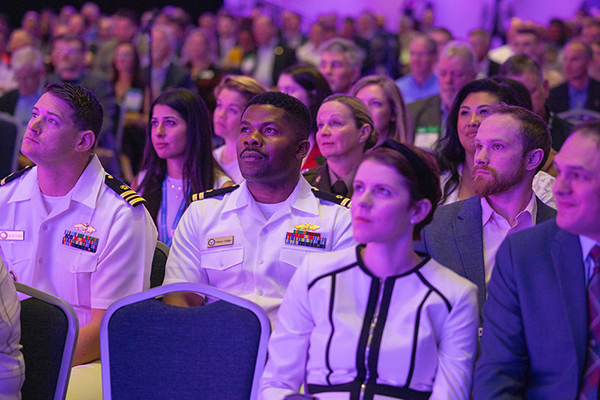
The origins of the summit can be traced to SAME’s 2024 Joint Engineer Training Conference & Expo (JETC), held that year in Orlando, Fla., during which a then-newly forming SAME National AI IGE Project Team hosted one of its first dedicated workshops on AI in the federal engineering sector. At the time, AI was still early in adoption across the A/E/C industry, and the conversation that came out of this early workshop demonstrated there was significant interest among members who wanted to understand how these new technologies might affect the engineering and delivery of federal work.
“The first workshop we did for SAME was in Orlando at JETC 2024,” recalls Cdr. Tim Dahms, P.E., CEC, USN, NAVFAC, one of the summit’s organizers and a recent member of the SAME Board of Direction. “There were a couple sessions that were heavily attended about AI, but a lot of it was low-hanging fruit. We quickly moved through it and began thinking about everything else in our industry.”
That question of where to go after the initial start-up conversations surfaced over the next several years as the project team held successive workshops and presentations at SAME’s Federal Small Business Conference, Capital Week, and other Society engagements. Throughout, a common theme emerged: participants wanted to understand implementation, cybersecurity, compliance, and policy considerations. Most importantly, they wanted to understand how AI would intersect with the unique requirements of federal work
“Historically, SAME events are largely attended by the engineering and construction community. But we know that the players in AI are more than that.”
Pooja Jain, P.E., S.E., CEO and Founder, Innov8 Consulting
At roughly the same time, another effort was gaining momentum within the Society. As part of a capstone project for SAME’s Leadership Development Program, a group of class members that included Steve Price, PG, PMP (U.S. West Federal Practice Leader for Water with Stantec), who is now part of the summit organizers, began exploring barriers to AI adoption across the federal A/E/C sector. Through a series of interviews and surveys with senior executives, technology leaders, and representatives from federal agencies, the team conducted a research project into barriers for AI implementation in federal projects. The findings, which they presented at JETC, helped shape the direction of the early workshops of the National AI IGE Project. But the outstanding contribution emerging from their research project was its reinforcement of the need for a wider conversation.
“Historically, SAME events are largely attended by the engineering and construction community,” says Pooja Jain, P.E., S.E., CEO & Founder, Innov8 Consulting, SAME’s AI IGE co-chair and AI Working Group Chair, and another of the summit’s organizers. “But we know that the players in AI are more than that. We have the engineering companies. We have the government. But we also need players like big tech. We need players like investors who are investing in startups related to this industry. We also need academia, which is moving very fast on AI. So we were missing three pieces of the big puzzle.”
Bringing Voices to the Table
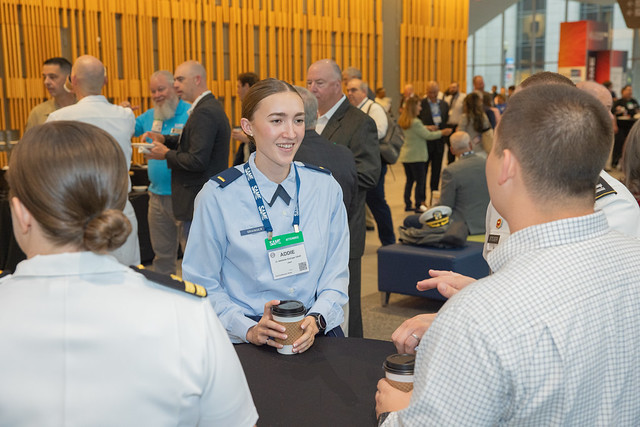
With the question of how to reach these missing voices and add them to SAME’s ongoing conversation surrounding AI in the federal sphere, the idea of a cross-sector summit began to form. “The genesis was, we need to have a conversation across multiple entities,” Tim says. “We are talking in silos as the A/E/C federal industry.”
To facilitate the convergence of all the players involved in the implementation of AI for federal infrastructure, the organizers have intentionally structured the event around opportunities for collaborative dialogue. The discussions will include federal leaders, chief technology officers, chief information officers, cybersecurity experts, investors, researchers, and A/E/C executives.
“We wanted to elevate the dialogue to the executive levels of the company,” Pooja explains. “This is not a project presentation summit. This is a higher-level dialogue of why certain companies are making the moves that they are making, what is and is not working, and how can the various entities work together for bigger and better outcomes.”
The event will focus on five critical areas for federal AI: Empowering A/E/C Adoption, Implementation Pathways, Policy & Governance, Big Tech Partnership, and Future Innovation.
“It’s bringing together people that don’t always get together, or even know each other,” Tim says. “We’ve got fantastic speakers lined up and more signing on each day.”
In addition to technical subject matter experts and practitioners inside the A/E/C sector and well beyond, SAME national leadership will be in attendance, getting a first-hand look at the leading edge of innovation and technology implementation shaping the future, and present, of the industry. Structured opportunities for networking and connection fill out the schedule.
Leveraging Regional Advantages
“The first workshop we did for SAME was in Orlando at JETC 2024. There were a couple sessions that were heavily attended about AI, but a lot of it was low-hanging fruit. We quickly moved through it and began thinking about everything else in our industry.”
Cdr. Tim Dahms, P.E., CEC, USN, NAVFAC
With planning for the summit underway, a major practical question was where it would be hosted. The answer came from San Francisco and SAME’s local connections.
Steve, Tim, and Pooja recognized that the San Francisco Post occupied a unique position within the Society, as its geographical area includes Silicon Valley, world-class academic institutions like Stanford University, venture capital networks, and a thriving startup community. After meeting with the Post’s board and presenting their framework for the event, the Post agreed to sign on as host.
However, questions still remained on location, and that’s when the partnership with CIFE emerged.
“As an Adjunct Faculty at Stanford, I was able to get the School of Engineering CIFE involved and brought the two together,” Pooja says. “What better place to host an AI summit than the Stanford campus itself?”
The SAME team approached CIFE Director Martin Fischer, Ph.D., about the event, and with his approval the location was set. More than just a venue, though, the center has partnered with the SAME leaders as co-host throughout the development process to tap into facilities, programming support, and broader network of faculty, students, researchers, alumni, and industry partners. The emerging event and its schedule is one informed by a multi-disciplined team, with insights from industry, government, and academic sectors building a robust platform for conversations.
An Evolving Conversation and AI Working Group
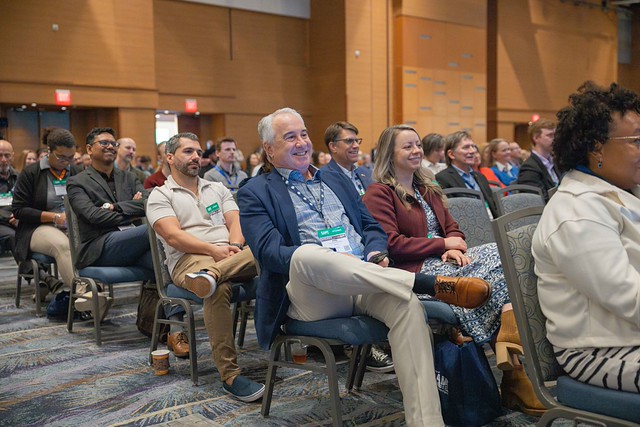
The event in September is planned as the first of an evolving and widening effort within SAME to address the needs of AI in the federal sector. As part of the maturity of this effort, the National AI Project Team recently transitioned to an official AI Working Group, nested within the Society’s framework of technical Communities of Interest, to better foster dialogue between government and industry, identify practical resources that could help members navigate an evolving landscape and develop guidance documents and white papers.
“The AI Working Group was created to help solve the challenges that we know the community is facing,” Pooja says. “For example, the challenge of data governance, or the challenge of cybersecurity. This working group creates that space for a dialogue and tangible outcomes like this Summit and policy recommendations.”
The SAME AI summit will serve as both a platform and a feedback mechanism for that work. Organizers expect the conversations sparked during the event to help shape future needs that the AI Working Group can address and identify new areas where guidance is needed.
History of Collaboration
The Federal AI Summit reflects SAME’s enduring commitment to leading collaboration. Born from workshops, research projects, and volunteer-led initiatives, the event has been designed from the ground up as a platform designed to connect the leaders and organizations who are shaping the future of AI in federal infrastructure.
As expectations, opportunities, and challenges around AI in the federal sphere continue to evolve, organizers hope the inaugural summit in 2025 will help establish and nurture the relationships, understanding, and cross-sector dialogue needed to move from exploration to implementation. For SAME, it is another example of the Society expanding its reach while staying true to a mission that has remained consistent for more than a century: bringing people together to solve the nation’s most pressing engineering challenges.
For more information on the Federal AI Summit, visit federalaisummit.org
For more information on SAME’s AI Working Group, visit same.org/events-programs/ige
Article appeared in the September-October 2024 issue of The Military Engineer
National IGE Report: New “AI” IGE Project
SAME’s latest National IGE Project, approved by the Executive Committee in July, will address the usage in the federal engineering and national defense sectors of artificial intelligence (AI).
With the rapid advancement of AI technologies, sitting by and waiting for adoption is not an option for government or the industry firms that support it. There is a pressing need for structured engagement between the military, public, private, and academic sectors to ensure the effective and ethical implementation of AI in engineering projects, particularly those with military applications.
Inclusive Task Force. The new project, “AI: Knowledge-Sharing, Security Concerns, Implementation Guidelines, and Best Practices,” seeks to assemble a task force comprised of individuals from industry and key stakeholders from government to examine the role of AI and its use cases, and to address the need for a formalized platform to facilitate collaboration between industry and government entities. It is important to have a broad perspective of participation, to ensure the myriad opportunities available through AI are considered by those who will benefit from them (but also to be able to mitigate risks). The AI IGE project team has developed an initial priority list of topics for consideration and discussion.
- Facilitating knowledge-sharing between industry and government, and government to government.
- Addressing security concerns related to AI integration.
- Discussing guidelines for AI implementation in military engineering projects.
- Promoting best practices for ethical AI usage.
The conversations facilitated through the project will be educational and based on experiences. The lack, currently, of coordinated efforts and standardized guidelines poses risks related to security, efficiency, and ethical considerations. All products, platforms, and capabilities of firms participating will only be used to reference implementation and lessons learned.
Assessing Next Steps. The primary goal for this IGE effort, initially, is focused on establishing a common space to discuss AI integration that enhances project delivery outcomes, improves security, and upholds ethical standards between industry-to-government and government-to-government. Further goals could include the publication of a “State of AI Within the DOD A/E/C” or other white papers outlining standardized guidelines and best practices, policy recommendations for government and industry stakeholders, reports on the state of AI integration in military engineering projects, or training materials and program outlines for knowledge-sharing.
The AI IGE project will be led by Victoria Mechtly with TranSystems. Other team leads include Pooja Jain, WSP; Ben Graf, Matrix Design Group; and Mike Ramos, Raymond. Overall, SAME’s National IGE Projects draw on the multidisciplined strength of the Society to assemble teams that cut across government, industry, and academia and focus on some of the toughest challenges facing the profession. The national-level organization also allows for a structure collaboration with benchmarks and sufficient resourcing.
Related News
-

Sharing the Value & Building the Bond: SAME’s 2025 Annual Report
SAME’s Annual Report for 2024 looks back at the accomplishments and moments from an impactful year. -
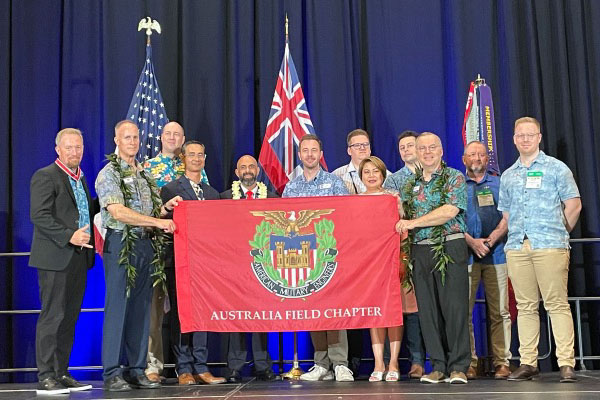
Bridging the Gap: How the Australia Post Fills a Critical National Security Need
Australia’s first Post finds its footing at a record setting pace, bringing together government and industry in an increasingly important region. -
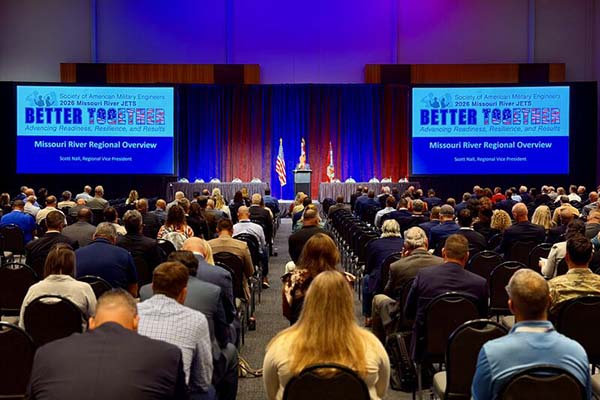
Collaborating Across the Missouri River Region
When the Greater Kansas City and Omaha Posts realized they were competing for venues with the FIFA World Cup they combined efforts and created a successful new event.
Stay up to date on all SAME news and more; download SAME Mobile today!