Contributed by Brandi Smith, 2022-2023 LDP Class
I spent the last full week of June at Camp Lejeune, and I didn’t spend it the way I usually spend my weeks. No conference room, no job site, and no flat white to start my morning, just sunscreen, bug spray, and a 5:30 a.m. wake-up call I wasn’t ready for.
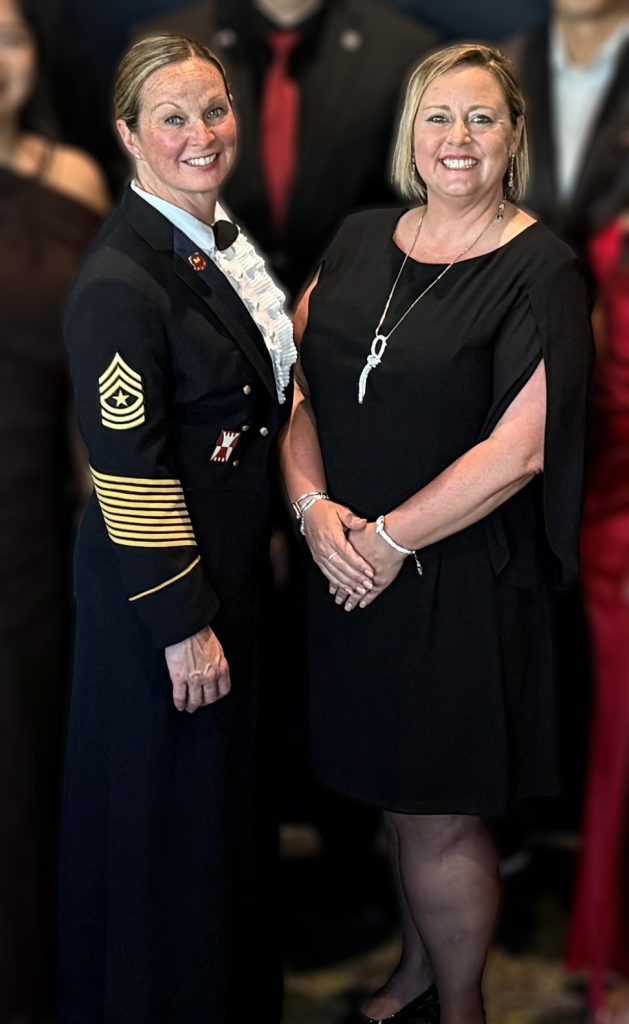
Melissa Wright and Brandi Smith
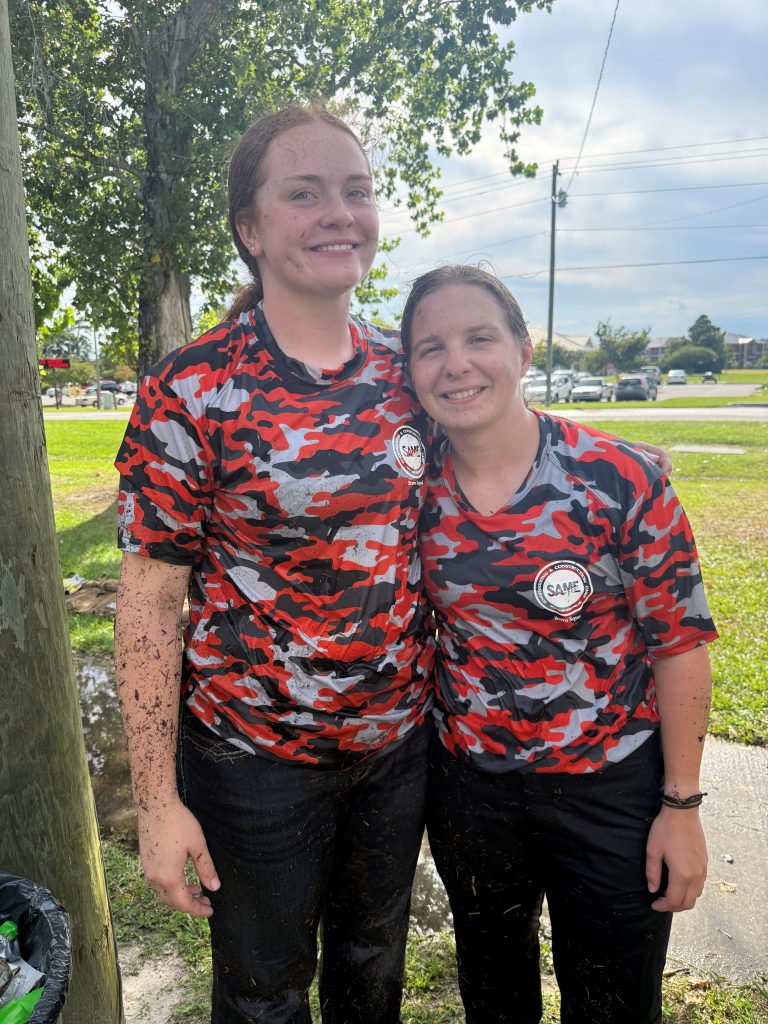
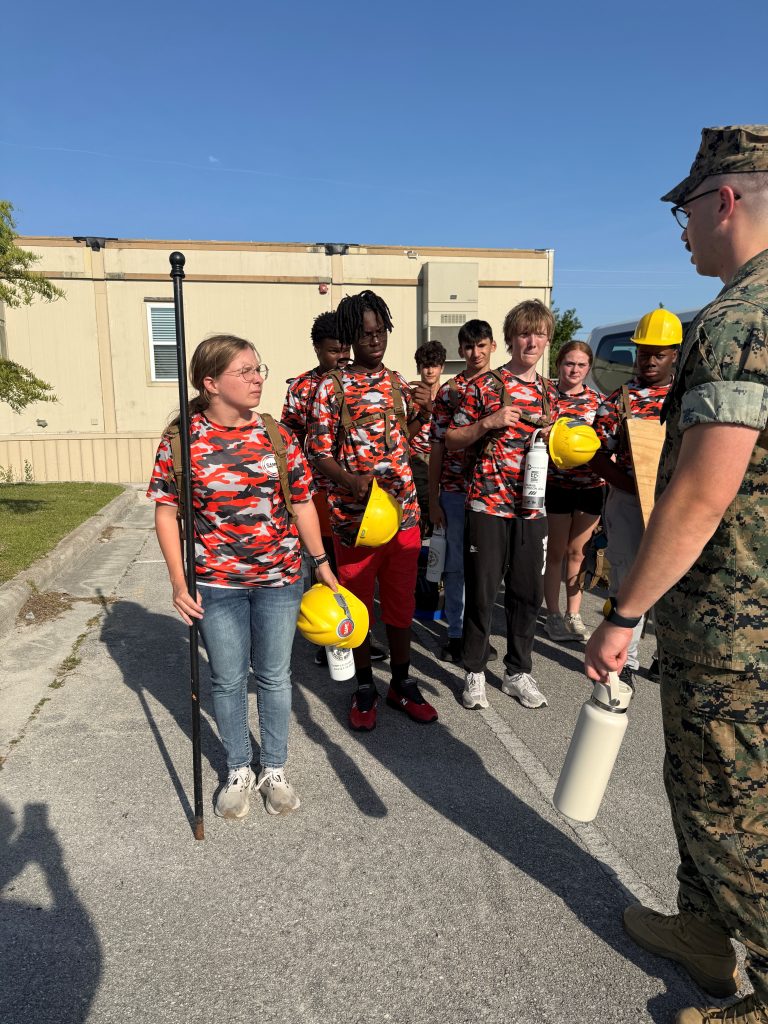
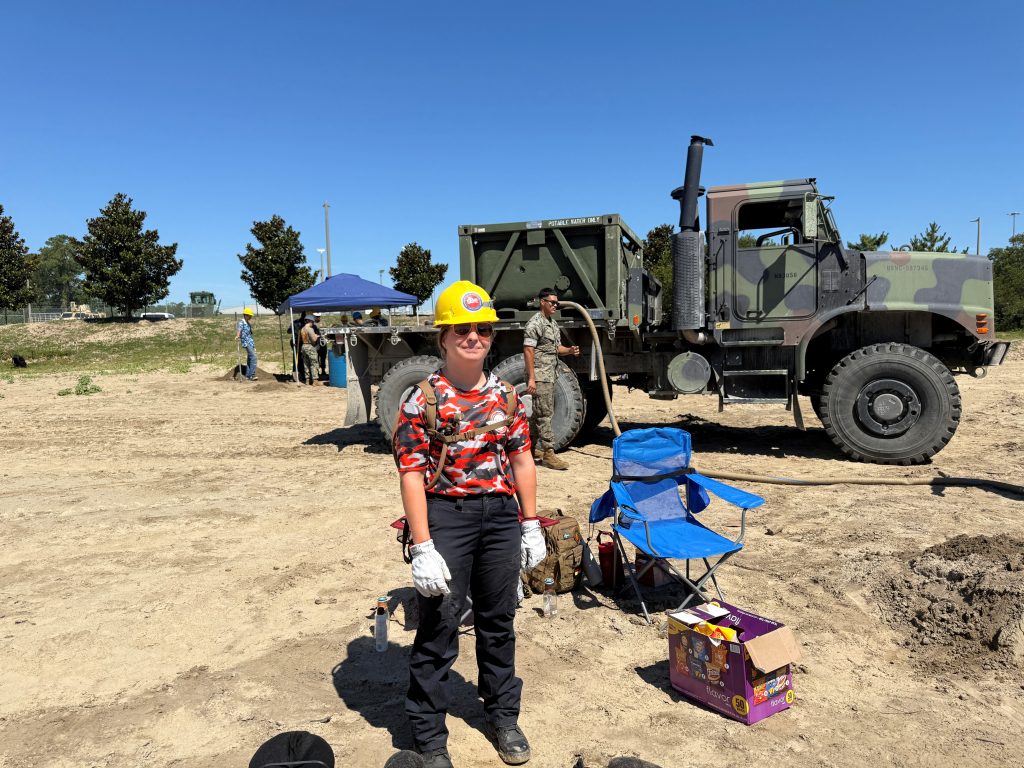
This summer, I was a mentor at SAME’s U.S. Marine Corps Engineering & Construction Camp. My job was to lead Bravo Squad: a group of nine high school students from across the country who were strangers when they arrived. Camp days are long and there are not many chances to sit still. The kids design something, build it, watch it fail, and figure out why. That week, it meant concrete beams loaded until they cracked, cardboard boats built and raced across a pool, and learning engineering theories most of the kids had never put into practice before Monday.
Every day followed roughly the same pattern: brief the problem in the morning, build through the worst of the afternoon heat, test what we’d built in the evening, then sit down and talk through what broke and why before lights out. The squad learned more from a beam that snaps in front of nine witnesses than any lecture I could have given them.
They met Marines and engineers and, more awkwardly, each other, the way teenagers do when you throw nine strangers together and hope for the best. I watched them become a team in about 72 hours, and I still don’tfully understand how that happens so fast. By Wednesday, they were finishing each other’s sentences. By Thursday, I caught myself getting choked up watching them cheer for a kid whose design had failed twice and then finally held.
This wasn’t a one-off. SAME ran six of these camps this summer at military installations from Hawaii to Southern California to the East Coast. Each camp places students on a military base for one week where they are presented with real, hands-on engineering problems instead of theoretical ones. More importantly, they’re given a unique opportunity to see the engineering profession from the inside.
SAME’s Camps program has been around for over 25 years, so I knew what kind of impact it has on its campers. But even with that foreknowledge, my week at camp gave me a view of something I hadn’t expected to see.
One of the young women in Bravo Squad was the daughter of Sgt. Maj. Melissa Wright, PMP, USAR, Army Reserve Command Headquarters.
Melissa texted me while I was on my way to camp. She’d just dropped her daughter off, and I was glad to hear from her because Melissa recently completed SAME’s Leader Development Program (LDP), the same program I chair nationally. LDP is a year-long commitment, with about 20 members from across the country spending roughly 120 hours in leadership training and mentorship and taking on a real project intended to give something back to the profession.
What I didn’t know was that Melissa’s daughter would be assigned to my squad. It took me a second to put it together once I got there. A mother had just finished a program built to develop leaders in our profession, and a few weeks later her daughter was standing in a field at Camp Lejeune, figuring out whether this profession might have a place for her. Somehow, I had landed right in the middle of both.
I’ve spent a lot of the past year thinking and talking about leadership, about cohorts and curriculum and mentorship and what we owe the people coming up behind us. I’ve said, “invest in the pipeline” more times than I can count. It’s one of those phrases we use so often in meetings, presentations, and strategy sessions that eventually it can start to sound like a line on a strategic plan. But standing there, the pipeline had a name and a mother and a quilt from home spread across a barracks bed.
It wasn’t just a phrase anymore.
I didn’t treat Melissa’s daughter differently than the rest of Bravo Squad, and I didn’t pull her aside for some meaningful conversation about legacy and destiny. That’s not how camp works, and it’s not how I work. What I did for her, I did for every kid in that squad. I told them the truth about the work, let them struggle through it without solving it for them, and watched for the quiet ones so somebody heard them. When something failed, they tried to figure out why and then tried again.
Still, watching her made me think differently about a word I’ve used for years.
There is another part of this story that is easy to miss because most of the people responsible for it weren’t standing at Camp Lejeune. The SAME Foundation helps make both the Camps and Leader Development Program possible. A week at camp costs somewhere between $100 and $800 depending on the site, and more than four out of five campers this year had some or all of that covered by donors who will probably neverknow their names. The Foundation also supports the Leader Development Program and provides funding that reaches SAME members and students across the country.
None of this happens on good intentions alone. Donors helped put those kids in those barracks, behind that survey equipment, and next to those concrete beams. Volunteers gave up a week of work, a week of vacation, or some combination of both to sleep on base and chase teenagers around a field in the Carolina heat. When we talk about supporting the SAME Foundation, this is what that support eventually becomes.
In my case, I got to see the pipeline from both ends. A mother who had just spent a year investing in her own leadership, and a daughter standing in a field trying to decide whether engineering might be for her.
Most of the time, we don’t get to see whether this stuff works. We mentor someone, fund a scholarship, volunteer for a program, or sit through another committee meeting talking about developing the next generation. Then everyone goes home, and whatever comes from that investment happens somewhere else, usually without us.
This time, I got to see it. I watched a mother finish LDP after a year of investing in her own leadership, and a few weeks later I watched her daughter wrestle with engineering problems at Camp Lejeune alongside eight other kids doing the same thing. I wasn’t responsible for either one, and that’s actually the point. A lot of people I will never know helped make both possible. Donors, volunteers, mentors, and SAME members who decided that developing people at every stage of this profession was worth investing in.
We talk about the pipeline like it’s a system we need to build, fund, measure, and protect. It is. Although most of the time, we only ever see the small piece of it that’s directly in front of us. We do our part and trust that somebody else is doing theirs farther up or down the line.
For one week this summer, I got to see both ends of it.
Related News
-

2025 SAME Foundation Donor Impact Report
The SAME Foundation’s 2025 Donor Impact Report recounts a year of expanded impact and outreach thanks to the generosity of its donors. -
SAME’s STEM/Engineering & Construction Camps 2026 Season Wrap-Up
SAME’s 2026 Engineering & Construction Camps has finished another successful year! Discover the activities and highlights for each of the camps. -
Sharing the Value & Building the Bond: SAME’s 2025 Annual Report
SAME’s Annual Report for 2024 looks back at the accomplishments and moments from an impactful year.
Stay up to date on all SAME news and more; download SAME Mobile today!