
Community Mission
The mission of the Geospatial Working Group (GWG) is to expand awareness and leverage the power of geospatial engineering to enhance operational outcomes. We aim to build a foundation that integrates people, processes, and tools, enabling the creation of digital solutions that improve engineering across basing, support, and battle spaces. Positioned under the Facility Asset Management (FAM) COI, the GWG serves as a vital cross-functional asset within SAME.
Join the SAME Engage GWG NetworkCOI Objectives
- Reinforce Geospatial Engineering as one of the three core doctrinal U.S. military engineer functions, emphasizing its role in supporting cross-functional missions across the entire Force.
- Support and contribute to Geospatial-Intelligence (GEOINT) activities by delivering engineering capabilities that enhance data accuracy and understanding of geographic locations.
- Provide expertise in data analysis and portrayal of both natural and constructed geographic features and boundaries, essential for mission planning and decision-making.
- Integrate diverse skill sets within Geospatial Engineering, including architects, cartographers, coders, data analysts, geospatial engineers, remote sensing specialists, and sUAS pilots, to offer comprehensive support to military and engineering operations.
- Leverage geospatial data to refine insights and enhance situational awareness for improved operational outcomes across multiple disciplines.
“The Geospatial Community of Practice is an umbrella
community encompassing Survey and Mapping, Remote Sensing, GIS,CAD-BIM, and
other groups engaged in geospatial work.“
– Mr. Jacob Watts, Geospatial Community of Practice Leader, USACE

Community Chair
Douglas Kaiser, PMP
Geospatial Project Manager
Organization Structure
Immediate Past Chair: Scott Ensign II, GISP, MSgt, Ret, USAF, Air Force Civil Engineer Center
Vice Chair, GeoWERX: Brian Best, GISP, HDR (Term ends May 2026)
Immediate Past Vice Chair, GeoWERX: Dan Mummert, PE, Pickett and Associates, LLC
(Term ends May 2026)
Assistant Vice Chair, GeoWERX (NEW POSITION– Vacant)
Vice Chair, Liaisons and Communications: Justus Eckstrom, Dewberry
Secretary (NEW POSITION– Vacant)
Senior Uniformed Advisor (NEW POSITION– Vacant)
Junior Uniformed Advisor (NEW POSITION- Vacant)
JETC 2025 (Louisville, KY)
- GeoWERX ’25 Demonstration
- Annual Geospatial Working Group Meeting
- DoD Installation Geospatial Information & Services Governance Group (IGG) Quarterly Meeting (IGG members only)
- DoD Geospatial Engineering Summit
- Geospatial Engineering Social
OPM Job Series
- Geography Series 0150
- Engineering Technical Series 0802
- Construction Analyst Series 0828
- Cartography Series 1370
- Cartographic Technician Series 1371
- Land Surveying Series 1373
- Geodetic Technician Series 1374
- General Physical Scientist Series – 1301
- Data Science Series – 1560
- Technical Information Specialist (Physical Science and Imagery) Series- 1412
Military (Uniformed)
Air Force
Army
USMC
U.S. Navy
DoD’s Digital Twin Definition: A digital twin is a virtual representation of a product, system, or process that uses the best available models, sensor information, data collected from the physical system, and input data to mirror and predict system activities and performance over the life of its corresponding physical twin and inform system design changes over time. There can be multiple digital twins of a system, but all digital twins should be based on authoritative sources of information and have clearly defined uses and scopes. Digital twins may vary in fidelity, based on the use case.
(Source: DoD Instruction 5000.97, Digital Engineering, December 2023/ Summary)
System of Systems: Built & Natural Infrastructure Digital Twin requires a system of systems approach as multiple sources of authoritative infrastructure data are derived via operations/ processes/ systems of distinct CE functional communities.

“The adoption of Digital Twins requires senior management to stop seeking short-term “solutions” and invest in a successful methodology capable of driving information management along the entire lifecycle. Because Digital Twins cannot be bought off the shelf, they require development by a robust methodology and strategic plan which focuses on the successful management of the flow of information across the entire construction lifecycle.” (Source: House of Digital Twins – AEC Business)
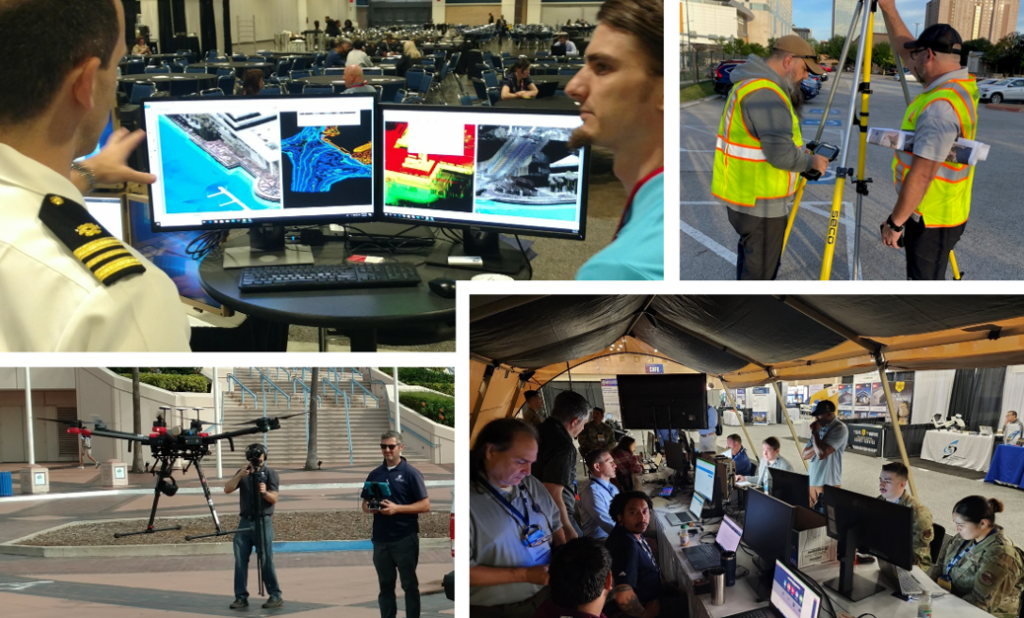
This annual demonstration executed during JETC offers a wide variety of expertise, processes, and tools for attendees to view in action, in addition the ability to discuss their application to unique mission requirements with those executing the demonstration.
Why GeoWERX? Pursuit of infrastructure Digital Twins has a very long history, but modern interests have been ignited by continued and sustained advances in technologies making them more accessible. The power of these types of capabilities are currently only limited by imagination and available resources; their potential return on investment- staggering. From traditional survey, BIM/ CAD, cartography, and GIS to Digital Twin, High-Definition Survey (HDS), sUAS, AI/ ML/ AR and beyond geospatial engineers continue to excel, showing the way!
GeoWERX ‘24 – JETC 2024, Orlando
- Story Map – pending
- Video
- Article- Guest Post: Engage With the “Silent Function” at JETC 2024
GeoWERX III – JETC 2023, San Antonio
GeoWERX II – JETC 2022, Aurora
GeoWERX I – JETC 2019, Tampa
- GISP – GIS Certification Institute (GISCI)
- GEOINT Professional Certification – National Geospatial-Intelligence Agency (NGA)
- Certified Survey Technician – National Society of Professional Surveyors
SAME has entered a partnership with Bootcamp GIS to offer our members the latest program of geospatial industry short courses. Engineers, planners, and environmental scientists can elevate their skills in the growing $18B Geographic Information System industry. As a Subject Matter Expert platform, our members can apply to author a course or sign up as a student to learn applied skills. You can take an individual course or earn a GIS certificate by taking six courses in six months.
Data
Data Standards
The key is to think about geospatial technology not as playing one particular role but as adding unique capabilities and progressively more value at different stages of the digital twin journey.
Upcoming National Webinars
-

- Webinar
Solving Complex CVOC Problems with ISTR– Field Proven Approaches
This webinar will first discuss the unique aspects of performance-based designs when considering procurement of thermal remediation services. Next, we will discuss how to evaluate criteria when selecting performance objectives, i.e., “ how do you define success?” -

- Webinar
The National Spatial Reference System: Modernizing Our Geodetic Foundation for the Future
The National Geodetic Survey (NGS), within the National Oceanic and Atmospheric Administration (NOAA), is in the process of making the critical transition from the current National Spatial Reference System (NSRS) to the upcoming, modernized (2022) system. -

- Webinar
CMMC Level 2: What A/E Firms Must Know Before November
Starting November 10, 2026, the Department of Defense will require CMMC Level 2 certification for contractors handling Controlled Unclassified Information (CUI). Unlike prior self-attestation requirements, this mandate requires verification by an accredited third-party assessor before a firm can be awarded or retain applicable DoD contracts.

Related TME Articles – Geospatial Working Group
-

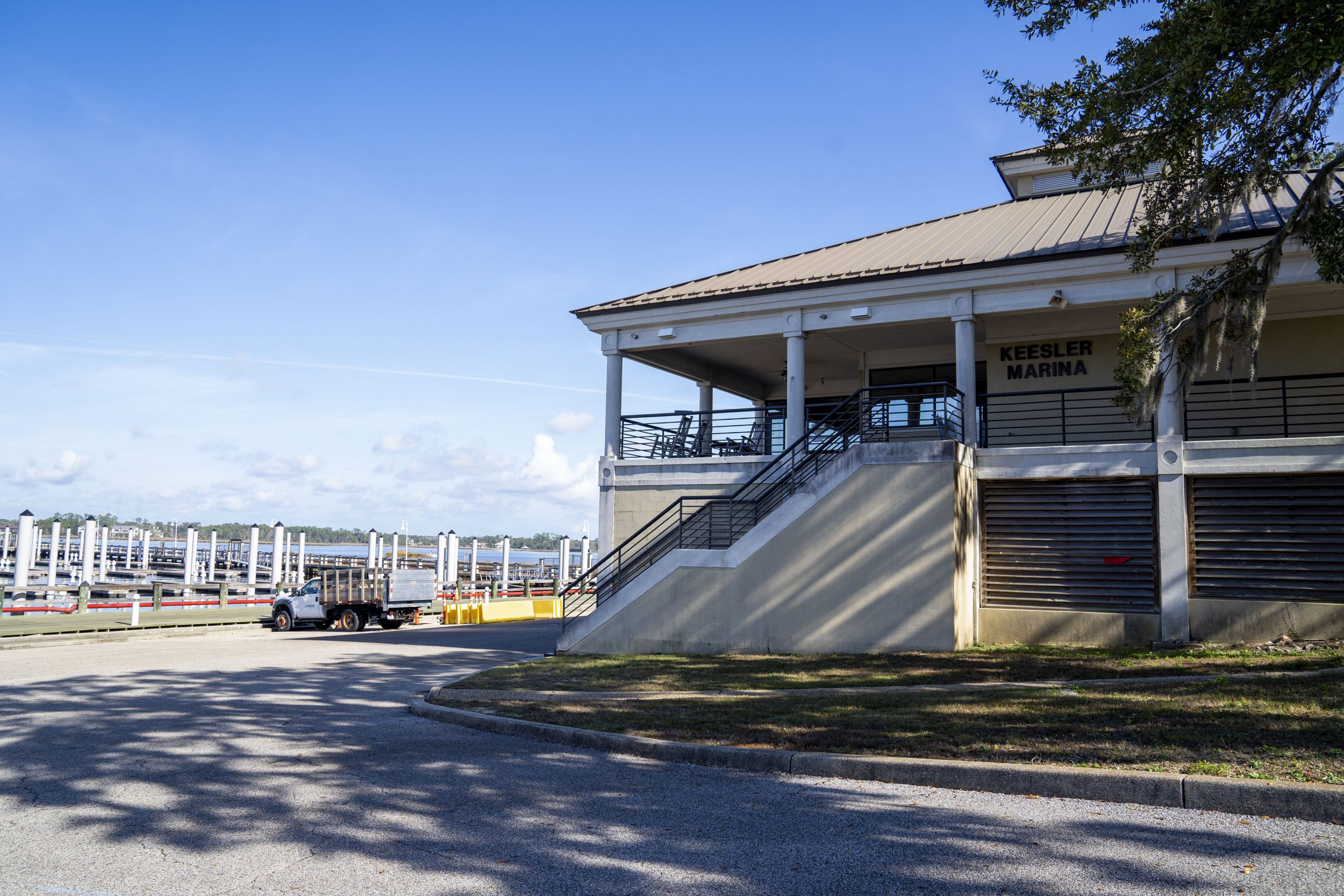
Analyzing Flood Impacts at Keesler AFB
A recently developed flood elevation tool for Keesler AFB allows leadership to visualize impacts of climate change-driven events to each facility, helping target investments. -

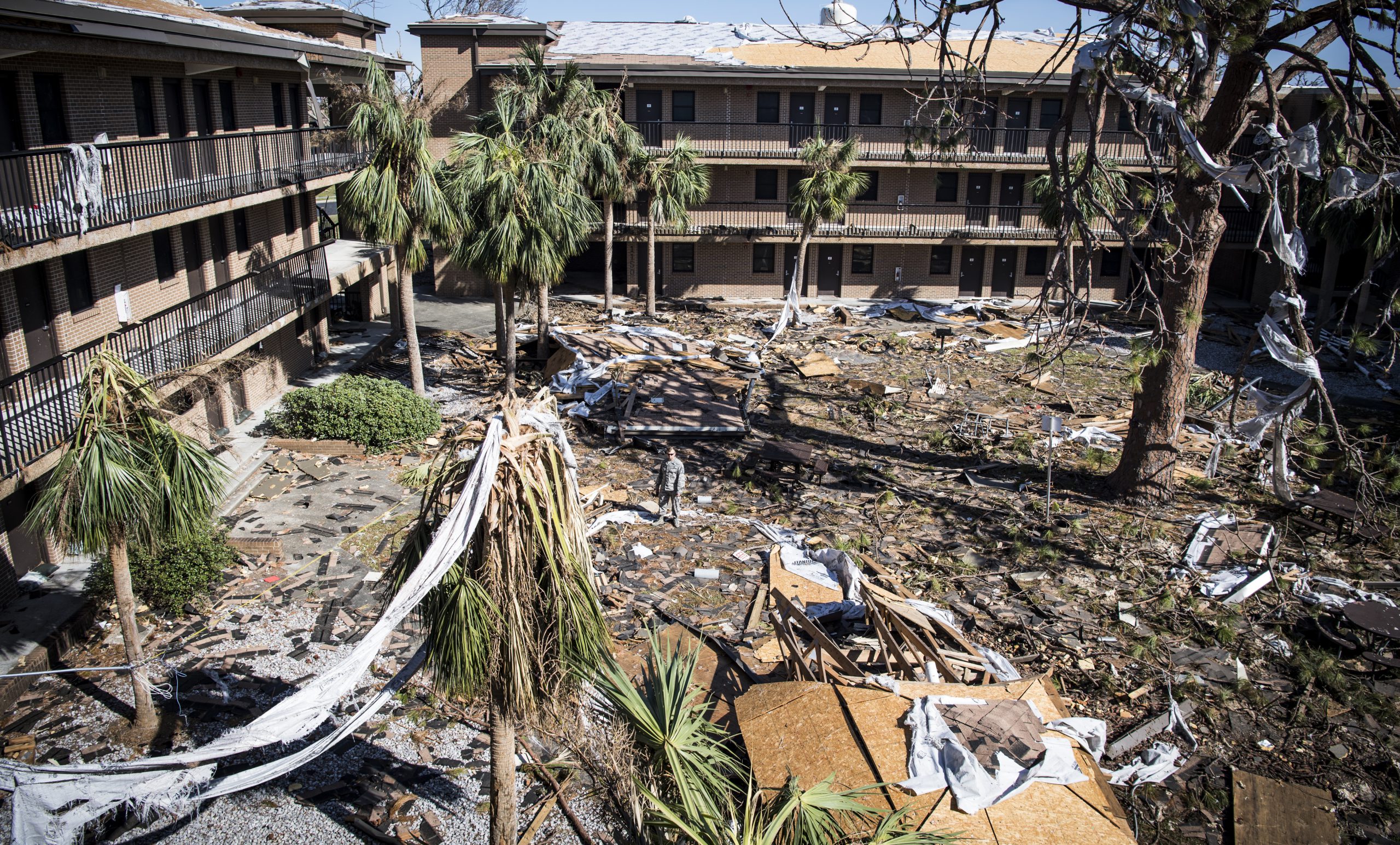
Protecting Coastal Installations with Natural Infrastructure
Through a simulation of Tyndall AFB and an assessment of existing policy, a research team from the Air Force Institute of Technology studied the effects of natural infrastructure as a hedge against sea level rise and extreme weather. -
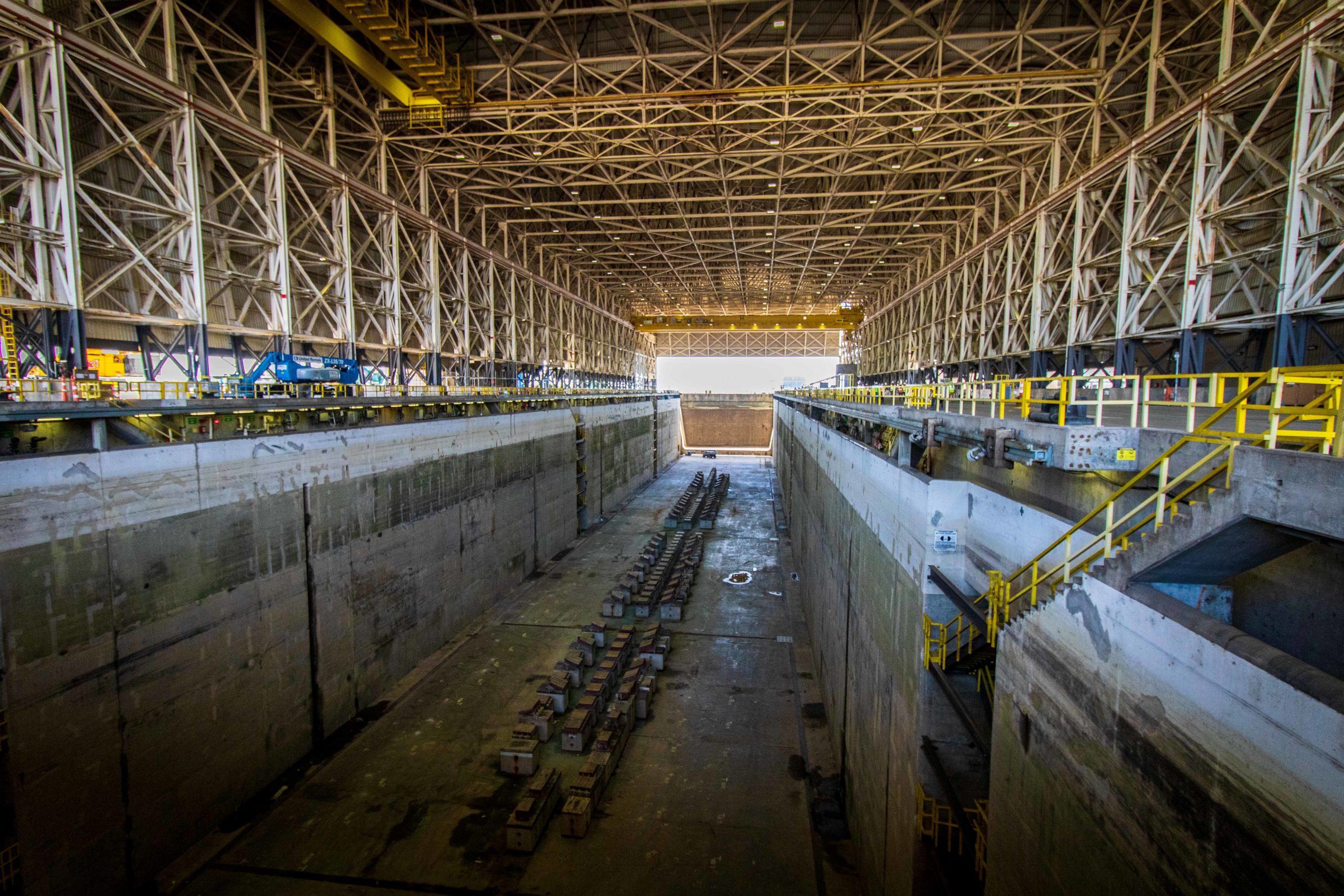
Lessons Learned from the Kings Bay Dry Dock Renovation
Facing a constrained timeline to execute a complete overhaul of the dry dock at Naval Submarine Base Kings Bay, a newly stood up Resident Officer in Charge of Construction leveraged early partnering, strategic staff alignment, robust stakeholder governance, and the creation of an internal continuity cell to deliver the project successfully in fall 2022. -

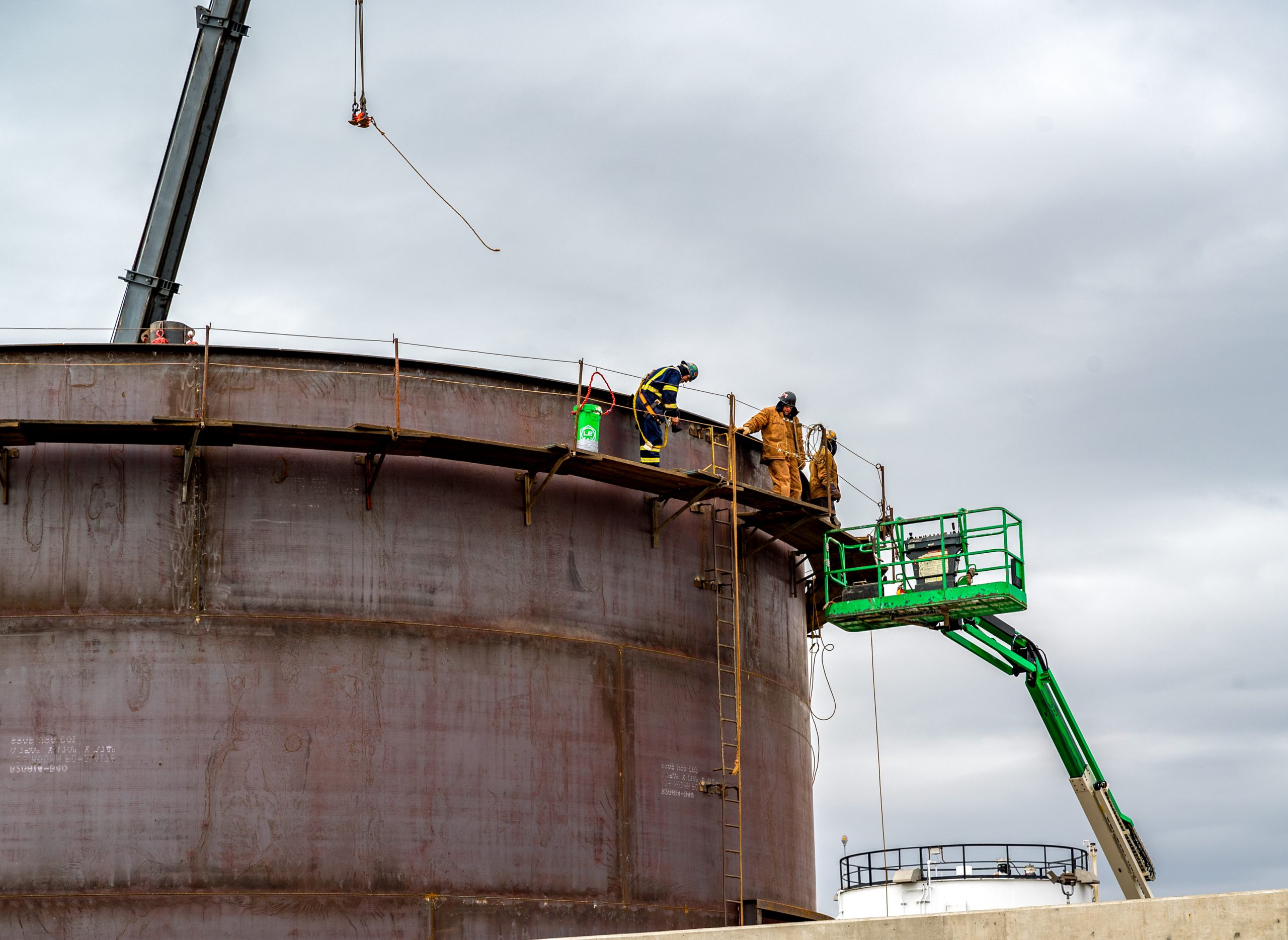
Establishing Partnership at Niagara Falls Air Reserve Station
In designing a new fueling solution for Niagara Falls Air Reserve Station that would be capable of meeting its modern mission needs, laying a foundation of transparency, accountability, and communicated expectations early on was key to meeting project goals.